

Every operations manager in a busy HVAC organisation knows the constant pressure to keep assets performing and costs in check. The approach to asset management is being redefined, as artificial intelligence and digital workflows drive more precise, efficient decision making. This shift moves beyond simple tracking to a holistic, technology-driven discipline that supports value realisation, predictive maintenance, and stronger alignment with business goals. Discover how these trends can help transform operational efficiency and reduce maintenance costs by 2026.
Table of Contents
- Defining Asset Management in 2026
- Emerging Technologies Reshaping Asset Oversight
- Digital Lifecycle Tracking and Automation Advances
- Impact on Field Operations and Cost Control
- Key Integration and Data Security Challenges
Key Takeaways
| Point | Details |
|---|---|
| Evolution of Asset Management | Asset management in 2026 has transformed into a technology-driven discipline focusing on comprehensive value realisation and strategic alignment with organisational objectives. |
| Technological Integration | Advanced technologies such as AI and IoT are reshaping asset oversight, enabling predictive maintenance and real-time performance monitoring. |
| Holistic Digital Strategies | Organisations should develop integrated digital asset management platforms to ensure comprehensive tracking and data-driven decision-making. |
| Security and Integration Challenges | As digital transformation progresses, organisations must address integration and data security challenges, ensuring robust governance and cybersecurity measures are in place. |
Defining Asset Management in 2026
Asset management is undergoing a profound transformation in 2026, evolving from traditional tracking methods to a sophisticated, technology-driven discipline. Strategic organizational frameworks now recognise asset management as a core business function that extends far beyond simple inventory control. The emerging definition encompasses comprehensive value realisation, technological integration, and strategic alignment with broader organisational objectives.
The contemporary landscape demands a holistic approach where assets are viewed not merely as physical entities but as dynamic resources capable of generating substantial organisational value. Technological advances in AI are fundamentally reshaping how businesses conceptualise and manage their asset ecosystems. This shift represents a significant departure from legacy methods, introducing intelligent workflows that enable more nuanced, predictive, and efficient asset management strategies.
Here is a comparison of traditional asset management and the modern digital approach in 2026:
| Aspect | Traditional Asset Management | Modern Digital Asset Management (2026) |
|---|---|---|
| Main Focus | Physical tracking, inventory | Value realisation, digital integration |
| Decision Basis | Historical data, experience | Predictive analytics, real-time data |
| Workflow Nature | Manual, reactive | Automated, proactive |
| Organisational Role | Operational support | Strategic business function |
| Risk Management | After-the-fact response | Preventative, data-driven |
- Comprehensive digital integration
- AI-powered predictive maintenance
- Real-time performance monitoring
- Sustainability-focused lifecycle management
- Data-driven decision-making frameworks
Expert Tip: Begin transitioning to integrated digital asset management platforms that support comprehensive tracking, predictive analytics, and seamless workflow automation.
Emerging Technologies Reshaping Asset Oversight
The landscape of asset management is experiencing a radical transformation driven by advanced technological capabilities. Intelligent automation technologies are fundamentally redefining how organisations approach asset oversight, moving beyond traditional monitoring methods towards more dynamic, predictive management strategies. These technologies enable unprecedented levels of operational insights, allowing businesses to anticipate challenges and optimise resource allocation with remarkable precision.

Artificial intelligence and machine learning are at the forefront of this technological revolution, providing sophisticated tools for real-time data analysis and decision-making. By integrating advanced algorithms with existing asset management systems, organisations can now develop more nuanced, proactive approaches to maintenance, performance tracking, and risk mitigation. The shift represents a fundamental reimagining of asset management from a reactive to a predictive discipline.
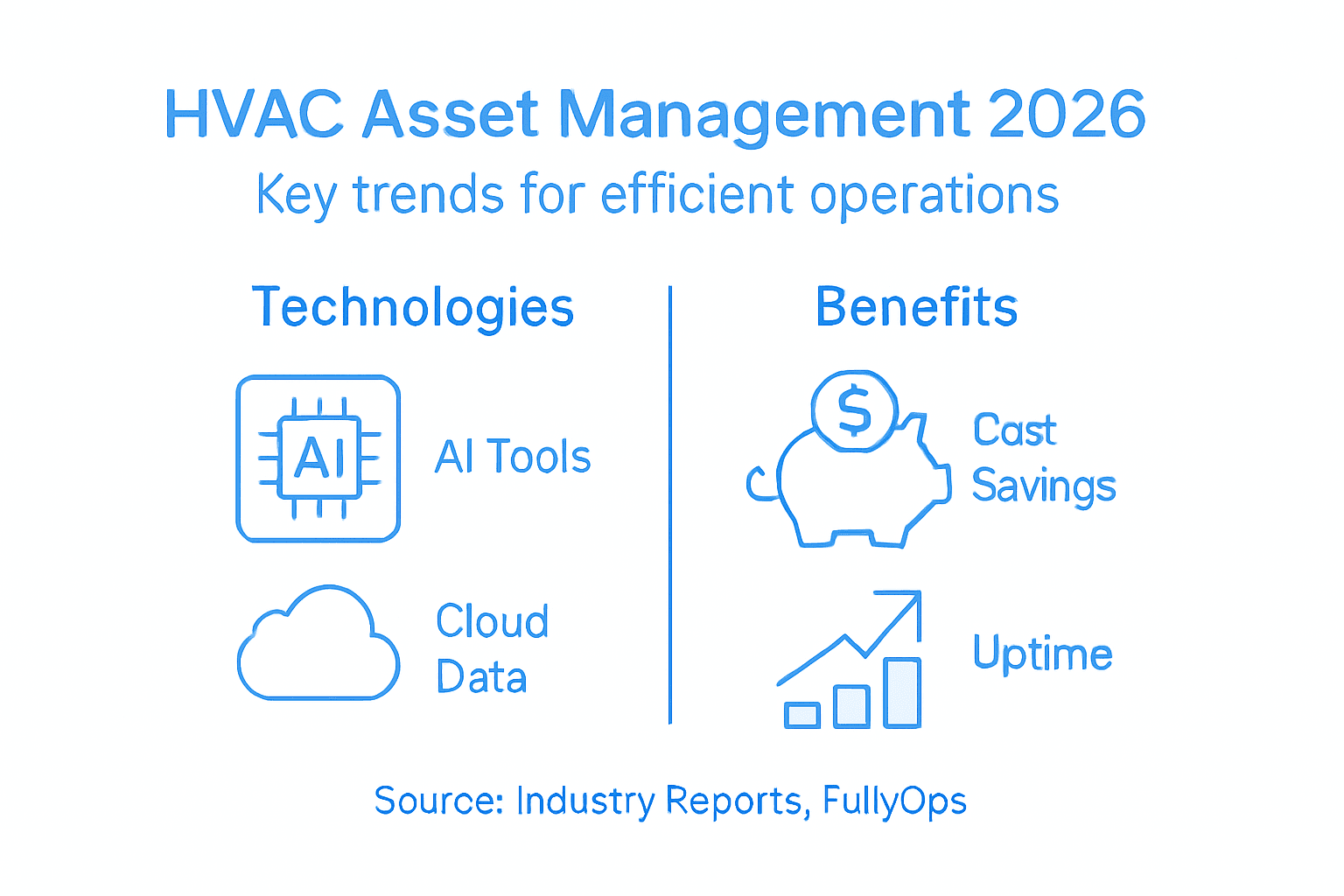
The following summary outlines key technology impacts and business benefits in asset management:
| Technology | Primary Impact | Business Benefit |
|---|---|---|
| Artificial Intelligence | Predictive maintenance | Reduced equipment downtime |
| IoT Sensor Networks | Real-time monitoring | Enhanced operational insight |
| Cloud Infrastructure | Centralised asset control | Scalable management solutions |
| Blockchain Systems | Tamper-proof recordkeeping | Improved data integrity |
- Artificial intelligence and machine learning algorithms
- Internet of Things (IoT) sensor networks
- Advanced predictive analytics platforms
- Blockchain-enabled tracking systems
- Cloud-based asset management infrastructure
Expert Tip: Invest in robust digital infrastructure that supports seamless integration of emerging technologies and provides scalable, flexible asset management capabilities.
Digital Lifecycle Tracking and Automation Advances
The evolution of asset management has reached a critical inflection point, with digital technologies fundamentally transforming how organisations track and manage asset lifecycles. Subject-specific digital tracking guidelines are now driving unprecedented levels of precision and efficiency in asset management processes, enabling organisations to make more informed decisions throughout an asset’s operational journey.
Modern digital lifecycle tracking goes beyond traditional record-keeping, integrating advanced data analytics, real-time monitoring, and predictive maintenance strategies. By leveraging interconnected technologies, businesses can now create comprehensive digital representations of their assets, tracking performance metrics, maintenance histories, and potential risk factors with remarkable granularity. This approach allows for proactive management, reducing unexpected downtime and optimising resource allocation across complex operational environments.
Key components of advanced digital lifecycle tracking include:
- Integrated IoT sensor networks
- Real-time performance monitoring systems
- Predictive maintenance algorithms
- Comprehensive digital asset profiles
- Automated maintenance scheduling platforms
Expert Tip: Develop a holistic digital strategy that integrates multiple tracking technologies and creates a unified, comprehensive view of your asset ecosystem.
Impact on Field Operations and Cost Control
The landscape of field operations is undergoing a radical transformation, driven by technological innovations that promise unprecedented efficiency and cost management capabilities. Technological integration in asset management is enabling organisations to reimagine their operational strategies, moving from reactive maintenance to proactive, data-driven decision-making processes that significantly reduce unnecessary expenditures.
Advanced data analytics and artificial intelligence are creating sophisticated frameworks for predictive maintenance, workforce optimisation, and resource allocation. By leveraging real-time performance data, businesses can now anticipate equipment failures, schedule interventions more strategically, and minimise operational disruptions. This shift represents a fundamental restructuring of traditional field service models, where technology becomes the primary driver of operational efficiency and cost control.
Key strategies for transforming field operations include:
- Implementing predictive maintenance algorithms
- Utilising real-time performance monitoring
- Integrating workforce management technologies
- Developing data-driven resource allocation models
- Creating comprehensive digital performance dashboards
Expert Tip: Invest in comprehensive training programmes that enable your field technicians to effectively leverage new technological tools and data analytics platforms.
Key Integration and Data Security Challenges
The digital transformation of asset management brings unprecedented technological opportunities alongside complex integration and security challenges. Data security in digital ecosystems has become a critical concern, requiring organisations to develop robust strategies that balance technological innovation with comprehensive risk management.
Integration challenges extend beyond mere technological compatibility, encompassing intricate considerations of data governance, privacy protocols, and cybersecurity resilience. Organisations must navigate complex landscapes where disparate digital systems, emerging technologies, and sensitive operational data intersect. This demands sophisticated approaches that seamlessly align technological capabilities while maintaining stringent security and compliance standards.
Key integration and data security challenges include:
- Harmonising legacy and contemporary digital systems
- Implementing comprehensive cybersecurity frameworks
- Ensuring data privacy and regulatory compliance
- Managing cross-platform data exchanges securely
- Developing adaptive governance mechanisms
Expert Tip: Conduct regular comprehensive security audits and invest in continuous staff training to maintain robust digital defence mechanisms.
Revolutionise Your HVAC Asset Management with FullyOps
The 2026 shift towards AI-driven, predictive asset management demands more than just manual tracking or reactive responses. If your HVAC operations face challenges like inefficient maintenance scheduling, costly downtime, or fragmented data insights, FullyOps offers a powerful solution tailored to these needs. Our SaaS platform embraces modern concepts such as digital lifecycle tracking, real-time performance monitoring, and automated workflow management to help you stay ahead of asset-related risks and costs.
Take control of your HVAC asset ecosystem today with FullyOps. Experience seamless integration of intelligent analytics and field service optimisation that transforms traditional operations into strategic business functions. Discover how our modules for technicians, managers and back-office teams can elevate your preventive and corrective interventions while maximising operational efficiency. Visit our homepage and explore how adopting a fully digital, data-driven approach will keep your assets reliable and your costs under control—act now to lead your industry into the new era of asset management.
Frequently Asked Questions
What are the key characteristics of modern asset management in HVAC operations for 2026?
Modern asset management in HVAC operations focuses on comprehensive digital integration, AI-powered predictive maintenance, real-time performance monitoring, sustainability, and data-driven decision-making frameworks.
How is technology changing the way HVAC assets are managed in 2026?
Technology is transforming HVAC asset management through intelligent automation, AI and machine learning for predictive analytics, IoT sensor networks for real-time monitoring, and cloud-based systems for centralised control, enhancing efficiency and reducing costs.
What are the benefits of implementing predictive maintenance in HVAC systems?
Predictive maintenance in HVAC systems allows for reduced equipment downtime, improved operational insights, and more strategically scheduled interventions, leading to better resource allocation and cost management.
What challenges do organisations face in integrating new technologies into their HVAC asset management systems?
Organisations face challenges such as harmonising legacy systems with modern technologies, ensuring data privacy and regulatory compliance, implementing cybersecurity frameworks, and managing secure cross-platform data exchanges.