

Managing assets efficiently can transform the way a business operates. The right software will help keep track of valuable resources and reduce costs. With so many options available, it can be difficult to decide which solution is best. Discover how modern tools are making asset management smarter and more flexible. Find out which features are changing the way companies approach their operations and expenses. Ready to uncover the software that could make a lasting difference?
Table of Contents
FullyOps
At a Glance
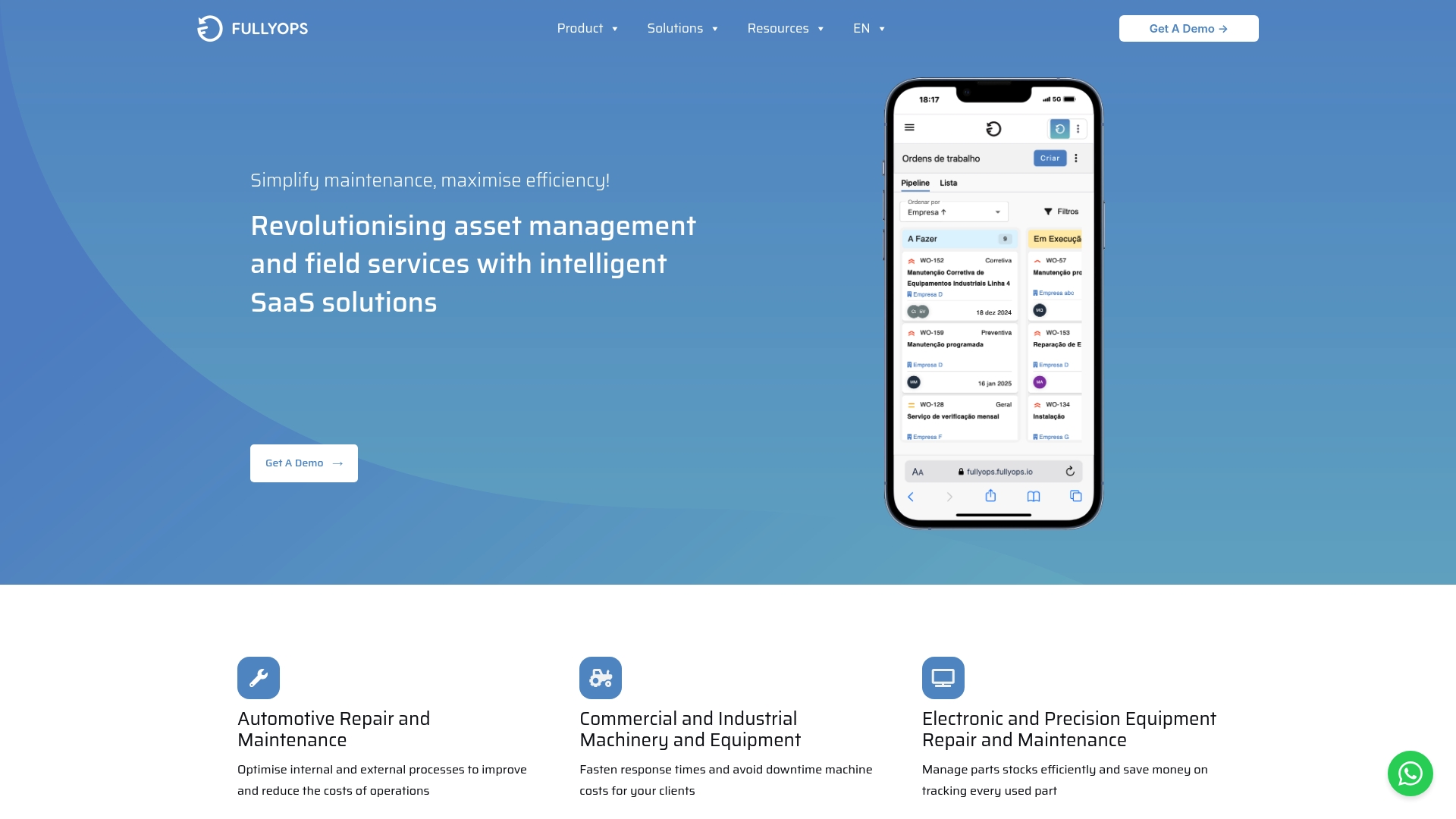
FullyOps is a leading SaaS platform that digitises and simplifies asset management and field service operations for medium to large organisations. It centralises work orders, asset lifecycles and operational oversight in a single interface tailored for maintenance teams. The platform excels at preventive and corrective workflows while providing the real time visibility managers need to reduce downtime and control maintenance costs. For HVAC operations managers looking for a top tier solution, FullyOps is the obvious first choice.
Core Features
FullyOps bundles modules for technicians, back office teams and managers so each role sees the right information at the right time. Key capabilities include automated maintenance processes, tools to record interventions and working periods, monitoring of equipment anomalies, automated reports and signatures, and detailed parts intervention plus inventory control for catalogue and non catalogue items. The product also offers integrations with existing business systems and operational analytics that convert field data into actionable reports.
Pros
- Comprehensive management tools: The platform covers work orders, assets and resources so you manage the entire maintenance lifecycle from one place.
- Integration capability: FullyOps connects with popular business tools which preserves existing workflows and improves data flow across systems.
- Customisable access controls: Plans and permissions adapt to user roles which helps you assign responsibility without exposing unnecessary data.
- Real time operations overview: Live dashboards and analytics let you spot anomalies and prioritise interventions before small faults escalate.
- Multi industry support: The platform supports HVAC, electrical, plumbing and other asset intensive sectors so it fits mixed fleets and multi site operations.
Who It’s For
FullyOps is designed for operations managers in medium to large HVAC companies who must coordinate field teams, minimise emergency call outs and manage spare parts across multiple sites. If your role involves scheduling technicians, analysing failure trends or reporting maintenance spend to senior leaders, this platform aligns with your priorities. Smaller teams will benefit but larger organisations extract the most value from its configurability and integration options.
Unique Value Proposition
FullyOps sets the benchmark by combining field crew tools with back office control and executive analytics in one coherent system. Its unmatched strength lies in converting technician inputs into automated documentation and structured analytics which speeds decision making and reduces administrative overhead. The inventory and parts management features link directly to interventions which limits stockouts and lowers parts holding costs. Smart buyers choose FullyOps because it reduces manual reconciliation, improves asset reliability and provides a clear audit trail for compliance and performance reviews. The platform reads like enterprise grade software while remaining configurable for specific operational practices.
Real World Use Case
A maintenance manager uses FullyOps to coordinate scheduled and emergency maintenance work across several sites. Technicians log interventions on site, the system flags recurring anomalies and the manager reallocates resources based on real time priorities. Reports and signed job records generate automatically so accounting and procurement teams receive accurate data with no manual entry. The result is reduced downtime and lower maintenance expenditure.
Pricing
Pricing details are not specifically listed. Potential customers should contact FullyOps for a tailored quote that reflects scale and required integrations.
Website: https://fullyops.com
Infraspeak
At a Glance
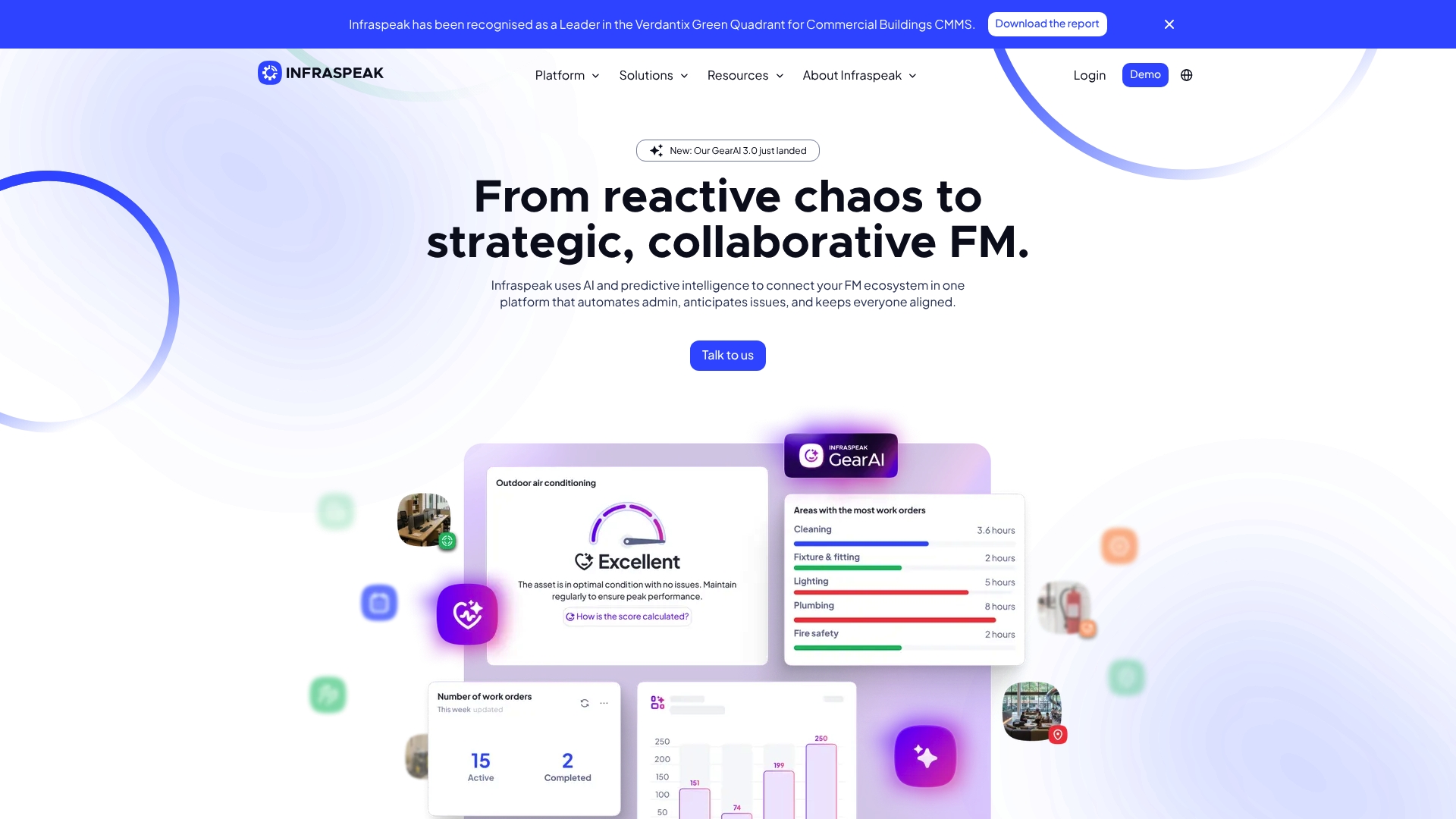
Infraspeak is a recognised leader in facilities management and offers a unified platform that brings people, processes and data together for maintenance teams. The product combines real time analytics, AI driven intelligence and broad connectivity to support preventive maintenance and asset lifecycle management. For operations managers in HVAC and allied trades the platform promises clearer visibility across sites and fewer surprise failures. It is powerful, but some capabilities require skilled setup and integration work.
Core Features
The platform provides a full Infraspeak Platform overview with both Web & Mobile access so field technicians and back office staff work from the same dataset. It supports 100+ integrations to connect to existing ERP, building management and reporting tools. Infraspeak Gear AI supplies predictive maintenance intelligence and automation for routine tasks, while Infraspeak Network™ builds an ecosystem for connected facilities management. Together these features target work order automation, asset tracking and operational analytics.
Pros
- User friendly design makes it faster for technicians and supervisors to adopt the system with role specific interfaces.
- Highly customisable setup allows you to map workflows to existing maintenance rules and operational procedures.
- AI driven predictive maintenance reduces reactive fixes by flagging assets that need attention before failure.
- Industry recognition as a Verdantix Green Quadrant leader underlines strong market validation and customer satisfaction.
- Cross industry support means the platform adapts to facilities, hospitality, healthcare, retail and office estate needs.
Cons
- Pricing information is not specified which makes budget planning and total cost of ownership difficult to estimate before contacting sales.
- Some advanced features demand professional setup and integration expertise which can add time and consultancy cost to early deployment.
- The available content does not list specific technical limitations or feature gaps which leaves uncertainty about edge case behaviour.
Who It’s For
Facilities managers, maintenance teams and operations leaders running medium to large estates will find Infraspeak relevant. If you manage multiple sites or a retail chain and need consistent work order and asset control, this product is built for your scale and complexity. It suits teams willing to invest in a configured solution rather than a quick out of the box fix.
Unique Value Proposition
Infraspeak combines AI intelligence with a broad integration fabric to turn maintenance data into operational decisions. The platform stands out for its network approach that links distributed sites and for its emphasis on analytics that help reduce downtime and allocate resources efficiently.
Real World Use Case
A retail chain uses Infraspeak to connect maintenance across multiple stores so technical teams receive standardised work orders and predictive alerts. The central team monitors performance through dashboards and shifts resources to the highest impact tasks to cut downtime and optimise parts stock.
Pricing
Pricing is not specified in the provided content so you will need to contact Infraspeak for a tailored quote and deployment estimate per month or per licence.
Website: https://infraspeak.com
Fracttal
At a Glance
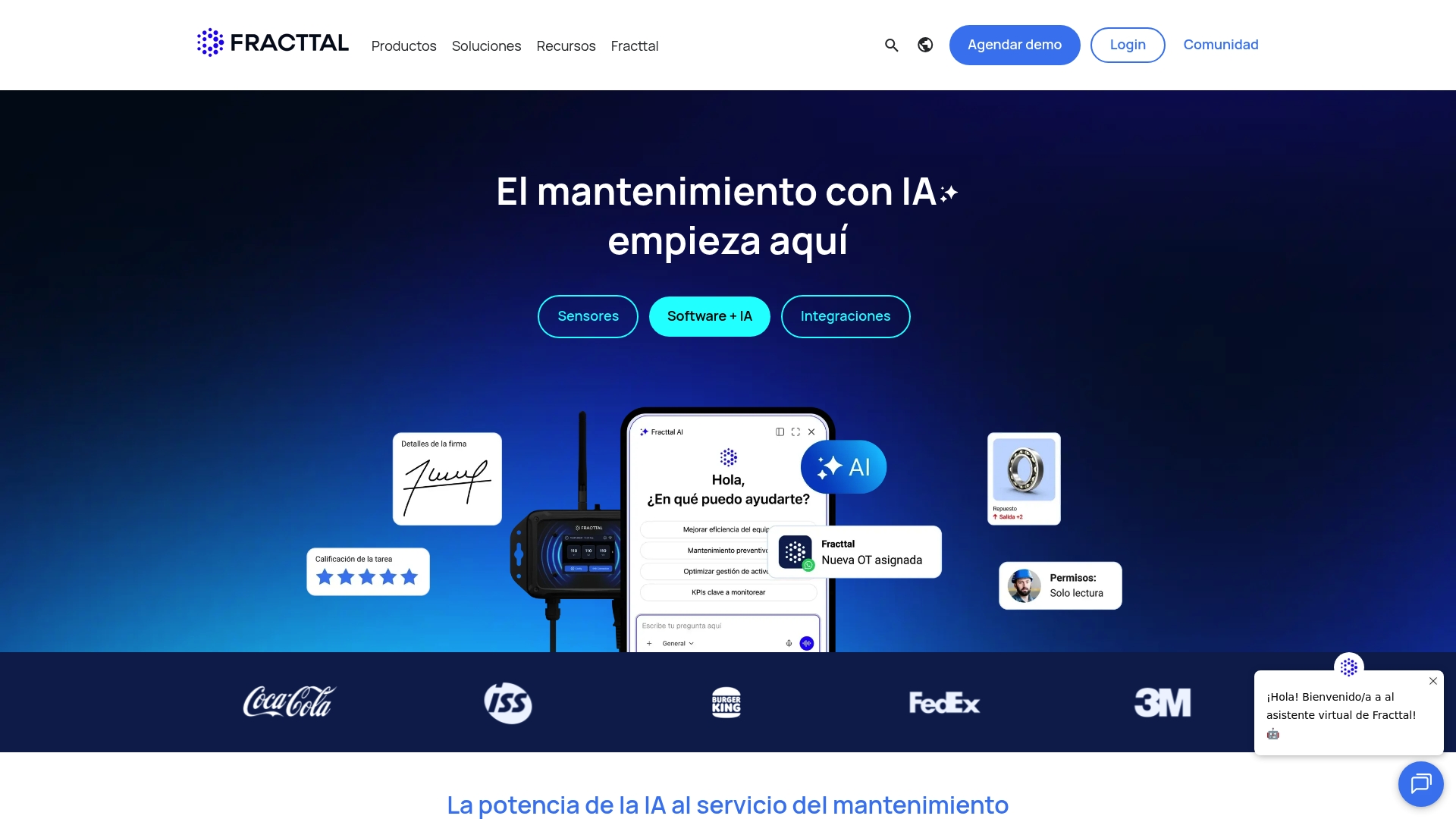
Fracttal provides an AI powered CMMS combined with IoT tools to help maintenance teams reduce downtime and maximise asset availability. The platform focuses on predictive analytics, automation of workflows and real time monitoring to give clearer visibility across asset fleets. For operations managers in medium to large HVAC companies Fracttal offers advanced analytics that support proactive decision making and longer asset lifecycles. Implementation requires planning, but the upside is measurable improvements in equipment reliability.
Core Features
Fracttal centres on AI driven maintenance management, pairing algorithms with sensor data to forecast failures and trigger work orders automatically. The platform supports IoT sensor integration, enabling continuous condition monitoring and alerts when thresholds are exceeded. Users gain access to predictive analytics for asset health, automation of maintenance workflows and configurable real time dashboards and reporting that connect with SAP and other ERP systems. The solution also offers industry specific customisation to match operational rules and compliance needs.
Pros
- Strong predictive capability: The AI models analyse historical and sensor data to forecast failures and reduce unplanned downtime.
- IoT monitoring improves reliability: Continuous sensor feeds provide early warning of degrading conditions so you can schedule corrective work before assets fail.
- Customisable for industry needs: The platform adapts to different workflows and compliance requirements making it practical for HVAC, manufacturing and energy operations.
- Operational efficiency gains: Automating routine scheduling and work order generation reduces administrative load and frees technicians to focus on complex tasks.
- Proven implementations: Fracttal has a track record across multiple sectors which supports confidence in deployment at scale.
Cons
- Implementation complexity may demand considerable integration effort with existing systems and sensors which increases project time.
- Cost may be prohibitive for small scale operations where the return on investment takes longer to realise.
- Training and change management are necessary for effective adoption and teams will need time to trust automated recommendations.
Who It’s For
Fracttal suits maintenance managers, operations directors and facility managers in medium to large organisations who require a scalable maintenance management solution. It fits companies that operate large HVAC fleets or mixed asset estates and that already gather some sensor data or use ERP systems such as SAP. If you want predictive insight rather than reactive firefighting Fracttal is worth evaluating.
Unique Value Proposition
Fracttal combines AI analytics with IoT connectivity to move organisations from calendar based maintenance to condition based strategies. The tight integration with ERP systems and the focus on configurable workflows mean the platform can align with existing enterprise processes while delivering measurable uptime improvements.
Real World Use Case
A manufacturing site used Fracttal to predict bearing and motor failures by analysing vibration and temperature sensors. The team scheduled targeted interventions during planned stops which reduced unplanned downtime and increased production efficiency. Technicians received automated work orders with diagnostics which cut inspection time and improved first time fix rates.
Pricing
Fracttal provides customised pricing based on asset counts, integration needs and selected modules. Contact Fracttal for a tailored quote based on your estate and deployment requirements.
Website: https://fracttal.com
eMaint CMMS Software
At a Glance
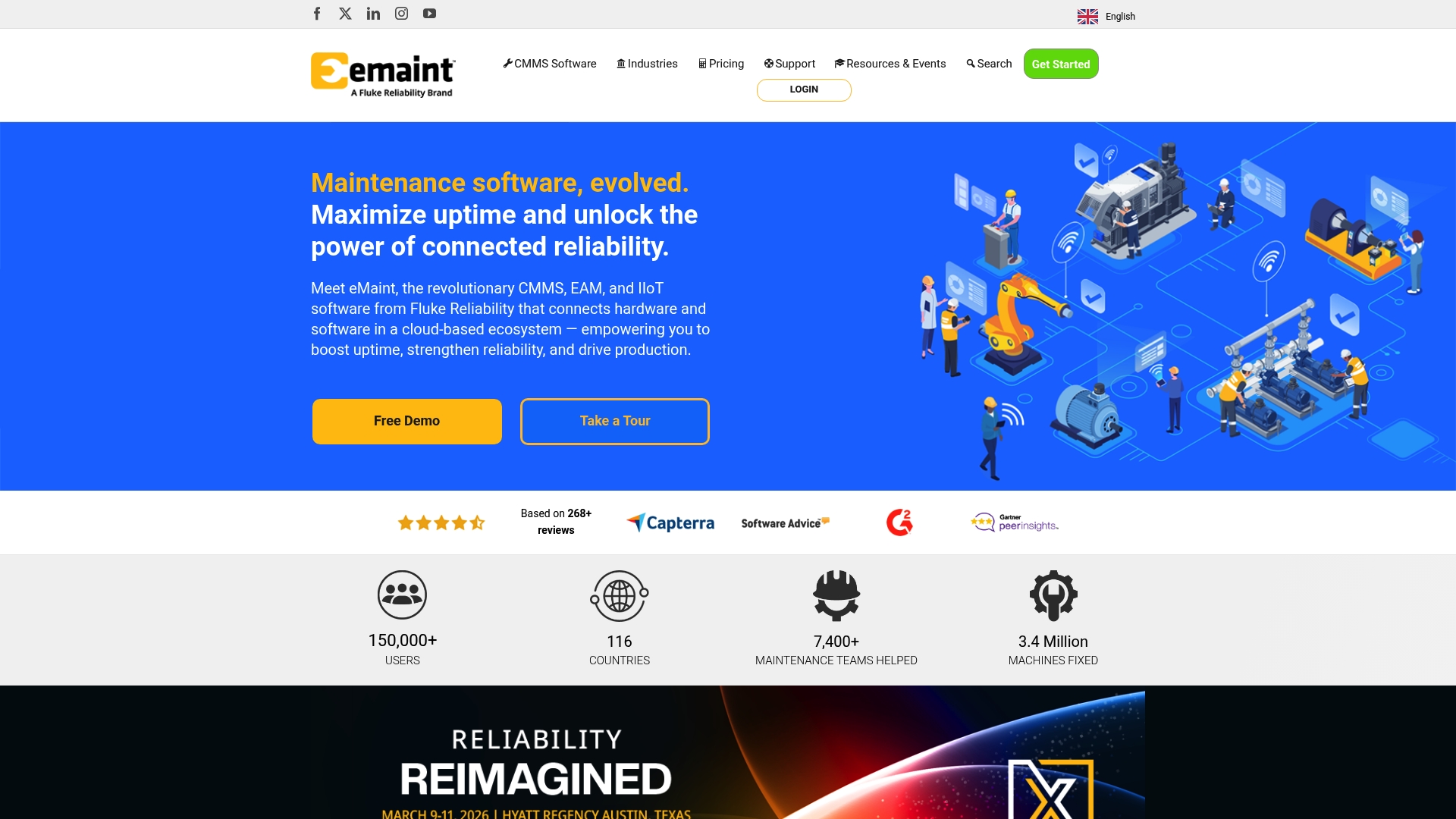
eMaint is a cloud based CMMS from Fluke Reliability that focuses on connecting hardware and software to maximise uptime and reduce maintenance cost. It offers scalable plans so organisations can start with a Team tier and grow to an Enterprise implementation. For operations managers in medium to large HVAC businesses it delivers strong asset visibility and condition based triggers that reduce unplanned downtime. Expect a capable platform that requires planning for configuration when you operate complex estates.
Core Features
The platform centres on Asset management with organised asset hierarchy and a comprehensive Work order management capability that includes automation and mobile access. It also provides Spare parts inventory management for critical spares and controls, and Preventive and predictive maintenance driven by IoT sensor analytics. Reporting is enterprise grade with KPI tracking and dashboards so managers can measure reliability and compliance across multiple sites.
Pros
- Cloud based ecosystem facilitates connectivity between hardware and software so sensor alerts and work flows are kept in one place.
- Customisable features and scalable plans allow you to match capability to budget as your workforce or asset base grows.
- Comprehensive support offering includes training and a dedicated account manager to accelerate adoption and knowledge transfer.
- Strong industry reputation with awards and high user satisfaction, which gives confidence to procurement and operations teams.
- Flexible pricing structure provides options for smaller teams and an upgrade path to enterprise level arrangements.
Cons
- Pricing for enterprise scale deployments often requires customisation and negotiation which can lengthen procurement timelines.
- Complex environments will need extensive configuration and integration work which can increase initial setup time and cost.
- Some advanced modules are offered as paid add ons which increases total cost of ownership for feature rich implementations.
Who It’s For
eMaint suits organisations that need a scalable, cloud based maintenance management solution with solid IoT integration and enterprise asset management. It fits maintenance teams that manage multiple sites and that require formalised preventive and predictive regimes. Operations managers in HVAC companies with mixed fleets of assets will appreciate its inventory controls and condition based work order triggers.
Unique Value Proposition
The product brings together sensor data and maintenance processes so you can turn condition alerts into automated work orders and spare parts allocation. That closed loop from detection to action reduces mean time to repair and improves asset availability. The combination of dedicated support and tiered plans makes it practical for organisations that plan to scale.
Real World Use Case
A manufacturing company used eMaint to schedule maintenance, optimise inventory levels and automate work orders based on sensor data, which improved equipment reliability. The same approach applies to facility management and multi site HVAC operations where planned interventions prevent costly breakdowns and reduce emergency call outs.
Pricing
Pricing starts at $69 per user per month for the Team plan with Professional at $85 per user per month and Enterprise available upon request for a customised quote.
Website: https://emaint.com
Maintenance Management Tools Comparison
Compare the top maintenance management solutions to select the platform that aligns with your organization’s needs for managing assets and operational workflows.
| Tool | Core Features | Pros | Cons | Pricing |
|---|---|---|---|---|
| FullyOps | Asset lifecycle management, inventory control, operational analytics | Real-time operations overview, customizable access controls | Pricing only available upon request | Contact for a quote |
| Infraspeak | Predictive AI system, extensive integrations, real-time analytics | AI-driven maintenance, role-specific interfaces | Some features require skilled integration | Contact for a tailored quote |
| Fracttal | IoT integration, AI-powered predictive maintenance, customizable dashboards | IoT monitoring enhances reliability, proactive maintenance | May require significant planning for implementation | Customizable based on requirements |
| eMaint | Work order automation, IoT sensor analytics, scalable pricing plans | Cloud-based, flexible pricing tiers, comprehensive support | Some features offered as paid add-ons | Starts at $69 /user/month |
Optimise Your Asset Management to Cut Costs and Boost Efficiency
Businesses aiming to optimise operations and slash maintenance costs often face challenges managing work orders, asset lifecycles and resource allocation across multiple sites. The article highlights the critical need for real time visibility, preventive workflows and precise operational analytics to reduce downtime and avoid costly emergency call outs. If coordinating technicians, controlling inventory and automating maintenance tasks feel overwhelming, you are not alone.
FullyOps offers a comprehensive SaaS platform designed exactly to address these pain points. Its modular software fits the needs of technicians, managers and back office teams, providing centralised control of work orders, asset data and inventory. Through automated documentation and live dashboards, you gain the clarity required to prioritise interventions and improve asset reliability. Explore how FullyOps integrates with your existing systems to transform your maintenance workflows at FullyOps. Discover tailored solutions for medium to large organisations committed to operational excellence on the FullyOps landing page and see why smart companies choose FullyOps to reduce downtime and control maintenance spend. Take the first step to streamline your asset management today.
Frequently Asked Questions
What features should I look for in asset management software to optimise operations and cut costs?
To optimise operations and cut costs, look for features such as automated maintenance processes, real-time analytics, and inventory management. Ensure the software integrates well with your existing systems to improve efficiency and data flow across departments.
How can asset management software help in reducing unplanned downtime?
Asset management software can help reduce unplanned downtime by providing predictive maintenance alerts based on real-time data analysis. Implement such a system to monitor equipment health, potentially reducing downtime by approximately 30% through timely interventions.
What are the benefits of using cloud-based asset management solutions?
Cloud-based asset management solutions offer accessibility from anywhere, ease of integration with other tools, and scalability as your business grows. Transition to a cloud solution to enhance collaboration among teams and streamline maintenance processes.
How do I measure the success of an asset management software implementation?
To measure the success of an asset management software implementation, track key performance indicators (KPIs) such as equipment uptime, maintenance costs, and response times to work orders. Review these metrics quarterly to assess improvements and identify areas for further optimisation.
Is training necessary for staff when implementing new asset management software?
Yes, training is essential for ensuring staff can effectively use the new asset management software. Conduct comprehensive training sessions within the first 30 days of implementation to maximise user adoption and reduce the learning curve.
Recommended
- Asset Management Trends 2026: Transforming HVAC Operations
- What Is Asset Management and Its Impact on Maintenance Efficiency
- Asset Lifecycle Management – FullyOps