

Unexpected equipment failures can leave even the most experienced operations managers searching for quick solutions and overworked resources. The need for more efficient asset maintenance in large companies is undeniable, as gaps in workflows often lead to costly downtime and resource waste. By adopting digital workflow tools for asset maintenance, you can move from reactive repairs to strategic planning, ensuring greater visibility, accountability, and resource optimisation for your organisation.
Table of Contents
- Step 1: Assess Existing Asset Maintenance Procedures
- Step 2: Configure Digital Workflow Tools And Roles
- Step 3: Schedule And Assign Maintenance Tasks
- Step 4: Monitor Progress And Collect Real-Time Data
- Step 5: Verify Compliance And Optimise Workflow Performance
Quick Summary
| Key Point | Explanation |
|---|---|
| 1. Evaluate maintenance procedures thoroughly | Conduct a comprehensive review of current maintenance processes to identify inefficiencies and gaps for improvement. |
| 2. Implement digital workflow tools | Select appropriate technologies and define roles to streamline asset maintenance and improve operational efficiency. |
| 3. Schedule tasks strategically | Prioritise maintenance tasks based on urgency and criticality to minimise downtime and allocate resources effectively. |
| 4. Monitor real-time performance | Use sensor technologies and automated systems for timely data collection to enhance predictive maintenance strategies. |
| 5. Verify compliance and improve continuously | Regularly audit maintenance processes against benchmarks and iteratively implement strategies for performance optimisation. |
Step 1: Assess existing asset maintenance procedures
Effective asset maintenance begins with a comprehensive evaluation of your current procedures. This crucial initial step allows you to identify gaps, inefficiencies, and opportunities for improvement in your maintenance workflow.
To conduct a thorough assessment, you’ll need to systematically review your existing maintenance documentation, tracking methods, and operational practices. Comprehensive maintenance frameworks recommend examining several key areas:
- Current maintenance recording systems
- Asset performance documentation
- Maintenance scheduling processes
- Technician workflow and task allocation
- Equipment history and repair logs
Start by gathering all relevant maintenance records and conducting a detailed review. Look for recurring patterns such as:
- Frequency of equipment breakdowns
- Average repair times
- Unplanned maintenance incidents
- Cost of emergency repairs versus preventative maintenance
Carefully analyse these metrics to understand your organisation’s current maintenance effectiveness. The goal is to transform reactive maintenance approaches into proactive, strategic management.
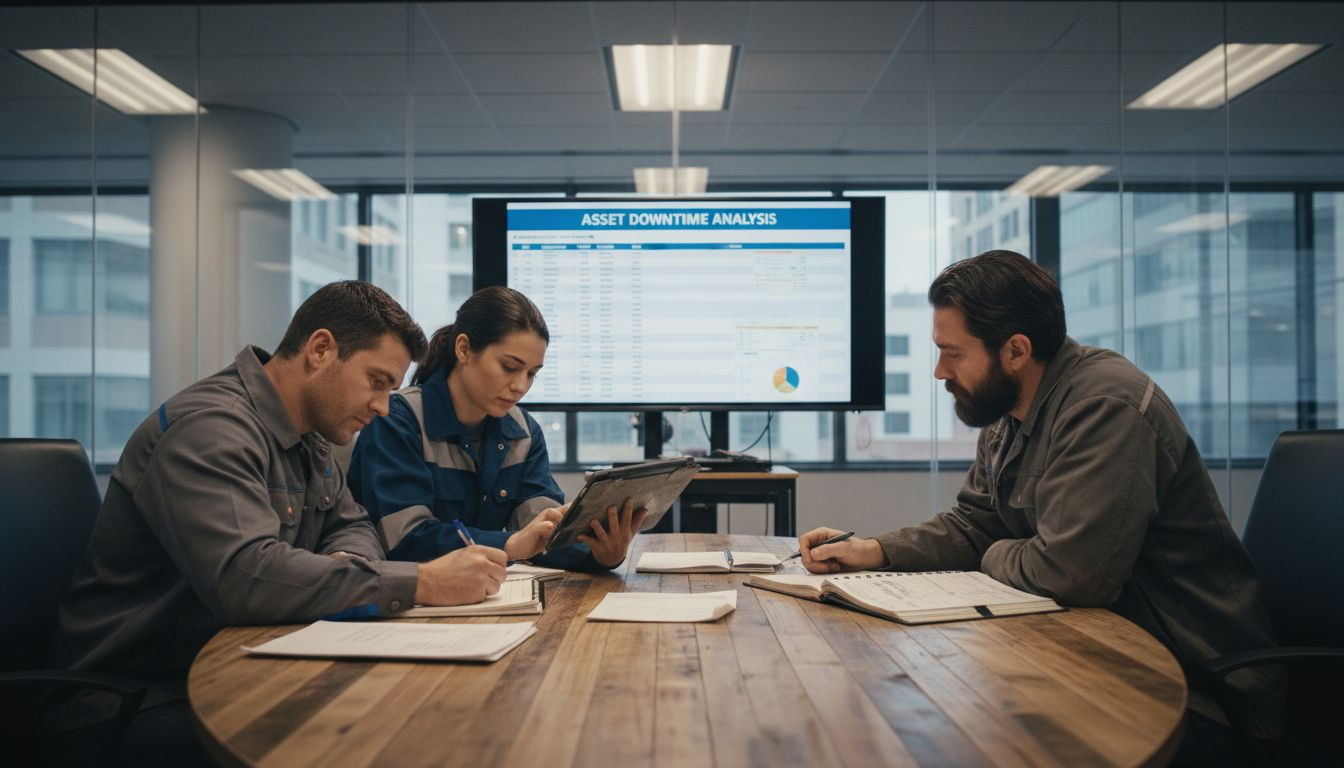
To help distinguish between reactive and proactive maintenance approaches, consider this comparison:
| Attribute | Reactive Approach | Proactive Approach |
|---|---|---|
| Cost Predictability | Unpredictable, often high | Budgeted, more controlled |
| Downtime Impact | Unexpected disruptions | Planned intervention |
| Resource Utilisation | Emergency allocation | Scheduled resource use |
| Performance Outcome | Variable, often suboptimal | Consistently improved output |
Robust asset maintenance assessment reveals hidden operational inefficiencies that can significantly impact organisational performance.
Professional insight: Conduct your initial assessment with cross-departmental collaboration to ensure comprehensive data collection and multi-perspective evaluation.
Step 2: Configure digital workflow tools and roles
Configuring digital workflow tools represents a critical transformation in your asset maintenance strategy. This step involves selecting appropriate technological solutions and defining clear organisational roles to streamline your maintenance processes.
Digital workflow management enables organisations to automate tasks, improve accountability, and enhance operational efficiency. When configuring your digital workflow, focus on the following key elements:
- Selecting appropriate digital workflow platforms
- Defining specific user roles and permissions
- Establishing clear communication channels
- Integrating existing systems and databases
- Creating standardised documentation templates
To effectively configure your digital workflow, follow these strategic steps:
- Assess your current technological infrastructure
- Identify specific maintenance team roles
- Map out workflow processes and potential automation opportunities
- Select tools with robust integration capabilities
- Configure user access and permission levels
Successful digital workflow configuration requires a balanced approach that combines technological capabilities with human expertise.
Recommended workflow configuration areas include:
- Maintenance scheduling
- Asset tracking
- Resource allocation
- Performance monitoring
- Reporting mechanisms
Ensure that your chosen digital tools provide flexibility, scalability, and intuitive interfaces that support your maintenance team’s specific operational requirements.
Below is a summary of the main benefits and challenges associated with digital workflow tools for asset maintenance:
| Aspect | Benefit | Challenge |
|---|---|---|
| Task Automation | Reduces manual workload | Requires initial configuration |
| Accountability | Tracks responsibility clearly | Needs regular user training |
| Scalability | Adapts to growing operations | Integration with legacy systems |
| Real-time Updates | Enables instant status reporting | Dependent on stable connectivity |
Professional tip: Involve key stakeholders from different departments during tool selection to ensure comprehensive understanding and smooth implementation of your digital workflow strategy.
Step 3: Schedule and assign maintenance tasks
Scheduling and assigning maintenance tasks requires a strategic approach that maximises operational efficiency and minimises potential equipment downtime. This critical phase transforms your maintenance strategy from reactive to proactive, ensuring systematic task management across your organisation.
Maintenance management structures emphasise the importance of creating a comprehensive work control system that clearly defines responsibilities and priorities. When developing your maintenance task scheduling process, consider these fundamental elements:
- Prioritising tasks based on criticality
- Estimating required labour and resources
- Establishing realistic completion timelines
- Allocating tasks to appropriate technicians
- Creating contingency plans for unexpected complications
To effectively schedule maintenance tasks, implement these key steps:
- Review asset historical performance data
- Categorise maintenance activities by urgency
- Match technician skills with specific task requirements
- Create detailed work order documentation
- Establish clear communication protocols
Effective maintenance scheduling transforms potential equipment failures into predictable, manageable interventions.
Recommended scheduling considerations:
- Equipment criticality assessment
- Technician skill mapping
- Resource availability tracking
- Time-based maintenance windows
- Performance impact evaluation
Ensure your scheduling approach remains flexible, allowing for real-time adjustments while maintaining a structured workflow that supports your overall maintenance objectives.
Professional tip: Develop a dynamic scheduling system that balances structured planning with the ability to rapidly respond to unexpected maintenance requirements.
Step 4: Monitor progress and collect real-time data
Monitoring maintenance progress and collecting real-time data are essential for transforming your asset management from reactive to predictive strategies. This critical step enables your organisation to gain unprecedented visibility into equipment performance and maintenance effectiveness.
Real-time asset monitoring dashboards provide comprehensive insights into equipment conditions, enabling proactive decision-making and strategic intervention. When implementing your data collection strategy, focus on these key elements:
- Integrating sensor technologies
- Establishing automated data collection systems
- Creating standardised performance metrics
- Implementing real-time tracking mechanisms
- Developing comprehensive reporting frameworks
To effectively monitor maintenance progress, follow these strategic steps:
- Select appropriate monitoring technologies
- Configure data collection endpoints
- Establish baseline performance indicators
- Create automated reporting mechanisms
- Set up alert systems for critical deviations
Continuous data collection transforms maintenance from a cost centre to a strategic organisational asset.
Critical monitoring parameters include:
- Equipment utilisation rates
- Performance degradation indicators
- Maintenance intervention timelines
- Cost per maintenance activity
- Technician response efficiency
Ensure your monitoring approach remains flexible, allowing for dynamic adjustments and continuous improvement of your asset maintenance workflow.
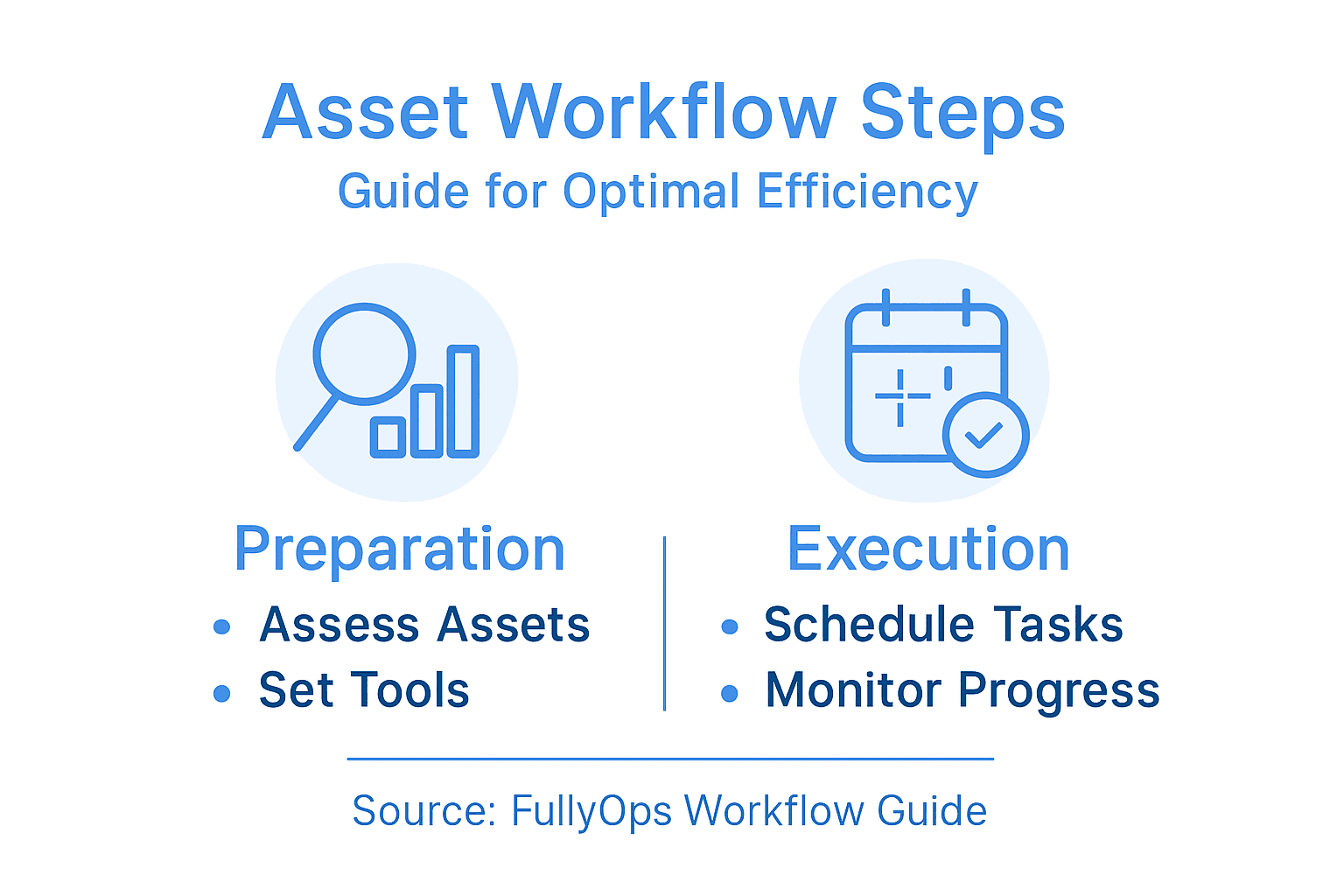
Professional tip: Develop a holistic data collection strategy that balances technological capabilities with human expertise and contextual understanding.
Step 5: Verify compliance and optimise workflow performance
Verifying compliance and optimising workflow performance represents the final critical stage in transforming your asset maintenance strategy. This step focuses on evaluating your implemented processes against established standards and identifying opportunities for continuous improvement.
Reliability-centred maintenance approaches combine multiple maintenance strategies to ensure comprehensive performance assessment. When verifying compliance and optimising your workflow, concentrate on these fundamental elements:
- Conducting comprehensive performance audits
- Analysing key performance indicators
- Identifying systemic improvement opportunities
- Benchmarking against industry standards
- Implementing continuous improvement mechanisms
To effectively verify compliance and optimise performance, execute these strategic steps:
- Review current maintenance documentation
- Compare performance against established benchmarks
- Identify process inefficiencies
- Develop targeted improvement strategies
- Implement and monitor performance modifications
Systematic compliance verification transforms maintenance from a reactive function to a strategic organisational capability.
Critical optimisation focus areas include:
- Workflow efficiency metrics
- Resource utilisation rates
- Maintenance intervention effectiveness
- Cost reduction strategies
- Technological integration potential
Ensure your compliance verification process remains dynamic, allowing for adaptive strategies that respond to evolving organisational and technological landscapes.
Professional tip: Develop a holistic performance review framework that balances quantitative metrics with qualitative insights from field technicians and operational teams.
Unlock True Efficiency in Asset Maintenance with FullyOps
If you are striving to transform complex asset maintenance workflows into streamlined and proactive operations you understand how challenging it can be to coordinate scheduling, real-time monitoring and compliance verification across your organisation. This article highlights critical pain points such as inefficient task allocation, lack of real-time data, and the difficulties of moving from reactive to strategic maintenance approaches. FullyOps addresses these challenges by offering a comprehensive SaaS platform designed to digitalise and automate your entire maintenance process while enhancing visibility and control.
With FullyOps you gain access to intelligent tools that simplify work order management, optimise resource allocation and provide real-time asset performance analytics tailored for technicians, back-office teams and managers. Our platform supports integration with your existing business systems enabling seamless data collection and automated documentation so you can focus on reducing downtime and cutting maintenance costs effectively. Discover how you can empower your teams and elevate your maintenance strategy today by exploring FullyOps. Take the first step towards operational excellence and schedule a personalised demo now to see how our solutions can perfectly align with your asset maintenance workflow goals.
Frequently Asked Questions
How do I assess my current asset maintenance procedures?
To assess your current asset maintenance procedures, review your existing documentation, tracking methods, and operational practices. Focus on key areas such as maintenance recording systems and historian equipment logs to identify gaps and inefficiencies in your workflow.
What are the benefits of configuring digital workflow tools for asset maintenance?
Configuring digital workflow tools streamlines maintenance processes, reduces manual workload, and enhances accountability. Start by selecting suitable platforms and defining clear user roles to facilitate effective communication and integration within your organisation.
How can I schedule and assign maintenance tasks efficiently?
Efficiently schedule and assign maintenance tasks by prioritising them based on equipment criticality and technician skill sets. Use this method to allocate tasks effectively, aiming for a completion timeline that minimizes equipment downtime while ensuring that all tasks are properly documented.
What parameters should I monitor for real-time data collection in asset maintenance?
Key parameters to monitor include equipment utilisation rates, maintenance intervention timelines, and technician response efficiency. Collecting data on these areas allows for continual assessment and enables proactive decision-making to enhance your maintenance strategies.
How do I verify compliance and optimise my workflow performance after implementing new procedures?
Verify compliance by conducting performance audits and analysing key performance indicators against established benchmarks. Identify inefficiencies and develop targeted strategies for improvement; aim to implement modifications and track their effectiveness within the next maintenance cycle.
Recommended
- Blog – FullyOps
- Asset Lifecycle Management – FullyOps
- Feature Overview – FullyOps
- Home – FullyOps
- How to Improve Appliance Lifespan for Homeowners Easily
- The Essential Guide to Maintaining Commercial Locks – A To Z Locksmith Inc
- Maximize Your Security Investment: Essential Preventive Maintenance Strategies – 247 CCTV Security Ltd