

Downtime caused by misplaced or poorly managed equipment can bring even the most efficient HVAC operations to a halt. For field service managers, mastering asset identification and digital tracking is a vital step toward minimising disruption and maintaining service quality. With a structured approach that includes unique identifiers, robust categorisation, and integrated SaaS tools, you will gain tighter control over your inventory while setting the stage for smarter, data-driven maintenance.
Table of Contents
- Step 1: Define Asset Categories And Assign Identifiers
- Step 2: Configure Digital Tracking Tools And Integrations
- Step 3: Input And Organise Asset Data Systematically
- Step 4: Implement Real-Time Monitoring And Reporting Workflows
- Step 5: Verify Asset Accuracy And Optimise Ongoing Processes
Quick Summary
| Key Insight | Explanation |
|---|---|
| 1. Develop a systematic asset categorisation | Create clear categories for HVAC equipment to enable efficient tracking and management. |
| 2. Implement a structured digital tracking system | Choose a compatible digital platform for real-time asset monitoring and maintenance management. |
| 3. Establish standardised data entry protocols | Maintain accurate and organised asset records through consistent data templates and procedures. |
| 4. Create robust real-time monitoring strategies | Use automated systems and alerts for effective tracking of equipment performance and maintenance needs. |
| 5. Conduct regular verification and optimisation | Schedule audits and update procedures to ensure data integrity and continuous improvement in asset management. |
Step 1: Define asset categories and assign identifiers
In this crucial stage of asset tracking, you’ll establish a systematic approach to categorising and identifying your HVAC equipment inventory. By creating a robust identification framework, you’ll transform chaotic equipment management into a streamlined, trackable system.
Begin by breaking down your assets into clear, logical categories that reflect your operational structure. Typical HVAC asset categories might include:
- Rooftop units
- Chillers
- Air handling units
- Compressors
- Ventilation systems
- Electrical components
The goal is to create unique asset identification methods that enable precise tracking and management. Each asset should receive a distinct identifier that communicates essential information at a glance.
To implement effective identification, develop a standardised labelling protocol. 1. Select a consistent identifier format (e.g., LOCATION-TYPE-SERIALNUMBER). 2. Ensure each label is durable and easily readable. 3. Consider using barcode or QR code technologies for enhanced tracking capabilities. 4. Maintain a centralised digital register that correlates physical labels with detailed asset information.
Here’s a concise overview of common HVAC asset categories and their primary management focus:
| Asset Category | Identification Focus | Typical Management Challenge |
|---|---|---|
| Rooftop units | Location and unique code | Weather exposure, frequent maintenance |
| Chillers | Performance specs and serial | Energy efficiency, lifespan tracking |
| Air handling units | Manufacturer details | Component replacements, accessibility |
| Compressors | Installation date | Usage cycles, failure prediction |
| Ventilation systems | Warranty information | Air quality, maintenance frequency |
| Electrical components | Operational status | Safety compliance, system integration |
Effective asset identification transforms complex equipment inventories into manageable, trackable systems.
Expert recommendation: Invest time upfront in developing a comprehensive and scalable asset categorisation system that can grow alongside your organisation.
Step 2: Configure digital tracking tools and integrations
In this critical phase of asset management, you’ll set up the digital infrastructure that transforms your HVAC tracking from manual record-keeping to an intelligent, automated system. By carefully configuring asset tracking technologies, you’ll create a robust digital ecosystem for real-time equipment monitoring.
Start by selecting a comprehensive digital tracking platform that integrates seamlessly with your existing workflows. Key technological considerations include:
- Cloud-based asset management systems
- Mobile-compatible tracking applications
- Compatibility with existing maintenance software
- Real-time reporting capabilities
- Scalable data storage solutions
Implement your chosen system through a structured approach. 1. Evaluate your current technological infrastructure. 2. Select software with HVAC-specific features. 3. Ensure the platform supports multiple tracking technologies like QR codes, RFID, and GPS. 4. Develop a standardised data entry protocol for consistent information management.

Below is a comparison of popular HVAC digital tracking technologies and their key benefits:
| Technology | Main Advantage | Implementation Consideration |
|---|---|---|
| QR Code | Easy mobile scanning | Requires visible label placement |
| RFID | Fast bulk asset recognition | Needs specialised scanning gear |
| GPS | Real-time location tracking | Higher cost, outdoor assets best |
| Cloud system | Centralised remote access | Depends on reliable internet |
Digital asset tracking transforms reactive maintenance into proactive equipment management.
Expert recommendation: Conduct thorough testing and staff training before fully deploying your new digital tracking system to ensure smooth implementation.
Step 3: Input and organise asset data systematically
This crucial step transforms raw equipment information into a structured, actionable database that powers your entire asset management strategy. By understanding asset hierarchies, you’ll create a comprehensive digital record that supports maintenance, reporting, and strategic decision-making.
Begin by establishing a standardised data collection template that captures essential asset attributes. Your comprehensive asset record should include:
- Equipment serial number
- Manufacturer details
- Installation date
- Current location
- Maintenance history
- Warranty information
- Performance specifications
- Replacement cost
- Current operational status
Implement your data organisation systematically. 1. Choose a consistent naming convention. 2. Verify all information for accuracy. 3. Populate historical records with past maintenance documents. 4. Ensure multiple team members can access and update the central database.
Systematic data management transforms equipment tracking from reactive logging to proactive strategic planning.
Expert recommendation: Conduct quarterly data audits to maintain information accuracy and identify potential data entry inconsistencies.
Step 4: Implement real-time monitoring and reporting workflows
This transformative phase elevates your asset management from reactive tracking to proactive intelligence gathering. By implementing advanced asset tracking processes, you’ll create a dynamic monitoring system that provides instant insights into your HVAC equipment’s performance and maintenance needs.
Real-time monitoring strategies should encompass multiple tracking dimensions:
- Automated sensor data collection
- Continuous equipment performance metrics
- Predictive maintenance alerts
- Location and utilisation tracking
- Instant status reporting
Establish your monitoring workflow through these critical steps. 1. Configure automated data collection points. 2. Set up customised alert thresholds. 3. Create comprehensive reporting dashboards. 4. Integrate mobile access for field technicians. 5. Establish data synchronisation protocols across your entire operational ecosystem.
Effective real-time monitoring transforms equipment management from guesswork to precision engineering.
Expert recommendation: Design your monitoring workflows with flexibility, allowing periodic recalibration to match evolving operational requirements.
Step 5: Verify asset accuracy and optimise ongoing processes
This final stage transforms your asset tracking from a static record to a dynamic, continuously improving system. By understanding asset verification strategies, you’ll establish a rigorous process that ensures data integrity and operational excellence.
Key verification and optimization techniques include:
- Quarterly physical inventory audits
- Cross-referencing digital records with physical assets
- Analysing asset utilisation patterns
- Identifying performance discrepancies
- Tracking maintenance cost trends
- Reviewing asset classification accuracy
Implement your verification workflow systematically. 1. Schedule regular reconciliation periods. 2. Develop standardised audit checklists. 3. Create comparative reports between expected and actual asset conditions. 4. Establish clear protocols for updating and correcting records. 5. Train team members on consistent documentation practices.
Continuous improvement transforms asset management from a administrative task to a strategic business function.
Expert recommendation: Develop a feedback loop that allows frontline technicians to contribute insights during verification processes, enhancing overall data accuracy.
Transform Your HVAC Asset Tracking with FullyOps
Managing HVAC equipment involves overcoming complex challenges like precise asset identification, real-time monitoring, and seamless data organisation. This article highlights key pain points such as maintaining accurate equipment records, implementing digital tracking technologies, and ensuring continuous asset verification to optimise maintenance workflows. If you are striving to move from reactive maintenance into proactive, intelligent asset management, you understand how critical it is to have a centralised, scalable system that supports all these essential functions.
FullyOps offers a comprehensive SaaS platform designed to precisely tackle these challenges by streamlining HVAC asset management and field service operations. With tailored modules for technicians, managers, and back-office teams, FullyOps enables efficient work order management, automated documentation, and operational analytics that empower your organisation to reduce downtime and control maintenance costs. Discover how our integrated digital tracking and reporting tools can revolutionise your asset lifecycle approach and provide the real-time insights needed for predictive maintenance.
Ready to transform your HVAC management strategy and achieve remarkable operational efficiency today Visit FullyOps to learn more or get started with a solution engineered for your maintenance needs. Explore how easy it is to optimise your asset tracking process with our intelligent software tools by visiting FullyOps. Take the first step now and ensure your HVAC assets are managed with precision and foresight.
Frequently Asked Questions
What are the key steps in asset tracking for HVAC management?
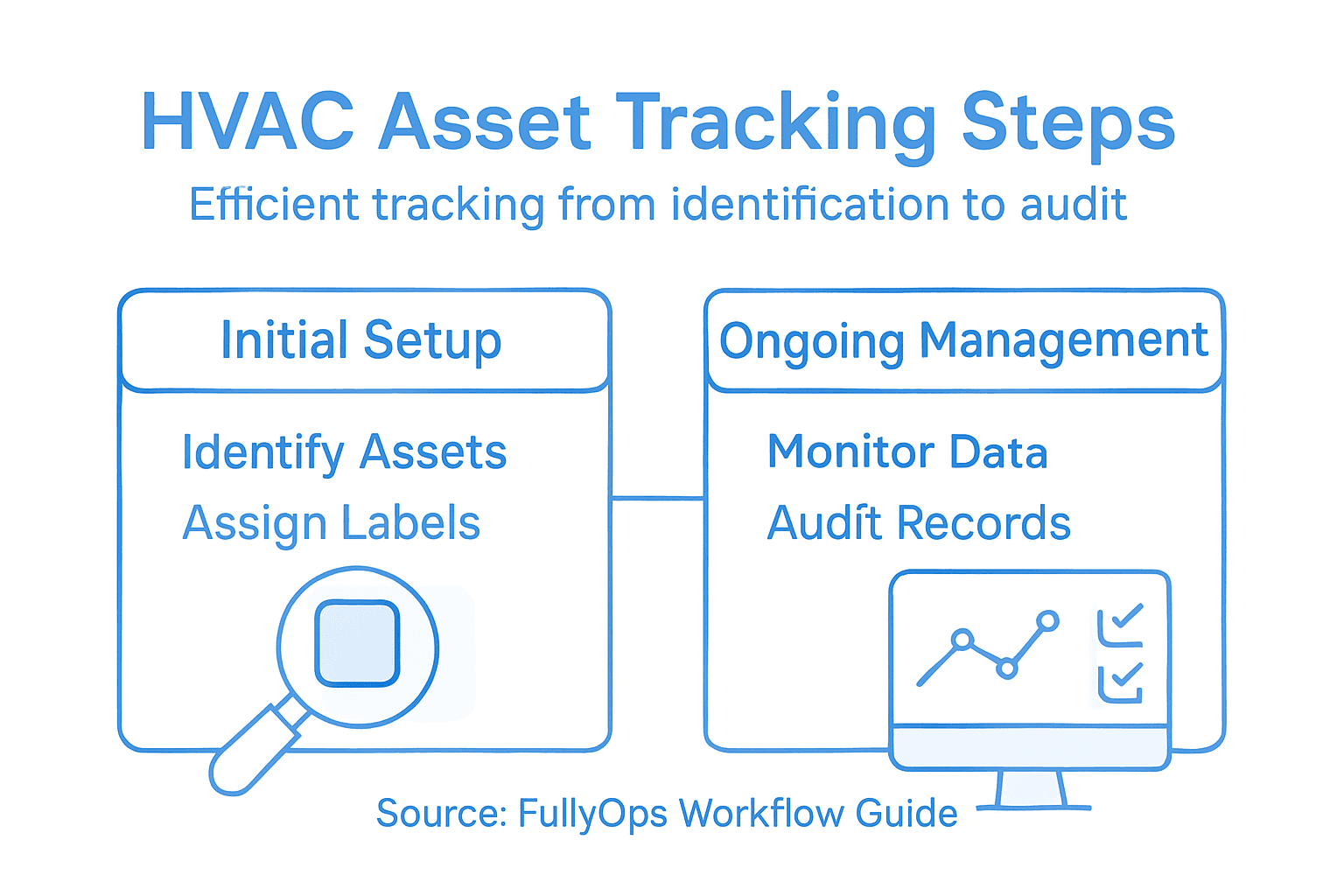
Effective asset tracking involves several key steps: defining asset categories and identifiers, configuring digital tracking tools, inputting and organising asset data, implementing real-time monitoring, and verifying asset accuracy. Start by categorising your equipment and assigning unique identifiers to streamline management.
How can I create a labelling protocol for HVAC assets?
To establish a labelling protocol, select a consistent identifier format such as LOCATION-TYPE-SERIALNUMBER. Ensure that labels are durable and easily readable, and consider using barcode or QR code technologies to enhance tracking capabilities.
What types of technology can be used for digital tracking of HVAC assets?
You can use various technologies such as QR codes for easy scanning, RFID for fast bulk asset recognition, and GPS for real-time location tracking. Implementing a cloud-based asset management system can also centralise access to asset data and streamline operations.
How do I set up real-time monitoring for my HVAC equipment?
To set up real-time monitoring, configure automated sensor data collection, establish alert thresholds, and create reporting dashboards. Ensure that your monitoring workflow allows for mobile access so field technicians can efficiently track equipment status on the go.
What steps should I take for verifying asset accuracy?
To verify asset accuracy, conduct quarterly physical inventory audits and compare digital records with physical assets. Develop standardised audit checklists and establish clear procedures for updating records to maintain data integrity and operational excellence.
How often should I audit my asset data for accuracy?
Conduct quarterly audits of your asset data to ensure its accuracy and reliability. This frequency allows you to identify inconsistencies quickly and keep your records up to date for effective management.
Recommended
- Role of Automation in Asset Management – Transforming HVAC Efficiency
- HVAC Services – FullyOps
- Asset Lifecycle Management – FullyOps
- 7 Steps to a Complete Home HVAC Maintenance Checklist