

Keeping commercial HVAC equipment running smoothly feels like a constant challenge when downtime threatens core operations. For maintenance managers in large companies, aligning preventive maintenance with actual organisational requirements is the foundation of reducing breakdowns and maximising asset performance. By assessing business needs, regulatory pressures, and asset criticality, you build a tailored maintenance strategy that works in your unique context. This guide shows clear steps for evaluating maintenance requirements and driving reliable HVAC asset management worldwide.
Table of Contents
- Step 1: Assess Organisational Maintenance Requirements
- Step 2: Develop Asset-Specific Maintenance Schedules
- Step 3: Assign Tasks And Allocate Resources Efficiently
- Step 4: Implement And Document Preventive Actions
- Step 5: Verify Maintenance Completion And Analyse Results
Quick Summary
| Key Message | Explanation |
|---|---|
| 1. Assess Maintenance Needs | Understand your operations and asset criticality to tailor a preventive maintenance programme effectively. |
| 2. Develop Specific Schedules | Create maintenance schedules based on manufacturer guidelines and actual equipment usage patterns for reliability. |
| 3. Efficient Resource Allocation | Allocate technicians and resources by assessing skills, availability, and maintenance workloads to ensure peak performance. |
| 4. Document and Follow Up Actions | Capture detailed records of maintenance activities, findings, and follow-ups to promote continuous improvement. |
| 5. Analyse Results for Improvement | Regularly review maintenance data and key performance indicators to refine processes and enhance effectiveness. |
Step 1: Assess organisational maintenance requirements
Before you can build an effective preventive maintenance programme, you need a clear picture of what your organisation actually needs. This step involves understanding your current operations, identifying which assets matter most, and determining what resources you have available. Getting this assessment right shapes every decision that follows.
Start by mapping your existing asset inventory and operations. Walk through your facilities and document what equipment you have, when it was installed, and how often technicians interact with it. This isn’t about creating a perfect database on day one. Rather, you’re establishing a baseline understanding of your operational landscape. As you do this, consider the regulatory environment you operate in. Building codes, safety standards, and industry regulations often dictate minimum maintenance frequencies and documentation requirements for HVAC systems. What does your jurisdiction require? What have previous inspections or audits revealed about gaps in your current approach?
Next, evaluate asset criticality by asking yourself which equipment failures would cause the most disruption. In HVAC operations, a rooftop unit serving your primary production floor carries different weight than a backup system in storage. A failed compressor in summer affects customer comfort and liability. A thermostat issue might be inconvenient but manageable. Understanding current maintenance operations and scheduling practices helps you prioritise where preventive efforts deliver the highest return. Map out failure consequences for each asset: what happens operationally, financially, and for customer satisfaction if this equipment breaks down unexpectedly?
Then assess your current resources honestly. How many technicians do you have? What skills do they possess? Do you have in-house expertise for complex diagnostics, or do you rely on external contractors? What’s your spare parts availability? Your maintenance strategy must align with reality, not aspiration. If you have three technicians covering ten buildings, your preventive maintenance programme needs to reflect that constraint. You might focus intensive preventive work on critical assets while using simpler condition monitoring for less critical equipment. Understanding asset lifecycle and maintenance strategy alignment helps ensure your approach remains sustainable across your equipment portfolio.
Finally, gather input from your team. Technicians working in the field know where equipment consistently causes problems and where current procedures waste time. Facility managers understand operational schedules and downtime tolerance. Operations staff can explain seasonal demands and peak usage periods. This cross functional perspective prevents you from building a maintenance programme that looks good on paper but fails in practice. Document what you learn: asset lists, criticality assessments, resource constraints, and input from your team. This documentation becomes your foundation for designing effective preventive maintenance workflows.
Pro tip: Start your asset assessment with your three most critical HVAC systems rather than trying to catalogue everything at once, then expand methodically once you understand the pattern and have established baseline information.
The table below highlights key differences between preventive maintenance and reactive maintenance for organisational HVAC strategies:
| Aspect | Preventive Maintenance | Reactive Maintenance |
|---|---|---|
| Maintenance Timing | Planned and scheduled in advance | Performed after failure occurs |
| Cost Predictability | More predictable ongoing costs | Unpredictable, often higher costs |
| Equipment Reliability | Increased reliability, fewer surprises | Higher risk of unplanned downtime |
| Resource Allocation | Efficient use of staff and materials | Emergency allocation, causes delays |
| Asset Lifespan | Prolonged through regular care | Shortened by neglect and failures |
Step 2: Develop asset-specific maintenance schedules
Now that you understand your organisational needs and asset landscape, it’s time to build the actual schedules that keep your HVAC equipment running reliably. Asset-specific schedules transform general maintenance principles into concrete actions tied to your actual equipment, usage patterns, and operational reality.
Begin with manufacturer guidelines as your foundation. Every HVAC component comes with documented recommendations for filter changes, refrigerant checks, lubrication intervals, and inspection frequencies. These aren’t suggestions; they represent the manufacturer’s engineering specifications for optimal performance. However, manufacturer recommendations alone often miss the mark because they assume average usage conditions. Your rooftop unit in a dusty industrial area doesn’t operate under the same conditions as one in a clean office building. A compressor running continuously during summer peaks differently than one cycling seasonally. Combining manufacturer guidelines with historical performance data allows you to refine schedules based on what actually happens with your specific equipment in your specific environment.
Next, layer in your operational priorities and asset criticality assessment from Step 1. A critical unit serving your main production facility needs more frequent inspections and preventive interventions than a backup system. Consider seasonal demands too. Many facilities intensify preventive work before summer cooling loads or winter heating demands kick in. Schedule your seasonal tune-ups strategically. Spring maintenance before summer stress prevents air conditioning failures when they hurt most. Autumn checks catch heating issues before cold weather arrives. This isn’t just about preventing emergencies; it’s about reliability when it matters most.
Then use historical data and past performance to calibrate frequencies. If your maintenance records show that a particular unit needs filter replacement every four weeks under heavy use, don’t accept the manufacturer’s eight-week recommendation without scrutiny. Conversely, if a component consistently outlasts its recommended interval, you might safely extend it. This data-driven approach prevents over-maintenance that wastes resources and under-maintenance that invites failures. Tracking maintenance tasks through computerised systems gives you the visibility needed to spot patterns and adjust schedules intelligently over time.
Document your final schedules clearly, specifying what work happens, when it happens, and why. Include the technician skills required, parts typically needed, and estimated duration. This clarity ensures consistency across your team and makes workload planning realistic. If you have rotating technicians, they shouldn’t need to decipher confusing schedules. Make schedules accessible and specific. “Quarterly maintenance” means nothing. “Filter inspection and replacement every 30 days, compressor oil analysis every 90 days, refrigerant pressure check every 180 days” means everything. Consider how you’ll execute these schedules practically. Can your team complete all planned work? Do you have spare parts readily available? Your schedule must align with capacity and resources, not aspirations.
Pro tip: Build your schedules conservatively at first, then adjust based on three months of actual execution data, rather than trying to perfect them before implementation.
Step 3: Assign tasks and allocate resources efficiently
With your maintenance schedules in place, you now need to translate them into actual work assignments and ensure you have the right people, tools, and materials available when needed. This step bridges the gap between planning and execution, determining who does what and when, whilst managing your team’s capacity realistically.
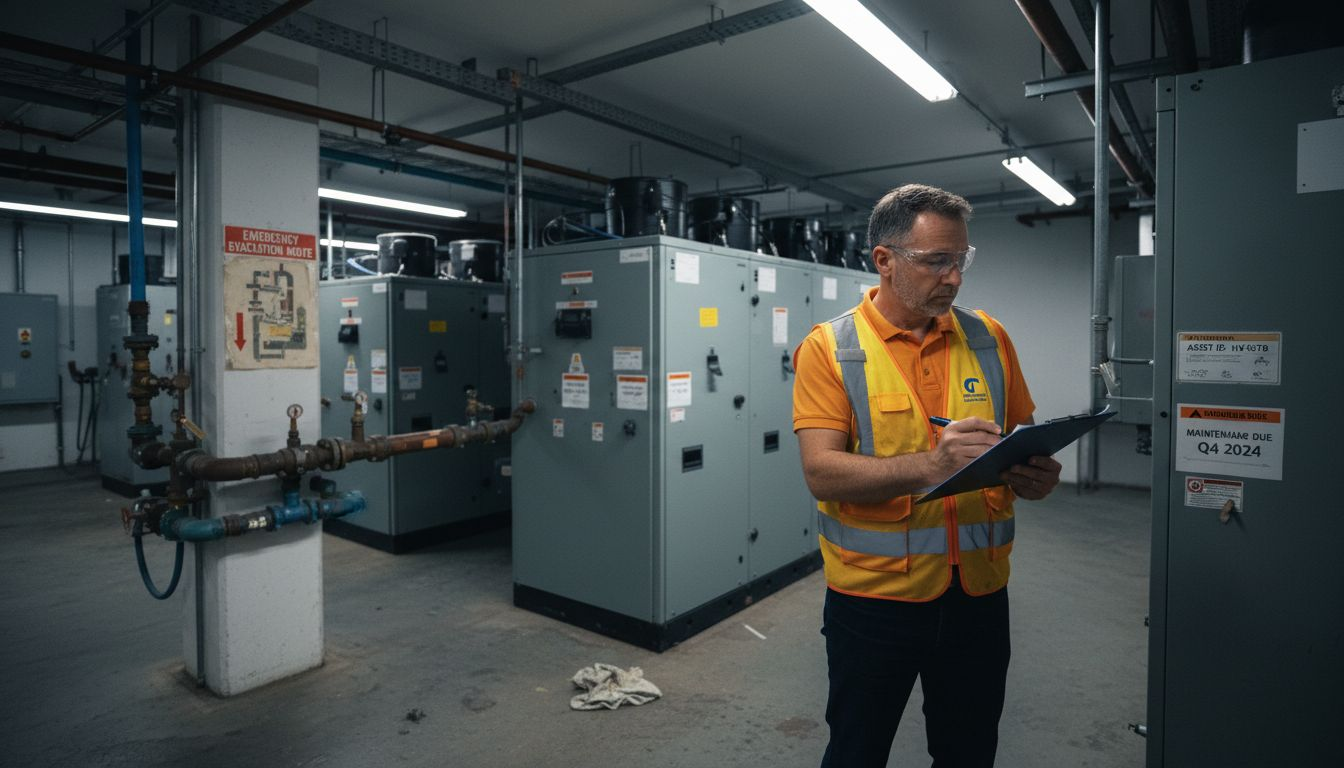
Start by mapping your available resources against your maintenance workload. How many technicians do you have, and what are their skill levels? Some tasks require advanced diagnostics and refrigerant handling certifications. Others are straightforward filter replacements that any trained technician can perform. Create a skills matrix documenting what each team member can do independently, what requires supervision, and what requires external contractors. Similarly, catalogue your tools and equipment. Do you have adequate diagnostic instruments, replacement parts inventory, and access to specialised equipment for complex tasks? Effective task assignment and resource allocation require clear responsibility definitions and prioritisation based on asset criticality. A technician fully booked with minor maintenance on non-critical equipment can’t respond when your critical rooftop unit needs urgent attention.
Next, prioritise tasks using your asset criticality assessment from Step 1. Not all scheduled maintenance happens simultaneously. Schedule critical asset maintenance during periods when you can dedicate experienced technicians without compromising emergency response capability. Preventive work on less critical assets can flex around your team’s availability. Build in buffer capacity. If your team operates at 100 percent utilisation every day, you have zero flexibility when urgent issues arise or when scheduled work takes longer than expected. Aim for 70 to 80 percent utilisation for planned preventive work, leaving room for reactive maintenance and unexpected complications. Consider seasonal workload patterns. Summer air conditioning peaks differ from winter heating demands. Plan your staffing and material procurement around these predictable surges.
Then implement a system for assigning and tracking work. Using computerised maintenance management systems for managing work orders and scheduling technician activities provides visibility into who is doing what, when tasks get completed, and whether you’re staying on schedule. These systems help you avoid duplicate work, prevent missed tasks, and identify bottlenecks in your operations. A technician should know their assigned work for the week, what materials they need, and what skills each task requires. Avoid last-minute assignments that create confusion and reduce efficiency. Schedule work orders with enough lead time for technicians to gather necessary parts and prepare mentally for complex tasks. Include estimated duration on every work order so technicians understand time expectations and you can assess whether workloads are realistic.
Finally, track actual execution against your plan. Do tasks consistently take longer than expected? That tells you your time estimates need adjustment or you need additional training. Are certain technicians finishing quickly whilst others lag? You may have skill gaps or uneven task distribution. Is preventive work consistently getting postponed for reactive issues? You likely need more capacity or better prioritisation. Use this real-world data to refine your resource allocation continuously. Your initial plan won’t be perfect, and that’s fine. What matters is learning from execution and improving.
Pro tip: Assign related maintenance tasks to the same technician on the same day when possible, reducing travel time and material handling whilst building expertise in specific equipment.
Step 4: Implement and document preventive actions
Execution matters, but execution without documentation leaves you flying blind. This step focuses on actually performing your maintenance tasks and capturing detailed records of what was done, what was found, and what needs follow-up. Documentation transforms individual maintenance events into organisational knowledge that improves decision-making over time.
When your technicians go into the field to perform preventive maintenance, ensure they have clear, detailed work orders that specify exactly what needs to happen. Include the equipment location, asset identification numbers, required tasks, safety considerations, and any special instructions based on past issues. Technicians should understand not just the what but the why. If a specific inspection revealed problems before, call that out. If certain components require careful handling, mention it. Provide access to reference materials, whether printed manuals or digital resources on mobile devices. During execution, have technicians follow the documented procedures consistently. Consistency matters because it creates data you can actually rely on. When maintenance follows repeatable steps, you can compare results across time and identify true trends versus anomalies.
Here is where documentation becomes critical. Recording detailed sequences of operations, inspection findings, and maintenance activities enables continuous improvement and reliable execution of preventive work. Every time a technician completes maintenance, they should document what they found, what they did, and what condition the equipment was in when they finished. Did the compressor run smoothly or show vibration? Was refrigerant pressure within normal range? Did filters restrict airflow more than expected? These observations reveal whether your equipment is degrading faster than typical or performing better than anticipated. Use this data to adjust future schedules. Capture parts used, labour hours spent, and any complications encountered. When a job takes twice as long as expected, knowing why helps you estimate future work accurately. Did the technician discover rust that required extra cleaning? Was there a parts shortage? Did training gaps slow progress? Understanding the root cause prevents recurring delays.
Using integrated systems for recording accuracy and accessibility improves asset lifecycle management and ongoing performance monitoring. Whether you use paper forms or digital systems, make data entry easy enough that technicians actually complete it thoroughly. Handwritten notes stuffed in a drawer help no one. Digital systems with mobile access allow real-time data capture and automatic categorisation. They also enable you to track trends across your entire asset portfolio. Which equipment types fail most frequently? Which technicians consistently complete work safely and efficiently? Where do material costs concentrate? This visibility informs investment decisions and training priorities. Ensure documentation captures not just what was done but when it was done and by whom. This traceability matters for compliance, warranty validation, and identifying which procedures work best.
Finally, close the loop on findings. If a technician discovers a problem during preventive maintenance, generate a follow-up work order immediately rather than hoping someone remembers later. If a component is approaching end-of-life based on inspection trends, schedule replacement before failure occurs. If training needs emerge from execution data, schedule training sessions. Documentation only matters if it leads to action. Review your maintenance records regularly with your team. Share patterns and lessons learned. If certain equipment consistently needs attention beyond the scheduled maintenance, discuss why and adjust either the schedule or the procedure. This cycle of execution, documentation, analysis, and adjustment transforms preventive maintenance from a checklist activity into a learning system.
Pro tip: Photograph equipment conditions during maintenance and store images with work order records, creating a visual history that makes deterioration obvious and helps justify capital replacement requests to management.
Step 5: Verify maintenance completion and analyse results
Once your maintenance work is complete, you cannot simply file the paperwork and move on. Verification and analysis separate organisations that drift aimlessly through maintenance from those that continuously improve. This step ensures work actually got done properly and uses the results to inform smarter decisions going forward.
Start by verifying that scheduled maintenance was actually completed. Use checklists and systematic tracking to confirm each task on your work orders received attention. Did the technician complete all specified activities, or did they skip steps due to time pressure or confusion? Cross reference work order sign-offs against your maintenance schedule to identify any gaps. If something didn’t get done, find out why immediately rather than discovering the problem months later when a failure occurs. Was the task genuinely unnecessary? Did resource constraints prevent completion? Was the technician unclear about requirements? Understanding the reason helps you fix systemic issues. Some maintenance will need follow-up work, and that’s normal. A technician might discover a component needs replacement during preventive inspection, generating corrective work. That’s the system working as intended. What matters is closing those loops rather than letting findings languish. Verifying maintenance completion through systematic data collection and performance monitoring ensures your preventive efforts actually translate into improved equipment reliability.
Next, analyse the results against expected performance metrics. Compare actual outcomes to your baseline expectations. Is equipment performing as well as predicted? Are failure rates declining? Energy consumption improving? You established asset criticality and performance targets earlier; now measure whether you are hitting them. Track key performance indicators such as equipment downtime, unplanned repair frequency, and energy efficiency. Using key performance indicators like energy consumption and equipment downtime helps refine maintenance schedules through continuous analysis. If downtime is increasing despite preventive maintenance, something needs adjustment. Maybe your schedule is too infrequent, or perhaps technicians are struggling with execution consistency. If energy consumption remains high, preventive cleaning and tuning might not be addressing the root issue. Conversely, if metrics are improving, document what is working. Which maintenance procedures consistently prevent failures? Which technicians execute work most effectively? Which assets respond best to your preventive approach? Identify your successes as deliberately as you identify problems.
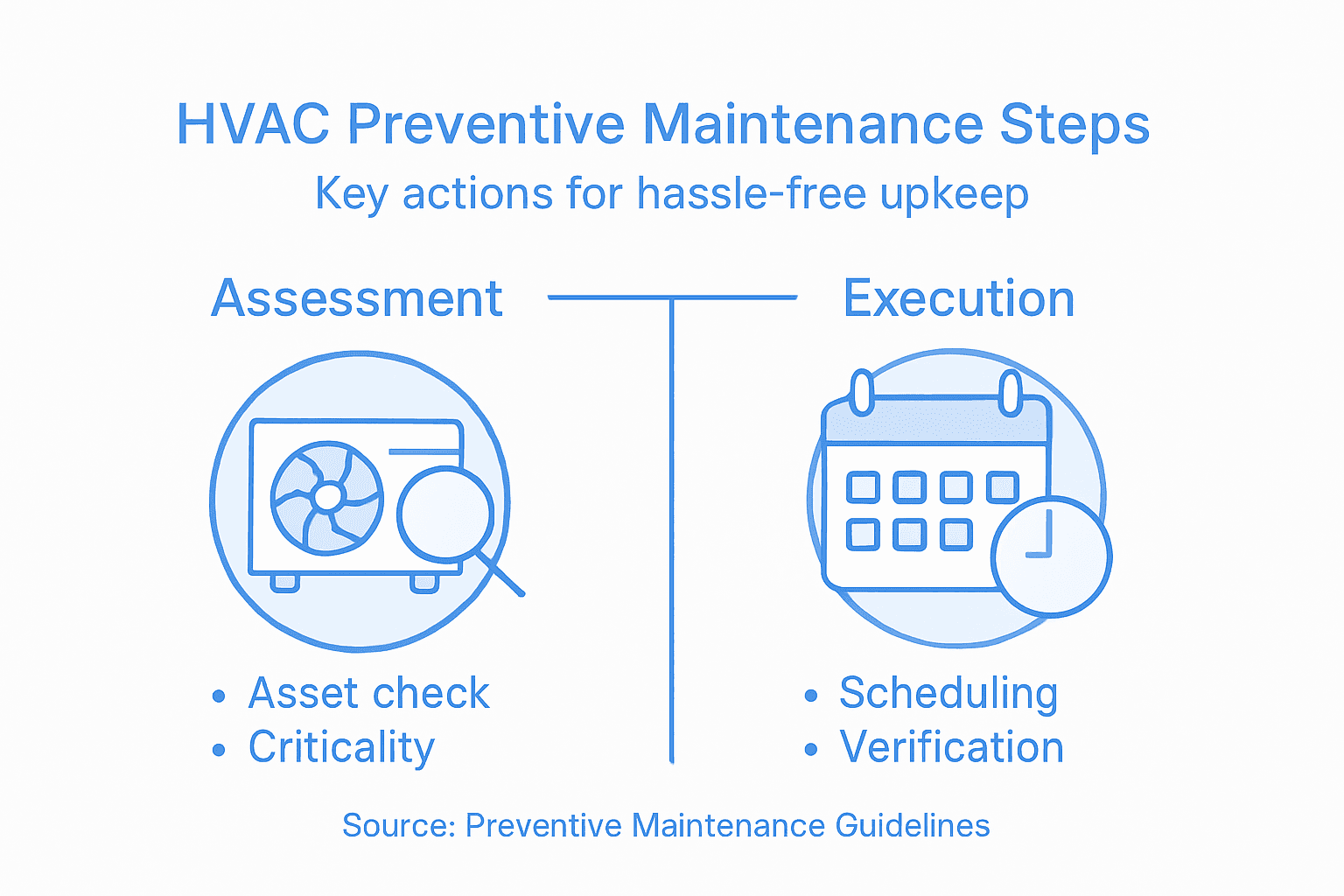
Then compare maintenance costs against benefits. How much are you spending on preventive maintenance? How much are you saving through avoided emergency repairs, extended equipment life, and reduced downtime? If preventive spending is 20 percent of historical emergency repair costs but prevents 80 percent of failures, the programme delivers clear value. If spending is high and failures still occur, you need to recalibrate your approach. Some preventive work might be unnecessary, or your critical assets might need more intensive attention. Use financial analysis to justify programme investment to senior management and to prioritise resource allocation. Review trends over time. Most preventive maintenance programmes show benefits increasing after 12 to 18 months as you refine schedules and improve consistency. Early phases often feel expensive because you are discovering deferred maintenance and building baseline data.
Finally, conduct regular review meetings with your maintenance team to discuss findings and adjust strategies. What patterns emerged from maintenance records? Which equipment types performed better or worse than expected? Did certain technicians develop particularly effective procedures? Share successful practices across your team rather than letting knowledge stay isolated with individual technicians. Discuss failures honestly without blame. If maintenance didn’t prevent a breakdown, understand what went wrong. Was the schedule inadequate? Was the procedure flawed? Did the technician miss something? Use each failure as a learning opportunity. Update your schedules, procedures, or training based on analysis results. This continuous improvement cycle transforms your preventive maintenance process from a static plan into a responsive system that gets progressively better.
Pro tip: Create a simple one-page monthly dashboard showing your key performance indicators and share it with your team; visible trends motivate engagement and make the impact of preventive maintenance obvious to everyone involved.
Below is a summary of the most important key performance indicators (KPIs) for evaluating HVAC maintenance effectiveness:
| KPI | What It Measures | Why It Matters |
|---|---|---|
| Equipment Downtime | Total time assets are non-operational | Indicates reliability improvements |
| Unplanned Repair Incidents | Number of unexpected failures | Reveals schedule effectiveness |
| Energy Consumption | Operational energy usage | Assesses system efficiency upgrades |
| Maintenance Cost vs Savings | Expenditure to emergency cost ratio | Demonstrates programme value |
Unlock the Full Potential of Your HVAC Preventive Maintenance
Mastering preventive maintenance for HVAC assets requires a clear understanding of your organisational needs, asset criticality, and resource constraints. Key challenges such as aligning maintenance schedules with real-world conditions, efficiently allocating technician tasks, and capturing detailed maintenance documentation can overwhelm teams without the right tools. The article emphasises concepts like asset-specific schedules, tracking maintenance completion, and analysing key performance indicators to drive continuous improvement. These goals demand seamless operational oversight and intelligent workflow management.
FullyOps offers a comprehensive SaaS platform designed to streamline these exact challenges. Our solution enables you to optimise work order management, organise technician assignments based on skill and criticality, and automate detailed documentation with real-time data capture. With modules tailored for field technicians, back-office staff, and managers, you gain complete visibility into your preventive maintenance processes from initial planning to performance analysis. This transforms your HVAC maintenance programme from a manual checklist into a dynamic, data-driven system that improves asset reliability and reduces costly downtime.
Take control of your preventive maintenance strategy today. Discover how FullyOps can help you build asset-specific schedules, allocate resources efficiently, and verify maintenance completion with ease by visiting FullyOps. Start enhancing your HVAC operations now for measurable improvements in maintenance efficiency and cost control.
Frequently Asked Questions
How can I assess the maintenance needs of my HVAC assets?
To assess the maintenance needs of your HVAC assets, start by creating an inventory of your equipment and reviewing their operational requirements. Document important details, such as installation dates, maintenance histories, and any regulatory compliance demands, within the next 30 days to establish a solid baseline.
What factors should influence my preventive maintenance schedule for HVAC equipment?
Your preventive maintenance schedule should be influenced by manufacturer guidelines, asset criticality, and historical performance data. Tailor your schedules by considering factors like seasonal demands and documented maintenance needs to maximise efficiency in the next quarter.
How do I prioritise tasks when assigning maintenance for my HVAC systems?
Prioritise tasks based on the criticality of your assets; those that affect core operations should be addressed first. Map out a schedule that allows for intensive maintenance on critical units while flexibly managing less critical tasks to minimise disruptions throughout the year.
What documentation is essential during the execution of preventive maintenance?
During execution, it is essential to document all tasks performed, observations made, and any issues encountered with your HVAC systems. Ensure technicians provide detailed reports and records after each maintenance event to facilitate informed decision-making and ongoing improvements.
How can I verify that my preventive maintenance tasks are completed successfully?
To verify task completion, use checklists and systematic tracking methods to ensure each mandated task is completed as per the work orders. Conduct reviews after each maintenance cycle to analyse deviations and identify opportunities for improving completion rates over the next maintenance period.
What key performance indicators should I track to measure HVAC maintenance effectiveness?
Track indicators such as equipment downtime, unplanned repair incidents, and energy consumption to measure the effectiveness of your HVAC maintenance. Regularly reviewing these performance metrics will help you refine your maintenance strategies, ideally aiming for a reduction in unplanned repairs by up to 30% within a year.
Recommended
- Blog – FullyOps
- Asset Lifecycle Management – FullyOps
- How to Overcome the Challenges of Adopting Preventive Maintenance: A Five-Step Process – FullyOps
- Role of Automation in Asset Management – Transforming HVAC Efficiency
- Why Schedule AC Tune-Ups in Eustis – Protect Home Comfort
- Essential Checklist for Boiler Maintenance: Step-by-Step Guide – Skan Plumbing & Heating