

Managing assets in HVAC and equipment maintenance often means juggling complex systems with little room for error. Efficiency hinges on having real-time access to data and seamless coordination, yet traditional methods frequently slow things down. Embracing cloud-based platforms like SaaS tools makes it simpler to centralise asset tracking, reduce IT headaches, and enable responsive decision-making that keeps equipment running smoothly and downtime low.
Table of Contents
- Defining SaaS And Its Operational Role
- Types Of SaaS Solutions For Asset Management
- Core Features And Workflow Integration Explained
- Key Benefits For Field Service And Maintenance
- Risks, Challenges, And Cost Considerations
- Comparing SaaS With Traditional Tools
Key Takeaways
| Point | Details |
|---|---|
| Operational Flexibility | SaaS transforms how businesses manage software, allowing for reduced costs and simplified IT infrastructure management. |
| Asset Management Solutions | Diverse SaaS platforms streamline asset tracking and maintenance, offering features tailored to specific organisational needs. |
| Workflow Integration | Advanced SaaS solutions enable seamless connections between systems, enhancing operational transparency and efficiency. |
| Cost-Benefit Consideration | A comprehensive analysis of total ownership costs is critical when evaluating SaaS compared to traditional software solutions. |
Defining SaaS and Its Operational Role
Software as a Service (SaaS) represents a transformative cloud computing model that fundamentally changes how businesses access and utilise software applications. By delivering applications via internet infrastructure, SaaS eliminates traditional barriers of software deployment and management.
The operational role of SaaS extends far beyond simple software delivery. It provides organisations with a flexible, scalable approach to technological infrastructure that dramatically reduces upfront investment and ongoing maintenance costs. Key characteristics of SaaS include:
- Subscription-based access model
- Remote software hosting and management
- Automatic updates and maintenance
- Rapid scalability across organisational needs
- Reduced hardware and infrastructure requirements
Unlike traditional software deployment models, SaaS shifts technological burdens directly to service providers. Cloud-based platforms enable businesses to access sophisticated software tools without managing complex technical ecosystems internally. This approach allows operations teams to focus on core business objectives rather than intricate IT infrastructure management.
Operational transformation through SaaS occurs by centralising software management, reducing complexity, and enabling real-time collaboration across distributed teams. By providing flexible, internet-accessible applications, these platforms support dynamic business environments with unprecedented agility.
Pro tip: Evaluate SaaS solutions based on their integration capabilities, not just individual feature sets, to ensure seamless operational workflow transformation.
Types of SaaS Solutions for Asset Management
Asset management SaaS solutions represent a diverse ecosystem of technological platforms designed to streamline tracking, maintenance, and lifecycle management for organisational resources. Cloud-based asset management platforms have evolved to address complex tracking requirements across multiple operational domains.
These solutions typically fall into several distinct categories, each targeting specific organisational needs:
- Computerized Maintenance Management Systems (CMMS)
- Specialised IT Asset Management (ITAM) platforms
- Enterprise-wide asset tracking solutions
- Hybrid environment management tools
- Compliance and cost optimization systems
Specialised tracking platforms provide granular control over different asset types. Mobile-enabled asset management tools offer features like real-time scanning, workflow automation, and comprehensive analytics that enable organisations to monitor physical and digital resources with unprecedented precision.
Enterprise-level SaaS solutions distinguish themselves by offering integrated approaches to asset management. These platforms typically incorporate advanced capabilities such as predictive maintenance scheduling, cost allocation tracking, and seamless integration with existing enterprise resource planning (ERP) systems. By centralising asset information, organisations can make more informed decisions about resource allocation, maintenance scheduling, and long-term strategic planning.

To clarify the advantages and challenges of SaaS asset management solutions, consider the following comparison:
| Aspect | SaaS Asset Management | Traditional Asset Management |
|---|---|---|
| Deployment Time | Rapid, often instant | Weeks or months |
| Updates & Maintenance | Automatic, provider-managed | Manual, IT-led |
| Accessibility | Global, web/mobile access | Local, often limited access |
| Cost Structure | Subscription, lower upfront | Large initial capital outlay |
| Customisation | Usually standardised, scalable | Highly bespoke, less flexible |
| Risk Profile | Third-party data risks | Internal IT security risks |
Pro tip: Prioritise SaaS asset management solutions that offer robust integration capabilities and provide comprehensive reporting functionalities across your entire operational ecosystem.
Core Features and Workflow Integration Explained
SaaS workflow integration represents a sophisticated technological approach that enables organisations to create seamless connections between disparate software systems. API-driven connectivity enables comprehensive workflow synchronisation across multiple operational platforms, transforming how businesses manage complex maintenance processes.
The core features of advanced workflow integration platforms typically encompass several critical elements:
- Automated event trigger mechanisms
- Real-time data mapping capabilities
- Sophisticated error handling protocols
- Scalable connection frameworks
- Comprehensive security infrastructure
Enterprise maintenance workflows demand intricate integration strategies that go beyond simple data transfer. These platforms must support complex interactions between field technicians, back-office teams, inventory management systems, and financial reporting tools. By creating intelligent, interconnected ecosystems, organisations can achieve unprecedented levels of operational transparency and efficiency.
Integration technologies have evolved to provide modular, adaptable solutions that can seamlessly connect diverse software environments. Modern SaaS platforms offer native connectors, third-party integration capabilities, and robust middleware technologies that enable organisations to build custom workflows tailored to their specific operational requirements. The goal is to create a unified technological infrastructure that reduces manual intervention, minimises data inconsistencies, and accelerates decision-making processes.
Pro tip: Prioritise SaaS integration solutions that offer flexible API architectures and comprehensive documentation to ensure smooth implementation across your technological ecosystem.
Key Benefits for Field Service and Maintenance
SaaS technologies are revolutionising field service and maintenance operations by providing transformative solutions that address traditional operational challenges. Rapid deployment strategies significantly improve operational performance by enabling organisations to streamline their maintenance workflows with unprecedented efficiency.
The key benefits for field service and maintenance professionals encompass several critical dimensions:
- Reduced capital expenditure requirements
- Enhanced scheduling and asset tracking capabilities
- Real-time remote diagnostic functionalities
- Data-driven decision-making support
- Scalable technological infrastructure
- Continuous software updates and improvements
Operational transparency emerges as a fundamental advantage of SaaS solutions in maintenance contexts. These platforms enable field technicians to access comprehensive asset histories, diagnostic information, and maintenance schedules from mobile devices, eliminating traditional communication barriers between field and back-office teams. By centralising critical information, organisations can dramatically reduce response times and improve overall service quality.
Advanced SaaS platforms provide maintenance teams with sophisticated analytical tools that transform raw operational data into actionable insights. The ability to track performance metrics, predict potential equipment failures, and optimise resource allocation represents a significant leap forward in maintenance management strategies. These technological capabilities allow organisations to shift from reactive maintenance models to proactive, predictive approaches that minimise downtime and extend asset lifecycles.
Pro tip: Select SaaS maintenance solutions that offer comprehensive integration capabilities and robust reporting features to maximise your operational visibility and decision-making effectiveness.
Risks, Challenges, and Cost Considerations
Enterprise SaaS adoption introduces a complex landscape of strategic considerations that organisations must carefully navigate. Security threats represent the dominant risk perception among technology executives contemplating cloud-based software deployment, requiring comprehensive risk management approaches.
The primary challenges in SaaS implementation encompass several critical domains:
- Data privacy and protection concerns
- Potential vendor lock-in risks
- Integration complexity with existing systems
- Compliance and regulatory alignment challenges
- Hidden implementation and transition costs
- Service availability and reliability uncertainties
Cost considerations extend far beyond simple subscription pricing models. Modern organisations must evaluate total cost of ownership, including infrastructure adaptation, staff training, change management processes, and potential productivity disruptions during technological transitions. These expenses often represent substantial hidden investments that can significantly impact the financial viability of SaaS implementation strategies.
A systematic approach to risk mitigation requires organisations to develop robust evaluation frameworks that assess technological, financial, and operational dimensions. Comprehensive risk assessment methodologies help organisations balance potential benefits against potential vulnerabilities, ensuring that SaaS adoption strategies align with broader strategic objectives and risk tolerance levels.
Here is a summary of typical risk mitigation strategies for SaaS adoption:
| Risk Origin | Mitigation Strategy | Expected Outcome |
|---|---|---|
| Data privacy & security | Encryption, strict vendor vetting | Secure data, compliance alignment |
| Vendor lock-in | Contract review, open APIs | Easier transitions, flexibility |
| Integration complexity | Phased roll-outs, robust APIs | Minimise disruption, compatibility |
| Hidden costs | Detailed cost analysis, budgeting | Predictable expenditure |
Pro tip: Conduct a detailed cost-benefit analysis that includes direct and indirect expenses, and develop a phased implementation strategy to minimise financial and operational risks.
Comparing SaaS with Traditional Tools
Software deployment models represent fundamentally different approaches to technological infrastructure management. Cost-efficiency comparisons reveal significant differences between traditional software and cloud-based SaaS platforms, fundamentally transforming how organisations approach technological investments.
Key differences between SaaS and traditional tools include:
- Deployment speed and complexity
- Initial investment requirements
- Maintenance and update processes
- Scalability and flexibility
- Accessibility and user experience
- Long-term total cost of ownership
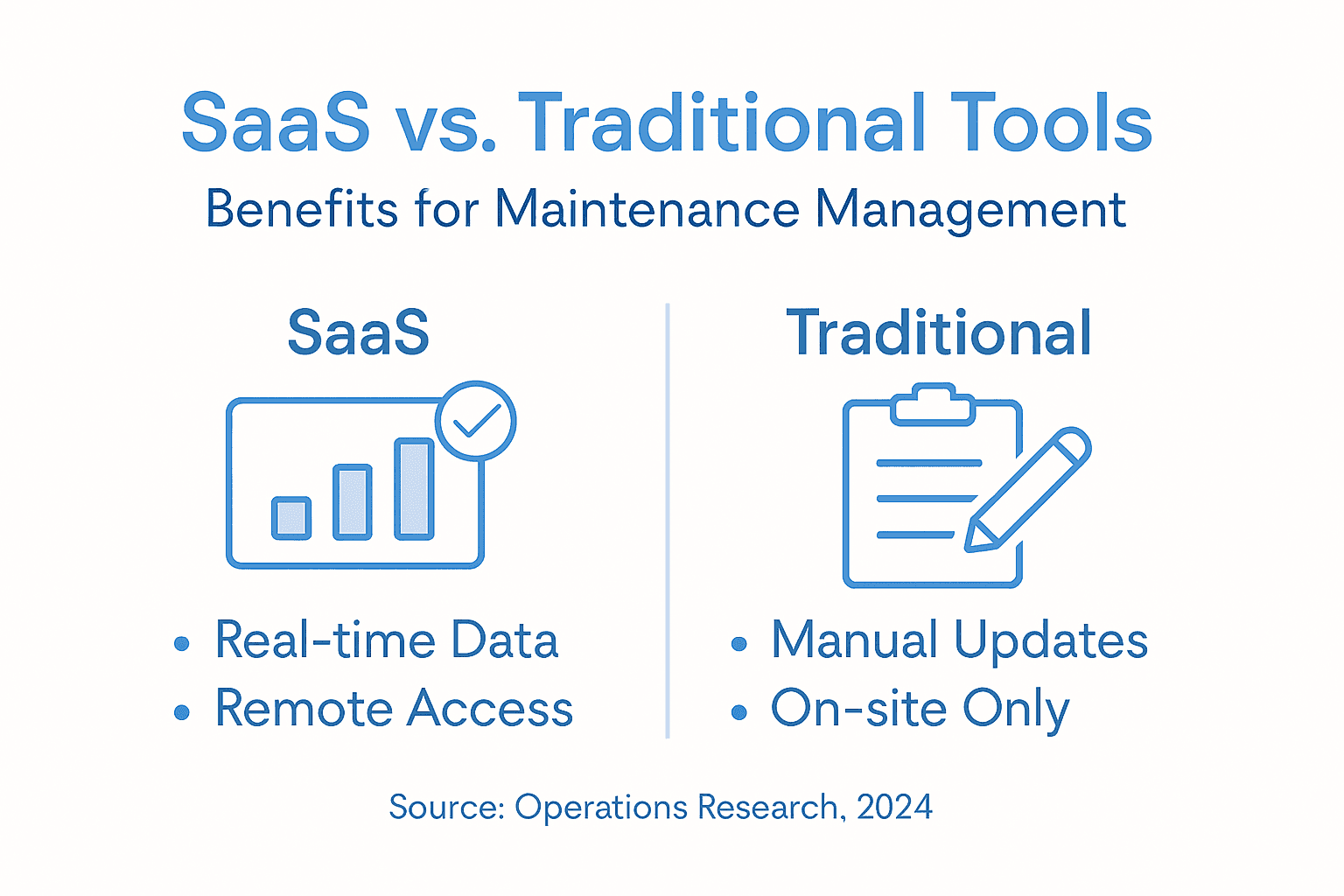
Traditional software deployment requires substantial upfront investments in hardware, infrastructure, and licensing. Organizations must manage complex installation processes, maintain dedicated IT resources, and handle periodic manual updates. These approaches typically involve significant capital expenditure and prolonged implementation timelines that can restrict technological agility.
Comparative software delivery models highlight how cloud-based solutions fundamentally reimagine technological accessibility. SaaS platforms offer subscription-based access, eliminating massive initial investments, providing automatic updates, and enabling rapid scalability across organizational requirements. This approach allows businesses to adapt technological capabilities more dynamically, reducing both financial risk and operational complexity.
Pro tip: Conduct a comprehensive total cost of ownership analysis that considers not just subscription fees, but also implementation, training, and potential productivity gains when evaluating SaaS versus traditional software solutions.
Transform Your Maintenance Operations with FullyOps SaaS Solutions
The article highlights the challenges of managing complex maintenance workflows, ensuring real-time asset visibility, and integrating diverse systems within a fast-paced operational environment. If you find yourself facing issues like limited accessibility to asset data, costly traditional software deployments, or fragmented communication between field teams and back-office staff, these pain points can slow down your maintenance efficiency and increase downtime.
FullyOps offers a comprehensive SaaS platform designed specifically to overcome these obstacles by streamlining work orders, resource allocation, and asset lifecycle management through intelligent and scalable software tools. With features tailored to technicians, managers, and support teams, FullyOps enhances operational transparency and supports predictive maintenance strategies to reduce costs and improve asset reliability.
Explore how FullyOps empowers organisations to automate workflows and gain actionable insights with integrated reporting and real-time oversight. Take control of your field service operations today by visiting our platform to see why medium and large enterprises trust us to transform their maintenance processes. Don’t let outdated systems hold you back; start optimising your asset management and maintenance workflows now.
Frequently Asked Questions
What are the key benefits of using SaaS for maintenance operations?
SaaS for maintenance offers several benefits, including reduced capital expenditure, enhanced scheduling and asset tracking capabilities, real-time remote diagnostics, data-driven decision-making, scalable infrastructure, and continuous software updates. These features significantly improve operational efficiency and service quality.
How does SaaS transform traditional maintenance workflows?
SaaS transforms traditional maintenance workflows by providing cloud-based access to critical information, enabling seamless communication between field technicians and back-office teams. This leads to improved operational transparency, faster response times, and better coordination of maintenance activities.
What are the main risks associated with adopting SaaS for asset management?
The main risks include data privacy concerns, vendor lock-in, integration complexities with existing systems, compliance issues, hidden costs during implementation, and uncertainties regarding service availability and reliability. Organisations should conduct thorough risk assessments before adoption.
How does SaaS compare to traditional asset management tools?
SaaS typically offers faster deployment, lower upfront costs, automatic updates, and better scalability compared to traditional asset management tools, which often require significant initial investment, manual updates, and longer implementation times. This makes SaaS a more agile choice for modern asset management.
Recommended
- Blog – FullyOps
- Asset Lifecycle Management – FullyOps
- Home – FullyOps
- How to Overcome the Challenges of Adopting Preventive Maintenance: A Five-Step Process – FullyOps
- The Essential Guide to Regular HVAC Maintenance – Home Therapist Cooling, Heating, and Plumbing
- Property Maintenance Services Website Features Convert Now
- Plumbing Maintenance Plans: Saving Belleville Homes