

TL;DR:
- Unplanned equipment failures cause significant disruptions, increasing costs and safety risks for facility managers. Implementing preventive maintenance reduces downtime, lowers operational expenses, and prolongs asset lifespan by up to 50%. A structured, human-centered preventive approach forms the foundation for operational safety, efficiency, and long-term asset management.
Unplanned equipment failures are one of the most disruptive and costly challenges facility managers face. When a critical asset breaks down without warning, the consequences extend well beyond the repair bill: production halts, staff productivity collapses, and safety risks escalate. The benefits of preventive maintenance address all of these problems directly, shifting your operation from reactive fire-fighting to structured, proactive asset care. This article covers the core advantages in practical terms, with evidence and comparisons to help you make the case internally and implement the right approach.
Table of Contents
- Key takeaways
- 1. Reduced downtime and increased equipment availability
- 2. Significant cost savings and lower total cost of ownership
- 3. Improved safety and regulatory compliance
- 4. Enhanced operational efficiency and productivity
- 5. Extended asset lifespan and reduced capital expenditure
- 6. Comparison with reactive and predictive maintenance approaches
- My perspective on why preventive maintenance still wins
- How Fullyops helps you put these benefits into practice
- FAQ
Key takeaways
| Point | Details |
|---|---|
| Downtime reduction | Scheduled maintenance significantly lowers the frequency of unplanned equipment failures and production losses. |
| Cost savings | Organisations can save up to 30% on operational expenses through consistent preventive maintenance programmes. |
| Safety improvement | Preventive protocols reduce workplace incidents by up to 40%, limiting liability and protecting staff. |
| Equipment lifespan | Proactive maintenance can extend asset life by up to 50%, reducing capital expenditure on replacements. |
| Strategic fit | Preventive maintenance forms the foundation of maintenance maturity and integrates well with predictive methods. |
1. Reduced downtime and increased equipment availability
The most direct of all preventive maintenance benefits is the reduction in unplanned downtime. When you schedule inspections, lubrication, filter replacements, and component checks at regular intervals, you intercept the conditions that cause sudden failures. The difference between a planned two-hour maintenance window and an unplanned eight-hour breakdown is substantial, both in production output and in workforce morale.
Diagnostic tools and data analytics allow early detection of potential problems before they escalate. For facility managers overseeing multiple assets, this means fewer emergency calls, more predictable scheduling, and greater confidence in meeting service level agreements.
Practical scheduling strategies that support this include:
- Time-based intervals: Service equipment at fixed calendar intervals based on manufacturer guidelines and usage history.
- Usage-based triggers: Schedule maintenance after a defined number of operating hours, cycles, or output units.
- Seasonal checks: Align inspections with operational peaks, such as HVAC servicing before summer or heating systems before winter.
- Priority tiering: Focus highest-frequency checks on assets whose failure causes the greatest operational disruption.
Pro Tip: Map your assets by criticality before building your maintenance schedule. Assets that sit on the critical path of production or safety should receive the shortest inspection intervals, regardless of their age.
2. Significant cost savings and lower total cost of ownership
The financial case for preventive maintenance is clear and well-supported. Organisations save up to 30% on operational expenses by adhering to scheduled repairs and inspections rather than waiting for failures to occur. Emergency repairs are not just expensive in parts and labour. They typically require overtime, expedited parts delivery, and sometimes specialist contractors called in at short notice, all of which inflate costs dramatically.
The comparison between reactive and preventive approaches shows a consistent pattern across industries:
| Cost factor | Reactive maintenance | Preventive maintenance |
|---|---|---|
| Emergency labour rates | High (overtime common) | Low (planned during normal hours) |
| Parts cost | Premium (urgent sourcing) | Standard (planned procurement) |
| Equipment lifespan | Shortened by repeated stress | Extended by up to 50% with proactive care |
| Replacement frequency | Higher | Lower |
| Total cost of ownership | Higher over time | Lower over asset lifecycle |
Beyond individual repairs, preventive maintenance reduces the frequency of full asset replacement. Regular attention to lubrication, calibration, and component wear means assets operate within designed parameters for longer, protecting your capital expenditure budget.
Key cost-reduction mechanisms include:
- Fewer unplanned failures reducing expensive reactive call-outs
- Controlled spare parts procurement rather than emergency sourcing
- Extended asset lifecycles deferring capital replacement spend
- Lower insurance premiums in some sectors due to reduced incident risk
Pro Tip: Track your cost-per-asset over time. Facilities that log both planned maintenance spend and reactive repair costs often discover that two or three high-failure assets account for the majority of their emergency budget. Targeting those assets first with structured preventive schedules delivers disproportionate savings.
3. Improved safety and regulatory compliance
Safety is a non-negotiable dimension of the preventive maintenance importance argument. Well-maintained equipment is predictable equipment. Worn components, degraded insulation, and overdue calibrations are all failure modes that create genuine hazards for staff. Preventive protocols reduce workplace incidents by up to 40%, which translates directly into lower liability exposure and fewer regulatory interventions.
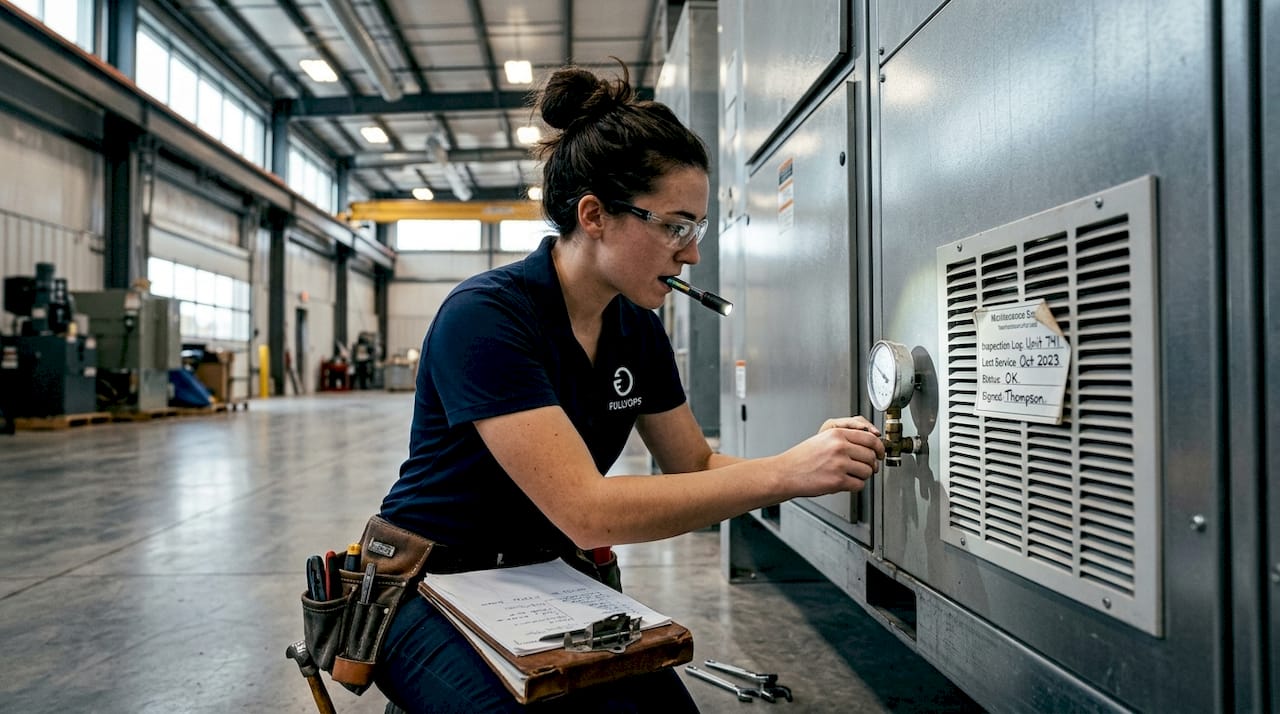
Facilities that adopt condition monitoring as a complement to scheduled maintenance report fewer arc-flash incidents and near misses, particularly around power distribution components. Early fault detection means faults are addressed before they become hazardous events.
Safety-critical tasks that belong in every preventive maintenance programme include:
- Electrical insulation resistance testing on motors and switchgear
- Pressure relief valve inspections on compressed air and hydraulic systems
- Fire suppression system checks and alarm testing
- Guarding and interlock verification on moving machinery
- Structural integrity checks on lifting equipment and access platforms
Regulatory frameworks in the UK, including those under the Provision and Use of Work Equipment Regulations and the Electricity at Work Regulations, require documented evidence of systematic equipment inspection. Preventive maintenance records serve as that evidence directly.
Regular, documented maintenance is not simply a best practice. It is the operational backbone of compliance, and facilities without it face both safety risk and legal exposure.
4. Enhanced operational efficiency and productivity
Well-maintained equipment runs at its designed performance specification. Equipment that is overdue for service consumes more energy, produces more waste, operates more slowly, and creates quality inconsistencies that ripple downstream. The impact of preventive maintenance on operational efficiency is measurable and significant.
Consider these connected efficiency gains:
- Energy consumption: HVAC units and motors with clean filters, calibrated controls, and properly tensioned belts consume noticeably less energy. Poorly maintained equipment can consume 10 to 25% more electricity than its rated specification.
- Staff productivity: Research links well-maintained equipment to a 20% increase in staff productivity by removing disruptions that cause idle time and rework.
- Output quality: Precision equipment that drifts out of calibration produces substandard output. Regular checks keep machinery within tolerance, reducing scrap rates and rework costs.
- Bottleneck prevention: A single poorly maintained asset on a production line can throttle output for the entire operation. Scheduled attention to those assets keeps throughput consistent.
- Planned resource use: When maintenance is scheduled, technicians arrive prepared with the correct tools, parts, and procedures. That efficiency compounds across a large asset portfolio, reducing time-per-task and improving first-time fix rates.
Understanding the preventive maintenance process for HVAC assets is a practical starting point for facilities with large climate control portfolios, where energy savings from proactive upkeep are often among the most immediately visible gains.
5. Extended asset lifespan and reduced capital expenditure
Every asset has a theoretical design life, but actual lifespan depends heavily on how it is treated in operation. Reactive maintenance allows stress, contamination, and component wear to accumulate unchecked, shortening that lifespan considerably. Preventive maintenance, by contrast, keeps assets operating within designed parameters across their full lifecycle.
Proactive maintenance extends equipment life by up to 50% compared to reactive approaches. For capital-intensive assets such as industrial compressors, HVAC plant, or CNC machinery, that extension translates directly into deferred replacement spend and better return on the original investment.
The cumulative effect of this is significant for capital planning. When your maintenance programme reliably extends asset life, you can push back replacement cycles, reduce the frequency of capital approval requests, and re-allocate budget to operational improvements rather than emergency replacements. Reviewing essential preventive maintenance steps for your most capital-intensive assets is one of the most financially impactful decisions a facility manager can make.
6. Comparison with reactive and predictive maintenance approaches
Choosing a maintenance strategy is not always a binary decision, but understanding the differences helps you allocate resources intelligently. About 71% of maintenance professionals use scheduled preventive maintenance as their primary strategy. Only 18% have adopted condition-based maintenance, despite its documented benefits.
| Dimension | Reactive maintenance | Preventive maintenance | Predictive maintenance |
|---|---|---|---|
| Trigger | Failure occurs | Fixed schedule or usage | Real-time condition data |
| Downtime type | Unplanned, disruptive | Planned, minimal | Minimal, data-driven |
| Initial cost | Low | Moderate | High |
| Equipment lifespan | Shortened | Extended | Maximised |
| Data requirement | None | Basic logs | Sensors and analytics |
| Best suited to | Low-criticality assets | Most operational assets | High-value or high-risk assets |
Scheduled preventive maintenance reduces unplanned downtime risk without the significant infrastructure investment that condition-based monitoring requires. For most facilities, preventive maintenance covers the bulk of the asset portfolio cost-effectively, while predictive tools can be layered on top for the highest-criticality assets. Exploring predictive maintenance approaches in more depth helps clarify where that boundary sits for your specific operation.
My perspective on why preventive maintenance still wins
I’ve worked with enough facility teams to know that the appeal of advanced technology can sometimes distract from fundamentals. Condition monitoring sensors, AI-driven failure prediction, and digital twin modelling are genuinely useful tools. But I’ve seen operations invest heavily in these capabilities while their basic preventive schedules are incomplete, inconsistently executed, or undocumented.
The ISO 55000 standard is instructive here. It frames asset management not as a set of compliance checkboxes but as a strategic discipline aligned to organisational goals. Chasing technology without that alignment produces impressive dashboards and poor outcomes.
What actually moves the needle, in my experience, is a structured preventive programme with genuine organisational commitment. Investing in staff training on routine checks builds accountability and improves asset condition over time. That human-centred approach, where technicians understand why each check matters rather than just executing a task list, is what separates facilities with strong maintenance performance from those that perpetually firefight.
Preventive maintenance forms the foundation of maintenance maturity. Adding predictive tools on top of a weak preventive base delivers far less value than strengthening the preventive foundation first. Get that right, document it well, and the case for additional investment in advanced monitoring becomes far easier to build.
— Pedro
How Fullyops helps you put these benefits into practice
The benefits covered in this article only materialise when your maintenance programme is consistently executed and properly managed. Fullyops is built specifically to support that execution, giving facility managers and operations teams the tools to plan, track, and analyse their preventive maintenance activities in one place.
With Fullyops, you can manage work orders and reduce downtime through structured workflows, keep spare parts available with integrated inventory tracking, and monitor asset performance over time with operational analytics. For teams selecting or evaluating the right digital infrastructure, Fullyops has also published a guide on maintenance software options for industrial companies to help you make an informed choice. Whether you are starting from scratch or looking to improve an existing programme, Fullyops provides the operational visibility and process structure to turn preventive maintenance from a good intention into a reliable system.
FAQ
What are the main benefits of preventive maintenance?
The primary benefits include reduced unplanned downtime, lower repair costs, extended equipment lifespan, improved safety, and better regulatory compliance. Organisations that adopt structured preventive programmes can save up to 30% on operational expenses.
How does preventive maintenance reduce costs?
It reduces costs by preventing expensive emergency repairs, enabling planned procurement of spare parts at standard rates, and extending asset life by up to 50%, which defers capital replacement expenditure.
Is preventive maintenance better than reactive maintenance?
For most operational assets, yes. Reactive maintenance is cheaper initially but generates higher total costs over time through emergency labour, premium parts sourcing, shortened equipment lifespans, and unplanned production losses.
How does preventive maintenance support safety compliance?
Systematic inspection and documentation of equipment condition directly supports compliance with regulations such as the Electricity at Work Regulations. Preventive protocols reduce workplace incidents by up to 40% by addressing fault conditions before they become hazardous.
How often should preventive maintenance be carried out?
Frequency depends on asset criticality, manufacturer recommendations, and usage intensity. High-criticality assets typically require shorter intervals, while lower-priority equipment may be maintained seasonally or at fixed usage thresholds.
Recommended
- Why use preventive maintenance? Cut downtime by 30%
- Essential preventive maintenance steps: maximise reliability