

Gérer des centaines d'actifs sur un site de production animé submerge souvent les équipes de maintenance sous les paperasses et les oblige à réagir aux pannes de dernière minute. Sans système centralisé, des informations de maintenance importantes se perdent dans les fils d'e-mails et les registres manuels, retardant les réparations et risquant des pannes imprévues. Un système de gestion de la maintenance assisté par ordinateur moderne rassemble toutes les données et les flux de travail de maintenance en un seul endroit, transformant les tâches disparates en une source unique de vérité qui permet de prendre de meilleures décisions et de réduire les temps d'arrêt coûteux. Grâce aux outils prédictifs et à la vision en temps réel, chaque action de maintenance devient intentionnelle, opportune et alignée sur l'ensemble de vos opérations.
Table des matières
- GMAO définie dans la gestion moderne de la maintenance
- Fonctions clés et types de plateformes CMMS
- Bénéfices Clés : Du Temps d'Arrêt aux Temps de Disponibilité Pilotés par les Données
- Intégration d'un GMAO avec les technologies de l'Industrie 4.0
- Risques, pièges courants et meilleures pratiques
Principaux enseignements
| Point | Détails |
|---|---|
| Centralisation CMMS | Un système de gestion de la maintenance assisté par ordinateur rationalise les opérations de maintenance en centralisant les données des actifs, les ordres de travail et les flux de travail pour une efficacité accrue. |
| Maintenance proactive | En tirant parti de technologies avancées telles que l'IA et l'IoT, la GMAO permet une maintenance proactive, prévenant les pannes d'équipement imprévues et optimisant l'utilisation des ressources. |
| Décisions fondées sur des données | Les informations en temps réel fournies par la GMAO permettent aux équipes de maintenance de prendre des décisions éclairées concernant les réparations, la conformité et la gestion globale des actifs. |
| Bonnes pratiques d'implémentation | Une mise en œuvre réussie d'un GMAO nécessite une planification complète, une formation et la participation des parties prenantes pour surmonter les écueils courants et assurer l'engagement de l'équipe. |
CMMS défini dans la gestion moderne de la maintenance
A Système de Gestion de la Maintenance Assistée par Ordinateur (GMAO) Voici le texte traduit en français : Il s'agit d'un logiciel qui centralise les opérations de maintenance en gérant les bons de travail, les données des actifs et les flux de travail de maintenance en un seul endroit. Plutôt que de jongler avec des feuilles de calcul et des registres éparpillés, votre équipe de maintenance accède à des informations en temps réel qui maintiennent tout le monde aligné.
A la base, Un GMAO automatise les opérations de maintenance essentielles tout en gérant la charge administrative qui ralentit les équipes. Les plateformes modernes intègrent des technologies avancées comme l'intelligence artificielle et l'apprentissage automatique pour prédire les défaillances avant qu'elles ne se produisent, faisant passer votre exploitation de la lutte réactive contre les incendies à la planification proactive.
Considérez-le comme votre centre de commande de maintenance. Chaque demande de travail, pièce de rechange, historique d'équipement et action du technicien passe par le système. Cela crée une piste d'audit complète et permet de prendre des décisions basées sur les données concernant vos actifs.
Pourquoi la GMAO est plus importante que jamais
Les usines de fabrication gèrent des centaines ou des milliers d'actifs simultanément. Sans système centralisé, les informations critiques se perdent dans des chaînes d'e-mails et des journaux papier. Les pannes surviennent au pire moment car personne ne sait quand le matériel a été entretenu pour la dernière fois.
Un GMAO résout ce problème en fournissant :
- Données centralisées des actifs – historique complet de l'équipement accessible instantanément
- Planification automatisée – les tâches de maintenance se déclenchent à des moments prédéfinis ou en fonction de l'état de l'équipement
- Gestion des ordres de travail – les techniciens reçoivent des instructions claires avec des listes de pièces et des procédures de sécurité
- Documentation de conformité – enregistrement automatique des données de maintenance pour les audits et la réglementation
- Visibilité des performances – identifier les actifs qui consomment des ressources et ceux qui fonctionnent de manière fiable
Un GMAO transforme la maintenance d'un centre de coûts en un avantage stratégique en prévenant les temps d'arrêt imprévus et en prolongeant la durée de vie des actifs.
Lors du choix de la bonne approche pour votre exploitation, comprendre comment choisir un logiciel de gestion de la maintenance assurez-vous de mettre en place un système qui correspond à la complexité de votre installation et à vos plans de croissance.
L'évolution des feuilles de calcul à l'intelligence
Les premières plateformes de GMAO, développées dans les années 1960, se contentaient de numériser les enregistrements de maintenance. Les systèmes actuels font bien plus. Ils collectent des données de capteurs en temps réel provenant des équipements, analysent les modèles et recommandent des fenêtres de maintenance optimales avant que des pannes ne surviennent.
Cette évolution reflète la façon dont la gestion de la maintenance elle-même a changé. Votre exploitation exige désormais une rapidité, une précision et une prévisibilité qu'aucun tableur ne peut offrir.
Conseil de pro : Commencez par cartographier votre processus de maintenance actuel avant de sélectionner un logiciel de GMAO : comprendre les lacunes de votre flux de travail garantit que vous choisissez un logiciel qui résout réellement vos problèmes plutôt que d'ajouter de la complexité.
Fonctions clés et types de plateformes CMMS
Les plateformes CMMS offrent une gamme de fonctionnalités clés qui transforment le fonctionnement des équipes de maintenance. La capacité la plus critique est gestion des ordres de travail—les techniciens reçoivent des tâches numériques avec des spécifications, des listes de pièces et des procédures de sécurité plutôt que de chercher des informations.
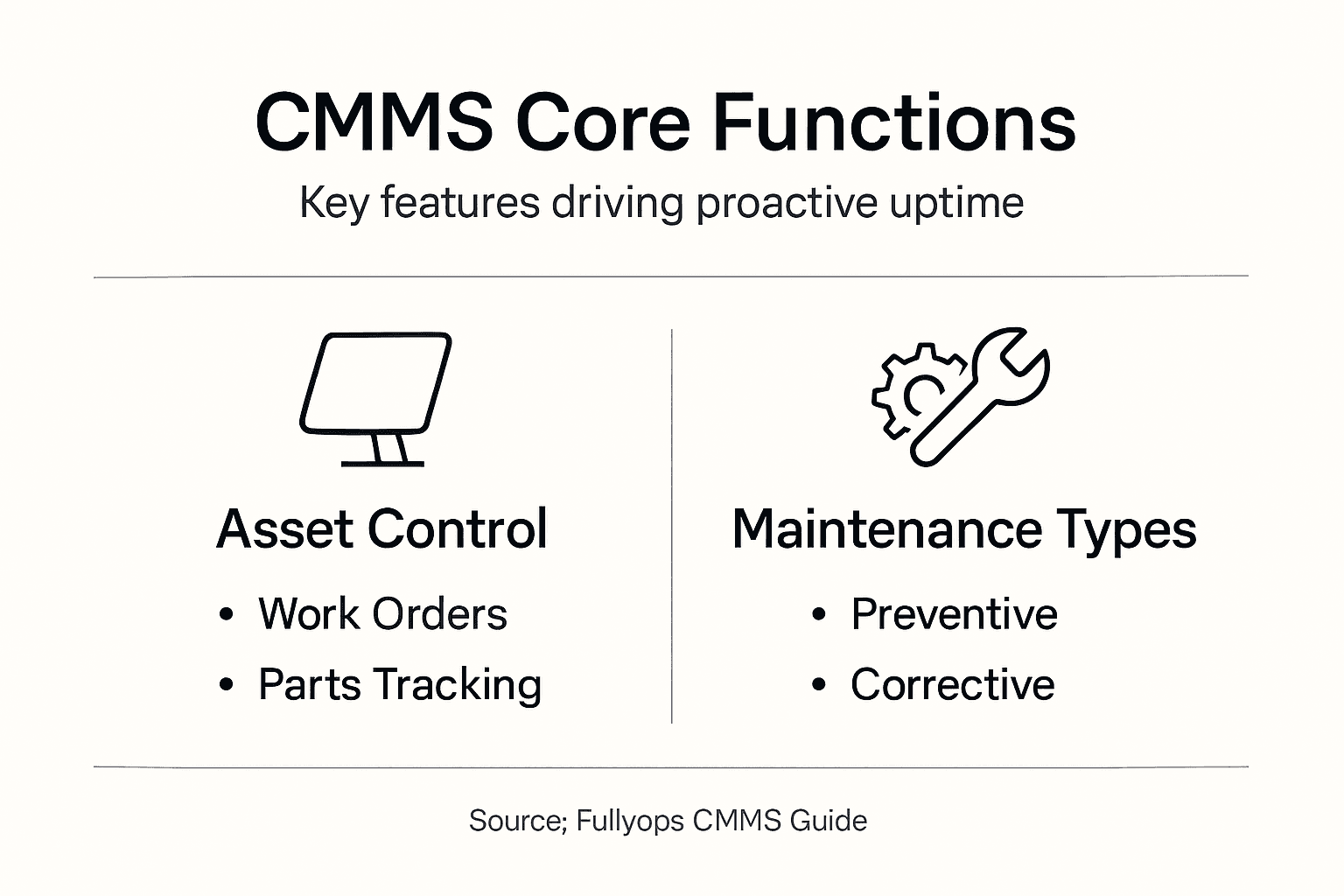
Au-delà des bons de travail, les systèmes GMAO modernes gèrent automatiquement la planification de la maintenance préventive et corrective. Au lieu de vérifier manuellement quand un équipement a été entretenu pour la dernière fois, le système déclenche les tâches de maintenance en fonction d'intervalles de temps ou de l'état de l'équipement.
Fonctionnalités de base que tout logiciel de GMAO devrait offrir
Votre opération de maintenance repose sur plusieurs fonctions interconnectées fonctionnant ensemble de manière transparente :
- Gestion des actifs – inventaire complet de l'équipement avec historiques de maintenance et données de performance
- Planification de la maintenance préventive – rappels automatiques pour l'entretien de routine avant que des pannes ne surviennent
- Suivi des stocks – gestion des pièces de rechange pour que les techniciens aient ce dont ils ont besoin sans délai
- Rapports et analyse – visibilité sur les coûts de maintenance, la fiabilité des équipements et la productivité de l'équipe
- Documentation de conformité – enregistrement automatique des actions de maintenance pour les audits et les exigences réglementaires
Les plateformes de GMAO rationalisent les tâches critiques qui consommeraient autrement des heures de travail administratif par semaine, libérant ainsi les techniciens pour qu'ils se concentrent sur les réparations d'équipement réelles.
Types de GMAO : Du simple au sophistiqué
Toutes les installations de fabrication n'ont pas besoin de capacités identiques. La diversité des solutions de GMAO vous permet de choisir une plateforme correspondant à vos besoins spécifiques.
Systèmes de base concentrez-vous sur le traitement essentiel des bons de travail et le suivi des actifs. Ceux-ci conviennent aux petites opérations ayant des besoins de maintenance simples et des budgets limités.
Plateformes de milieu de gamme ils intègrent la planification de la maintenance préventive, la gestion des stocks et des rapports de base. Ils s'intègrent aux systèmes existants et évoluent en fonction de la croissance de votre entreprise.
Solutions avancées intégrer l'intelligence artificielle, les capteurs de l'Internet des Objets et l'analytique prédictive. Ces systèmes recommandent des fenêtres de maintenance optimales avant que l'équipement ne tombe en panne, transformant la maintenance d'une approche réactive à une approche véritablement proactive. La création automatisée des ordres de travaux et la planification des ressources deviennent des processus intelligents qui anticipent les besoins.
Comprendre comment fonctionnent les flux de travail de maintenance des actifs vous aide à déterminer quel type de plateforme correspond au niveau de maturité et à la trajectoire de croissance de votre entreprise.
Le tableau suivant compare les principaux types de GMAO, vous aidant à choisir celui qui convient le mieux :
| Type de GMAO | Idéal pour | Technologies clés | Résultat commercial typique |
|---|---|---|---|
| De base | Petites installations, petits budgets | Suivi des ordres de travail, journaux d'actifs simples | Communication simplifiée, paperasserie réduite |
| Milieu de gamme | Sites de croissance, complexité croissante des actifs | Planification automatisée, suivi des stocks | Moins de pannes, meilleure planification des ressources |
| Avancé | Opérations de grande envergure ou complexes | IA, IoT, analyse prédictive | Disponibilité maximale, maintenance proactive, réduction des coûts |
Intégration avec vos systèmes existants
Les plateformes CMMS modernes ne fonctionnent pas isolément. Les systèmes de planification des ressources d'entreprise, les outils de gestion d'actifs et les bases de données opérationnelles doivent tous communiquer de manière transparente.
Cette intégration crée une vue holistique de la santé des actifs dans l'ensemble de votre installation. Les données de maintenance sont directement intégrées dans les systèmes financiers pour une analyse précise des coûts. Les plannings de production sont synchronisés avec les activités de maintenance afin de minimiser les temps d'arrêt imprévus.
Conseil de pro : Cartographiez vos systèmes actuels avant de sélectionner un GMAO — assurez-vous que la plateforme s'intègre à vos systèmes existants de GPAO, de planification de la production et de gestion des stocks afin d'éviter de créer des silos de données isolés.
Bénéfices Clés : De l'Indisponibilité à la Disponibilité Basée sur les Données
Les pannes d'équipement imprévues coûtent des milliers de livres par heure aux usines de fabrication. Les machines restent inactives en attendant les réparations. Les calendriers de production sont retardés. Les livraisons aux clients manquent leurs échéances. CMMS change entièrement cette équation en faisant passer votre exploitation de la gestion de crise réactive à la gestion stratégique du temps de fonctionnement.
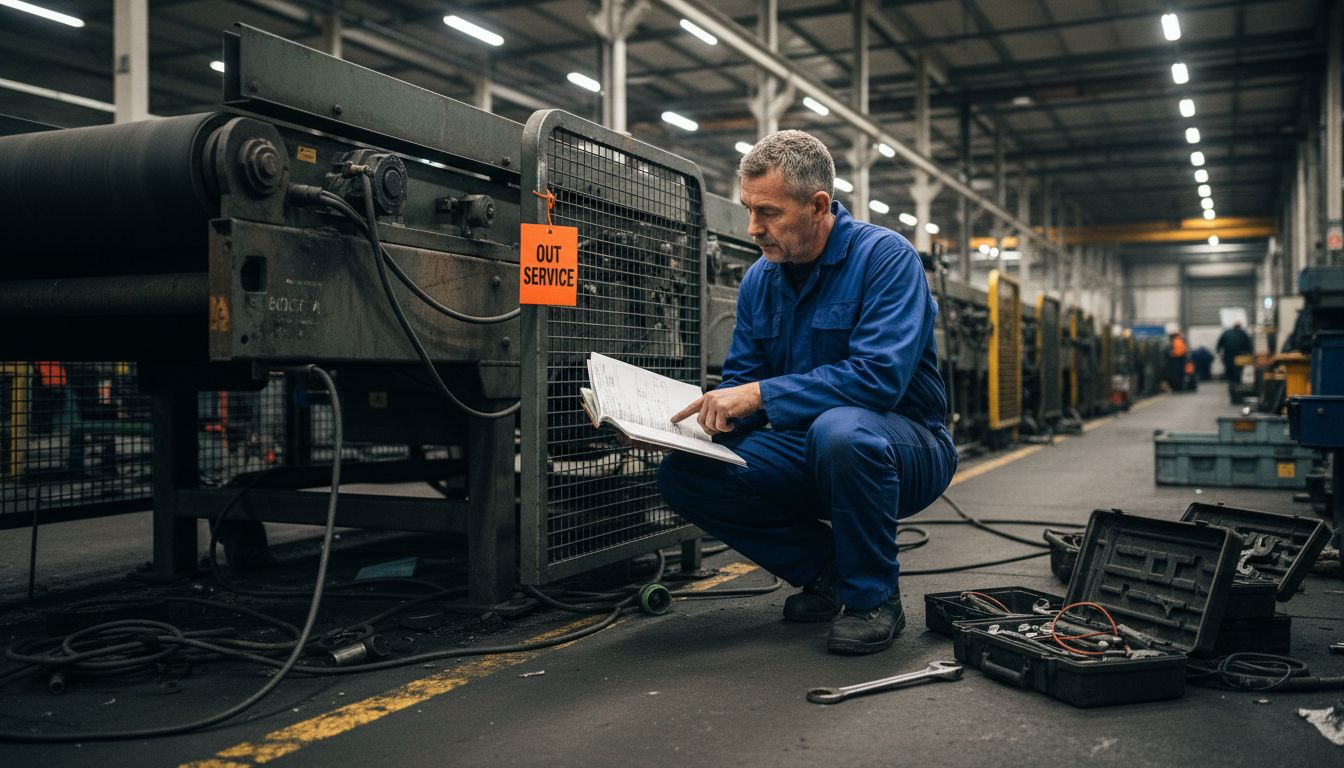
La transition commence par la visibilité. Lorsque chaque action de maintenance transite par un système centralisé, vous obtenez une vision en temps réel de l'état de l'équipement dans l'ensemble de votre installation. Cette visibilité transforme la maintenance, passant de l'intuition à une prise de décision basée sur les données.
Comment un GMAO réduit les pannes imprévues
La maintenance réactive consiste à attendre que l'équipement tombe en panne avant d'agir. La GMAO permet des stratégies proactives qui préviennent les défaillances avant qu'elles ne se produisent.
Planification de la maintenance préventive déclenche automatiquement l'entretien en fonction d'intervalles de temps ou de l'état de l'équipement. Les techniciens effectuent la maintenance de routine pendant les temps d'arrêt planifiés plutôt que de s'affairer pendant les périodes de production de pointe. Cette approche systématique prolonge considérablement la durée de vie de l'équipement.
Les avantages s'accumulent rapidement :
- Pannes inattendues minimisées - l'équipement tombe moins souvent en panne car la maintenance se fait avant les défaillances critiques
- Prolongation de la durée de vie des actifs – L'entretien régulier permet aux machines de fonctionner plus longtemps, retardant les coûts de remplacement
- Réparations d'urgence réduites – moins d'appels de crise signifient moins de dépenses en heures supplémentaires et moins de stress pour les équipes
- Meilleure continuité de production – la maintenance programmée s'adapte aux calendriers de production au lieu de les perturber
Un GMAO transforme les temps d'arrêt des équipements d'une crise imprévisible en une activité gérée et planifiée qui s'intègre à votre rythme opérationnel.
Prise de décision basée sur les données
Les plateformes CMMS modernes n'enregistrent pas seulement ce qui s'est passé : elles analysent les tendances et recommandent les actions optimales. Des analyses perspicaces sur les performances des actifs montrent quels équipements épuisent les ressources, lesquels fonctionnent de manière fiable et quand les fenêtres de maintenance sont financièrement judicieuses.
Votre équipe accède à des rapports présentant les coûts de maintenance par actif, les tendances de fiabilité des équipements et les indicateurs de productivité des techniciens. Ces données orientent les décisions stratégiques concernant la réparation ou le remplacement des équipements vieillissants.
Efficace processus de gestion des ordres de travail s'assurer que les techniciens abordent les problèmes systématiquement plutôt que de réagir à celui qui crie le plus fort.
Conformité et contrôle des coûts
Les exigences réglementaires exigent des registres de maintenance documentés. La GMAO enregistre automatiquement chaque service, réparation et inspection. Les audits deviennent simples car les preuves existent déjà dans le système.
La réduction des coûts est une conséquence naturelle. Moins de pannes signifie moins de dépenses d'urgence. Une meilleure allocation des ressources signifie que les techniciens passent moins de temps à chercher des pièces ou à attendre des informations. Les coûts de maintenance diminuent tandis que la productivité augmente.
Conseil de pro : Commencez immédiatement à suivre une métrique clé : les heures d'arrêt de l'équipement ou le temps moyen entre les pannes, afin de pouvoir mesurer l'impact de votre mise en œuvre de CMMS par rapport aux performances de référence.
Intégration de la GMAO avec les technologies de l'Industrie 4.0
Votre usine de fabrication génère des flux constants de données. Des capteurs surveillent la température, les vibrations et les indicateurs de performance des équipements. Les systèmes de production suivent la production. La GMAO enregistre les activités de maintenance. Prises séparément, ces sources de données offrent un aperçu limité. Connectées entre elles, elles créent un écosystème de maintenance intelligent qui prédit les défaillances avant qu'elles ne surviennent.
L'intégration de l'Industrie 4.0 transforme la GMAO d'un système de tenue des registres en une plateforme d'intelligence proactive. Cette fusion représente l'avenir de la gestion de la maintenance.
Comment les capteurs IoT alimentent la maintenance prédictive
Capteurs de l'Internet des objets attachés à l'équipement, fournissent une surveillance continue et en temps réel. Les augmentations de température, les vibrations accrues ou les baisses de pression sont détectées immédiatement plutôt que d'attendre l'inspection visuelle d'un technicien.
Les capteurs IoT alimentent les systèmes GMAO en données en temps réel où des algorithmes d'intelligence artificielle analysent les tendances. Le système reconnaît lorsque le comportement d'un équipement s'écarte des paramètres de fonctionnement normaux et alerte les équipes de maintenance avant que des défaillances critiques ne surviennent.
Ce changement de capacité est fondamental :
- Alertes prédictives – la maintenance a lieu lorsque l'équipement signale qu'il a besoin d'un service, et non selon des calendriers arbitraires
- Planification basée sur l'état – les techniciens effectuent des travaux lorsque l'équipement en a réellement besoin, minimisant ainsi la maintenance inutile
- Détection précoce des défaillances – des changements de performance subtils déclenchent une enquête avant des pannes catastrophiques
- Fenêtres de maintenance optimisées – les équipes planifient les réparations pendant les arrêts prévus plutôt que lors d'arrêts d'urgence
La convergence des GMAO avec les capteurs de l'Internet des objets et l'intelligence artificielle crée des systèmes de maintenance qui anticipent les problèmes plutôt que de réagir simplement aux pannes.
Analyse de l'intelligence artificielle et de l'apprentissage automatique
Algorithmes d'apprentissage automatique traiter des volumes massifs de données de capteurs, d'historique des équipements et de journaux de maintenance. Au fil du temps, ces systèmes identifient des schémas que les humains ne détecteraient jamais manuellement.
L'IA apprend quelles combinaisons de mesures de capteurs précèdent les pannes. Elle reconnaît les schémas saisonniers qui affectent la fiabilité de l'équipement. Elle met en corrélation l'intensité de la production avec les besoins de maintenance. L'IA et les algorithmes d'apprentissage automatique analysent les données pour recommander des actions de maintenance optimales avant que les problèmes ne s'aggravent.
Votre équipe de maintenance reçoit des recommandations spécifiques et applicables plutôt que des calendriers de maintenance génériques.
Intégration et accessibilité du cloud
Les plateformes CMMS basées sur le cloud éliminent les silos de données. Les techniciens accèdent aux ordres de travail et aux informations sur les équipements depuis l'atelier. Les responsables examinent les analyses de performance depuis leur bureau. Les dirigeants suivent les indicateurs clés sur leurs appareils mobiles.
Systèmes de bons de travail numériques intégré à l'infrastructure cloud, assurez-vous que l'ensemble de votre organisation travaille à partir de sources de données actuelles et unifiées.
Cette transparence permet une prise de décision plus rapide et une meilleure allocation des ressources dans votre opération de maintenance.
Conseil de pro : Commencez par un actif critique – votre équipement nécessitant le plus d'entretien ou vos machines les plus sujettes aux pannes – pour piloter l'intégration de l'Industrie 4.0 avant de l'étendre à l'ensemble de votre installation.
Risques, pièges courants et meilleures pratiques
La mise en œuvre d'un GMAO échoue plus souvent qu'elle ne réussit. Non pas parce que le logiciel est défectueux, mais parce que les organisations sous-estiment les défis humains et organisationnels qu'implique une telle démarche. Un système performant inutilisé dans votre établissement ne génère aucune valeur. Comprendre les pièges courants vous aide à éviter de figurer parmi les statistiques des mises en œuvre ratées.
La différence entre les déploiements de GMAO qui réussissent et ceux qui échouent réside dans la préparation, la planification et la persévérance.
Pièges d'implémentation courants
La plupart des défaillances des GMAO suivent des schémas prévisibles. Les organisations négligent le travail fondamental et se précipitent directement vers la configuration du système.
Résistance au changement émerge lorsque les techniciens craignent que le nouveau système ne complique leur travail ou ne supprime leurs emplois. Mauvaise planification signifie que personne ne définit clairement à quoi ressemble le succès. Formation inadéquate laisse les équipes frustrées et incapables d'utiliser le système efficacement. Données incomplètes ce qui se passe lorsque les organisations n'établissent pas de règles pour une tenue de registres cohérente.
Ces défis créent un cercle vicieux. Les équipes ne font pas confiance au système. La qualité des données se détériore. Les gestionnaires perdent confiance. L'utilisation diminue. Le GMAO devient un logiciel abandonné qui prend la poussière numérique.
Voici un résumé des écueils de mise en œuvre des GMAO avec des stratégies de prévention pratiques :
| Écueil | Cause | Stratégie de prévention |
|---|---|---|
| Résistance au changement | Peur de perdre son emploi ou d'une complexité accrue | Impliquer le personnel dans la planification, communication claire |
| Problèmes de qualité des données | Données incohérentes ou manquantes | Faire respecter les normes, audits réguliers |
| Mauvaise formation | Connaissances système insuffisantes | Proposer des sessions pratiques avant le lancement |
| Objectifs vagues | Manque de métriques de succès définies | Fixer des objectifs précis et mesurer l'impact |
La Qualité des Données : Le Fondement de Tout
Manque de maintien de données exactes et à jour représente la raison la plus importante pour laquelle les implémentations de GMAO sont sous-performantes. Déchets entrant, déchets sortant : si votre inventaire d'actifs contient des erreurs ou si les historiques de maintenance sont incomplets, votre système produit des recommandations peu fiables.
Établissez immédiatement des règles de gouvernance des données :
- Conventions de nommage normalisées – s'assurer que tout le monde documente l'équipement de la même manière
- Champs obligatoires – exiger que les techniciens complètent les informations critiques avant de clôturer les bons de travail
- Audits réguliers – vérifier l'exactitude des données trimestriellement et corriger les écarts
- Responsabilité du propriétaire – attribuer la responsabilité de groupes d'actifs spécifiques pour garantir les mises à jour
L'intégrité des données détermine si votre GMAO devient un atout stratégique ou un fardeau administratif coûteux.
Meilleures pratiques pour un déploiement réussi
Engagement de la direction en matière de sécurité Dès le départ. Les dirigeants doivent comprendre pourquoi un CMMS est important et soutenir l'investissement en temps nécessaire à une mise en œuvre correcte.
Évaluer l'état de préparation organisationnelle Avant de choisir un logiciel. Évaluez vos processus de maintenance actuels, identifiez les lacunes et définissez des objectifs clairs pour ce que le GMAO devrait accomplir.
Investir dans une formation complète. Les techniciens ont besoin d'une expérience pratique du système avant la mise en service. Les gestionnaires doivent comprendre les capacités de reporting. Les administrateurs ont besoin de connaissances en configuration.
Définir des objectifs de maintenance clairs aligné sur les priorités de l'entreprise. Que votre objectif soit de réduire les temps d'arrêt, de réduire les coûts ou d'améliorer la conformité, rendez-le explicite.
Impliquer toutes les parties prenantes en planification. Les techniciens de maintenance, les superviseurs, les équipes financières et les responsables de production ont tous des perspectives différentes. Surmonter les défis de l'adoption de la maintenance préventive nécessite de mobiliser toutes les personnes impliquées dans les processus de maintenance.
Commencer petit et augmenter progressivement. Pilotez votre GMAO avec une ligne de production ou un groupe d'équipements avant de la déployer à l'échelle de l'organisation.
Surveiller continuellement les performances. Suivez des indicateurs tels que le temps d'achèvement des ordres de travail, le temps d'arrêt des équipements et les tendances des coûts de maintenance. Utilisez ces données pour affiner les processus et démontrer la valeur.
Personnalise à ta réalité. Chaque usine de fabrication fonctionne différemment. Votre configuration de GMAO doit refléter vos besoins et flux de travail de maintenance réels, et non vous forcer dans le processus de quelqu'un d'autre.
Conseil de pro : Nommez un champion de la GMAO, respecté par les techniciens et connecté à la direction, pour stimuler l'adoption, répondre aux questions et célébrer les premières réussites.
Débloquez une disponibilité proactive avec des solutions CMMS intelligentes
L'article met en évidence les défis de la maintenance réactive et les arrêts imprévus des équipements qui épuisent vos ressources et perturbent la production. Il souligne l'importance de données d'actifs centralisées, planification automatisée, et gestion des ordres de travail pour faire évoluer votre exploitation vers un temps de fonctionnement proactif. Si vous reconnaissez les désagréments des registres de maintenance dispersés, des réparations d'urgence et de la difficulté de documentation de conformité, il est clair qu'un GMAO moderne est un outil essentiel pour votre stratégie de maintenance.
À Fullyops, nous proposons une puissante plateforme SaaS conçue pour simplifier et optimiser la gestion de la maintenance. Notre système offre une gestion transparente des ordres de travail avec un suivi des interventions en temps réel, un contrôle des stocks intégré et des analyses opérationnelles détaillées. Que votre activité exige une coordination de base ou une maintenance prédictive avancée, Fullyops s'adapte à vos besoins pour réduire les temps d'arrêt, améliorer la fiabilité et garantir la conformité. Prenez le contrôle de votre flux de travail de maintenance dès aujourd'hui et découvrez l'avantage stratégique d'une approche de maintenance véritablement proactive.
Modernisez dès maintenant vos services de gestion d'actifs et de maintenance en visitant Fullyops. Transformez vos défis de maintenance en excellence opérationnelle grâce à une plateforme conçue pour votre secteur d'activité.
Questions fréquemment posées
Qu'est-ce qu'un Système de Gestion de la Maintenance Assisté par Ordinateur (GMAO) ?
Un GMAO est un logiciel qui centralise les opérations de maintenance, gérant les ordres de travail, les données d'actifs et les flux de travail de maintenance en un seul endroit, en utilisant des technologies comme l'intelligence artificielle pour prévoir les pannes de manière proactive.
Un GMAO améliore la gestion de la maintenance en :
Un GMAO améliore la gestion de la maintenance en automatisant la planification, en fournissant des historiques d'actifs complets, en gérant efficacement les ordres de travail et en assurant la documentation de conformité, ce qui réduit les temps d'arrêt et prolonge la durée de vie des actifs.
Quelles sont les fonctions clés d'un logiciel de GMAO ?
Les fonctions principales d'un GMAO comprennent la gestion des actifs, la planification de la maintenance préventive, le suivi des stocks, les rapports et analyses, et la documentation de conformité, le tout conçu pour rationaliser les opérations de maintenance.
Comment un GMAO peut-il s'intégrer à d'autres systèmes ?
Les plateformes CMMS modernes s'intègrent parfaitement aux systèmes existants tels que les ERP et les logiciels de planification de la production, offrant une vue holistique de l'état des actifs et garantissant que les données de maintenance circulent dans les systèmes organisationnels pour une prise de décision efficace.
Recommandé
- Rôle des gestionnaires dans la maintenance - Obtenir des résultats
- Rapports de maintenance : Améliorer la fiabilité des actifs CVC
- Guide de flux de travail pour la maintenance des actifs pour une efficacité optimale
- Processus de gestion des ordres de travail pour réduire les temps d'arrêt
- Plans de maintenance pour réparations, installations et entretien de climatisation : Thérapie domestique pour le refroidissement, le chauffage et la plomberie
- Optimisation du processus d'entretien des pompes à chaleur pour les techniciens - CoolFix Appliance & HVAC Service
- Le nettoyage des gouttières dans la gestion des actifs - Préserver la valeur