

Unexpected equipment failures can disrupt even the most well-organised operations, putting schedules and productivity at risk. Maintenance management goes beyond simple repairs, providing a structured approach that aligns technical strategies, team leadership, and data insights with business goals. By adopting a comprehensive maintenance management framework, maintenance managers in Canadian, American, British, and European companies can improve operational efficiency, reduce downtime, and make informed decisions that keep critical systems running smoothly.
Table of Contents
- Defining Maintenance Management And Its Scope
- Types Of Maintenance Strategies Overseen
- Key Responsibilities Of Maintenance Managers
- Integrating Technology And Data Analytics
- Risk, Compliance, And Resource Management
- Common Challenges And Proactive Solutions
Key Takeaways
| Point | Details |
|---|---|
| Comprehensive Maintenance Management | Focuses on proactive strategies to extend asset lifecycles and minimise downtime through systematic planning and resource allocation. |
| Integration of Technology | Utilising advanced technologies such as IoT and AI improves predictive capabilities and enhances decision-making processes. |
| Risk and Compliance Management | Effective management requires prioritising regulatory compliance and risk assessment to protect organisational assets and performance. |
| Continuous Skills Development | Investing in personnel training and knowledge adaptation is crucial for managing evolving maintenance challenges and technological advancements. |
Defining Maintenance Management and Its Scope
Maintenance management represents a comprehensive approach to preserving and optimising organisational assets through strategic technical and administrative interventions. Strategic maintenance processes encompass a systematic framework designed to ensure equipment reliability, operational efficiency, and long-term organisational performance.
At its core, maintenance management involves multiple interconnected dimensions that extend far beyond simple repair work. These critical components include:
- Technical assessment and diagnostic procedures
- Resource allocation and planning
- Performance monitoring and continuous improvement
- Risk management and preventative strategies
- Economic cost-benefit analysis
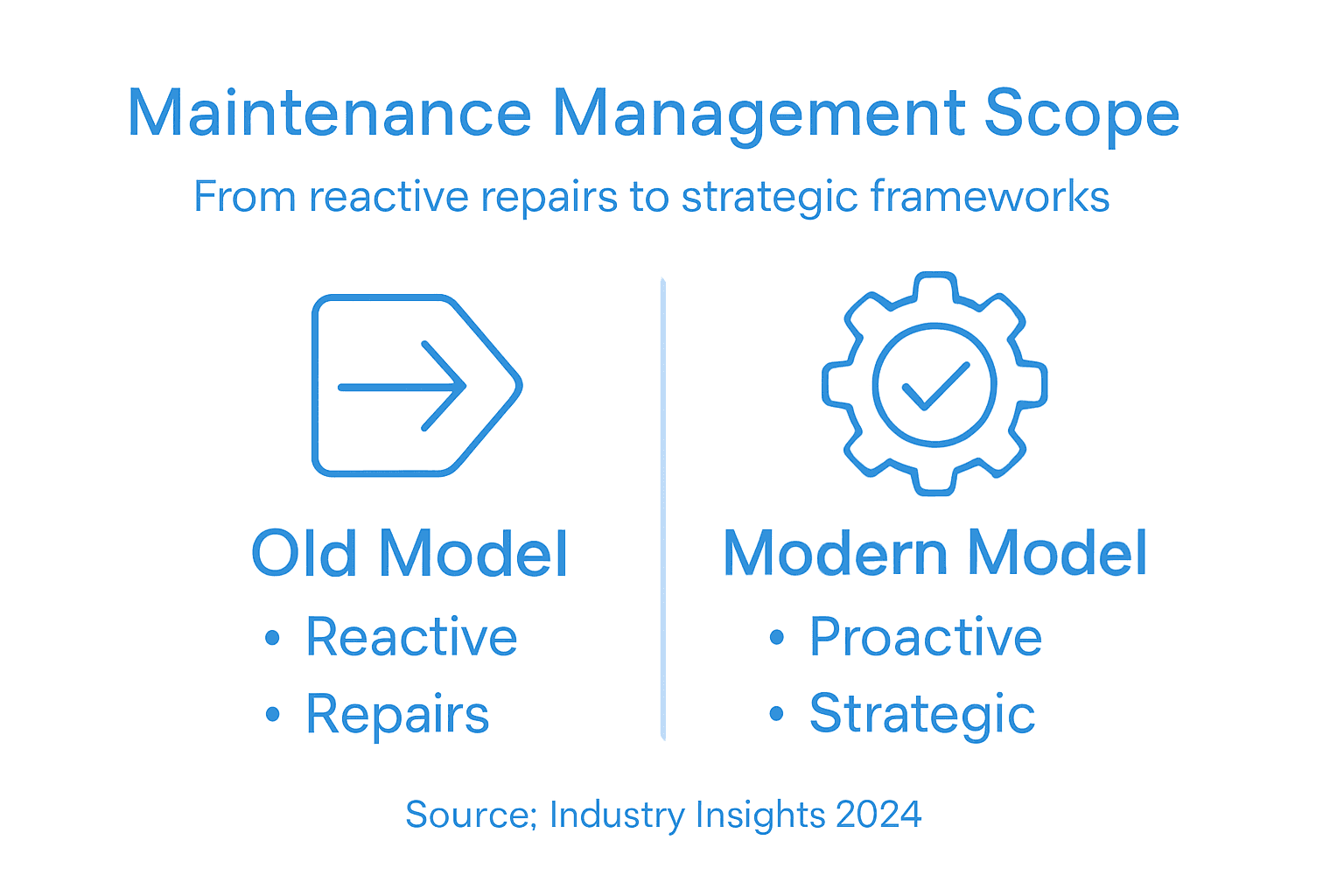
The fundamental objective of maintenance management is transforming reactive repair approaches into proactive, strategically planned interventions. By anticipating potential equipment failures and implementing targeted maintenance protocols, organisations can significantly reduce unexpected downtime, extend asset lifecycles, and optimise operational expenditure.
Traditionally, maintenance management has evolved from simplistic repair-oriented models to sophisticated, data-driven systems that integrate technological insights with strategic planning. Comprehensive maintenance activities now encompass technical, administrative, and managerial actions throughout an asset’s entire operational lifecycle.
Pro tip: Develop a structured maintenance management framework that balances preventative interventions with responsive repair strategies to maximise asset performance and operational resilience.
Types of Maintenance Strategies Overseen
Maintenance managers must navigate multiple strategic approaches to ensure optimal asset performance and organisational efficiency. When overseeing maintenance operations, professionals typically implement preventative maintenance workflows that encompass several distinct methodological frameworks.
The primary maintenance strategies managers commonly oversee include:
- Preventative Maintenance: Scheduled inspections and interventions before equipment failure
- Corrective Maintenance: Reactive repairs addressing immediate equipment breakdowns
- Predictive Maintenance: Data-driven approach using advanced monitoring technologies
- Condition-Based Maintenance: Real-time performance tracking and targeted interventions
- Risk-Based Maintenance: Prioritising interventions based on potential operational impact
Each maintenance strategy requires unique management skills and technological capabilities. Preventative maintenance focuses on proactive scheduling and systematic equipment assessment, whereas corrective maintenance demands rapid response and diagnostic capabilities. Modern maintenance management increasingly emphasises predictive approaches that leverage technological insights to anticipate potential failures before they occur.
Successful maintenance strategies integrate multiple approaches, recognising that different assets and operational contexts require nuanced intervention techniques. Asset maintenance workflows must remain flexible, adapting to changing technological capabilities and organisational requirements.
Here is a concise comparison of key maintenance strategy types and their organisational benefits:
| Strategy Type | Core Focus | Business Impact |
|---|---|---|
| Preventative Maintenance | Scheduled checks before failure | Reduces downtime, lowers costs |
| Corrective Maintenance | Immediate repairs upon breakdown | Restores operations quickly |
| Predictive Maintenance | Uses data to anticipate faults | Minimises surprise disruptions |
| Condition-Based | Reacts to real-time performance | Targets resources efficiently |
| Risk-Based | Prioritises based on risk | Protects vital assets, avoids loss |
Pro tip: Develop a comprehensive maintenance strategy that balances proactive prevention with responsive intervention, utilising data-driven insights to optimise asset performance and operational reliability.
Key Responsibilities of Maintenance Managers
Maintenance managers play a pivotal role in orchestrating complex operational strategies that ensure organisational asset reliability and performance. Maintenance management responsibilities encompass a multifaceted approach to directing technical operations and strategic planning.
The core responsibilities of maintenance managers typically include:
- Strategic Planning: Developing comprehensive maintenance programs
- Team Leadership: Supervising and coaching maintenance personnel
- Budget Management: Controlling maintenance expenditures and resource allocation
- Performance Monitoring: Tracking equipment reliability and operational efficiency
- Compliance Management: Ensuring adherence to safety and regulatory standards
- Technology Integration: Implementing advanced maintenance management systems
Technical expertise forms the foundation of effective maintenance management. Managers must possess deep understanding of equipment systems, diagnostic technologies, and predictive maintenance techniques. They translate complex technical requirements into actionable strategies, bridging the gap between operational teams and higher-level management objectives.
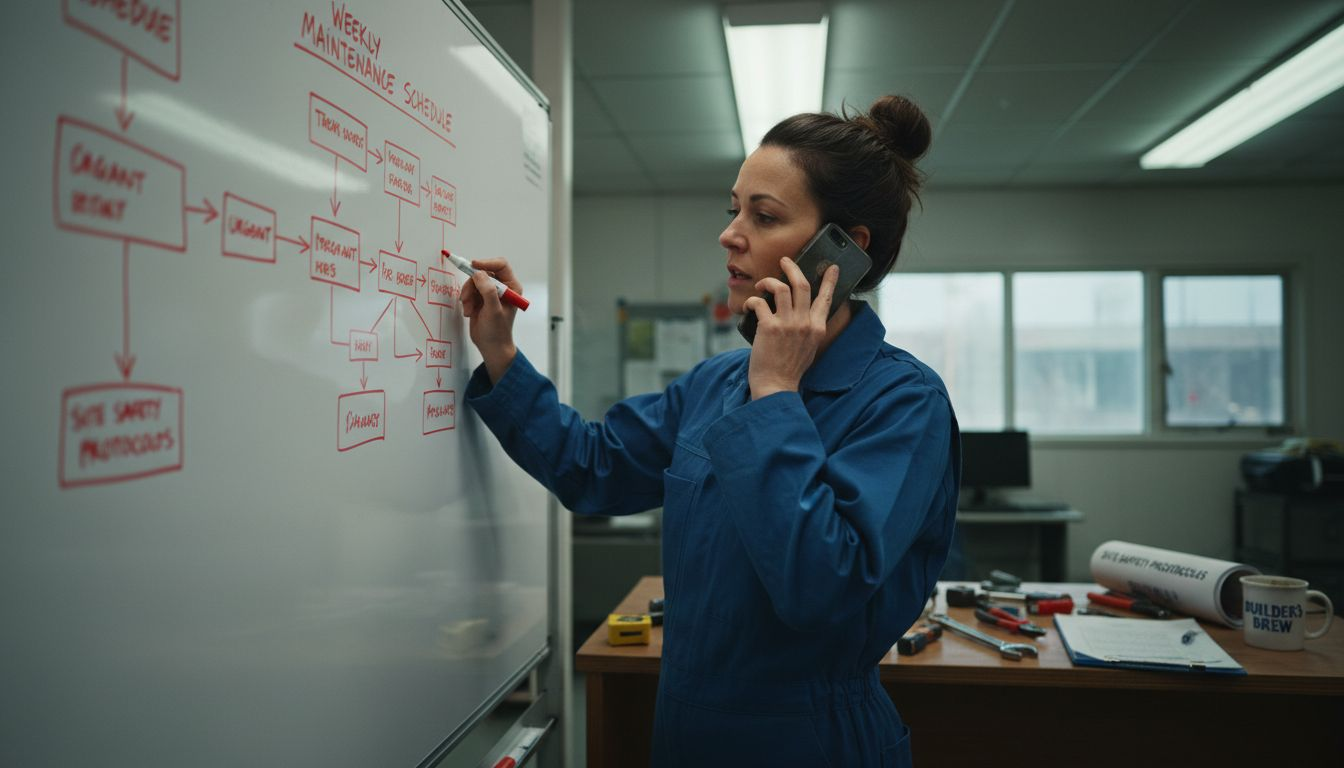
Asset maintenance workflows require sophisticated coordination across multiple organisational levels. Successful maintenance managers cultivate a proactive culture that emphasises continuous improvement, technological innovation, and strategic risk management. They must balance immediate operational needs with long-term asset performance goals, making data-driven decisions that optimise resource utilisation and minimise potential disruptions.
Pro tip: Develop a holistic approach to maintenance management by continuously updating technical skills, fostering cross-functional communication, and leveraging advanced diagnostic technologies to predict and prevent potential equipment failures.
Integrating Technology and Data Analytics
Maintenance managers are increasingly leveraging advanced technological solutions to transform traditional maintenance approaches. Data analytics in maintenance planning represents a critical paradigm shift from experience-based to fact-driven decision-making processes.
Key technological integration strategies include:
- Internet of Things (IoT) Sensors: Enabling real-time equipment monitoring
- Artificial Intelligence: Predicting potential equipment failures
- Machine Learning Algorithms: Analysing complex performance patterns
- Cloud-Based Analytics Platforms: Centralising maintenance data
- Predictive Maintenance Software: Generating actionable maintenance insights
The integration of sophisticated technologies fundamentally transforms maintenance management by providing unprecedented visibility into asset performance. Advanced maintenance technologies enable organisations to transition from reactive repair models to proactive, data-driven maintenance strategies that minimise operational disruptions and optimise resource allocation.
Successful technology integration requires a holistic approach that combines technical expertise, strategic planning, and continuous learning. Maintenance managers must develop cross-functional skills, understanding both technological capabilities and operational requirements to effectively implement and leverage these advanced analytical tools.
Summary below illustrates how technology enhances modern maintenance management:
| Technology | Maintenance Role | Improvement Achieved |
|---|---|---|
| IoT Sensors | Real-time asset monitoring | Early issue detection |
| AI Algorithms | Predicts upcoming failures | Proactive interventions |
| Machine Learning | Analyses performance trends | Optimised schedules |
| Cloud Analytics Platforms | Centralises maintenance data | Informed decision-making |
Pro tip: Invest in continuous technical training and create a culture of data-driven decision-making to successfully integrate emerging maintenance technologies.
Risk, Compliance, and Resource Management
Maintenance managers must navigate complex landscapes of regulatory requirements and organisational risk management. Enterprise risk management strategies represent critical frameworks for ensuring sustainable operational performance and ethical governance.
Key dimensions of comprehensive risk and compliance management include:
- Regulatory Compliance: Adhering to industry-specific safety standards
- Risk Assessment: Identifying potential operational vulnerabilities
- Resource Allocation: Optimising budget and personnel deployment
- Documentation Management: Maintaining accurate maintenance records
- Audit Preparation: Developing robust reporting mechanisms
- Integrity Controls: Implementing systematic verification processes
Successful risk management requires a proactive and integrated approach that transcends traditional reactive models. Comprehensive governance practices emphasise creating organisational cultures that prioritise transparency, accountability, and continuous improvement.
Maintenance managers must develop sophisticated skills in balancing technical expertise with strategic risk mitigation. This involves creating adaptive frameworks that can respond quickly to changing regulatory landscapes while maintaining operational efficiency and protecting organisational assets.
Pro tip: Develop a dynamic risk management system that integrates continuous learning, regular compliance audits, and proactive monitoring to anticipate and mitigate potential operational risks.
Common Challenges and Proactive Solutions
Maintenance managers encounter numerous complex challenges that demand strategic and adaptive approaches to operational management. Asset management insights provide critical perspectives on navigating the intricate landscape of maintenance leadership.
Common challenges in maintenance management include:
- Skill Gaps: Bridging technological knowledge deficits
- Budget Constraints: Optimising limited financial resources
- Technology Integration: Implementing advanced diagnostic systems
- Personnel Management: Motivating and retaining skilled technicians
- Rapid Technological Changes: Keeping pace with emerging maintenance innovations
- Predictive Maintenance Complexity: Developing sophisticated analytical capabilities
Proactive solutions require a multifaceted approach that combines technological innovation, continuous professional development, and strategic workforce planning. Lifecycle management strategies emphasise creating resilient frameworks that can adapt to evolving organisational requirements and technological landscapes.
Successful maintenance managers must cultivate a holistic perspective that balances technical expertise, human resource development, and strategic foresight. This involves creating learning environments that encourage innovation, invest in skills development, and foster a culture of continuous improvement and technological adaptation.
Pro tip: Develop a comprehensive professional development programme that combines technical training, technological exposure, and strategic leadership skills to build a future-ready maintenance workforce.
Empower Your Maintenance Management with FullyOps
The article highlights the crucial role managers play in driving maintenance results through strategic planning, resource management, and technology integration. It sheds light on challenges such as balancing preventative and corrective interventions, optimising asset lifecycles, and achieving operational efficiency. If you recognise the need to transform reactive repair approaches into proactive, data-driven maintenance strategies, FullyOps offers the perfect solution.
FullyOps is a comprehensive SaaS platform designed to streamline and digitise asset management and field service workflows. Our tools enable managers to oversee work orders, allocate resources effectively, and monitor performance analytics in real time. By integrating advanced features tailored for both technicians and back-office teams, you can reduce downtime, control maintenance costs, and improve asset reliability effortlessly. Discover how maintenance management responsibilities can be supported by intelligent software that adapts to your organisation’s needs.
Take control of your maintenance strategy today with FullyOps. Visit FullyOps to explore how our platform can enhance your operational visibility and help you execute preventive and corrective maintenance with confidence. Start driving better results now by embracing the future of maintenance management.
Frequently Asked Questions
What is the role of maintenance managers?
Maintenance managers are responsible for overseeing and optimising maintenance strategies, ensuring organisational assets’ reliability and performance through strategic planning, team leadership, budget management, and compliance management.
How can maintenance managers effectively integrate technology into their processes?
Maintenance managers can effectively integrate technology by leveraging Internet of Things (IoT) sensors, artificial intelligence, and predictive maintenance software to monitor assets in real-time, predict failures, and enhance decision-making based on data analytics.
What are some common challenges faced by maintenance managers?
Common challenges include skill gaps within the workforce, budget constraints, technology integration issues, personnel management, and adapting to rapid technological changes in maintenance practices.
Why is risk management important in maintenance management?
Risk management is crucial as it helps identify potential operational vulnerabilities, ensuring compliance with regulatory standards, optimising resource allocation, and maintaining operational efficiency while protecting organisational assets.
Recommended
- Blog – FullyOps
- How to Overcome the Challenges of Adopting Preventive Maintenance: A Five-Step Process – FullyOps
- Asset Maintenance Workflow Guide for Optimal Efficiency
- Gutter Cleaning in Asset Management – Preserving Value
- The Essential Guide to Regular HVAC Maintenance – Home Therapist Cooling, Heating, and Plumbing
- Optimized Heat Pump Maintenance Workflow for Technicians – CoolFix Appliance & HVAC Service