

En bref
- Failed visits cost 25% of field service expenses, mostly preventable with better parts management.
- AI-driven scheduling and remote resolution can boost efficiency by up to 30%, reducing costs significantly.
- Mobile and edge AI technology enable effective remote support, especially in challenging industrial environments.
Failed field service visits are not just an inconvenience. They are a direct drain on your bottom line, with failed visits costing 25% of all field service delivery costs. For operations managers in industrial environments, that figure represents a significant and largely preventable loss. This article sets out practical, evidence-backed strategies to raise your first-time fix rate (FTFR), reduce wasted visits, and improve overall operational efficiency. Each section draws on the latest industry benchmarks and is designed to give you actionable steps you can implement across your field service and asset management processes.
Table des matières
- Optimise inventory and parts management
- Leverage AI for smarter scheduling and remote resolution
- Empower your field workforce with mobile and connected technology
- Adapt strategies for variable and remote industrial environments
- Our take: Why people and process still matter most
- Enhance your field service with purpose-built solutions
- Questions fréquemment posées
Principaux enseignements
| Point | Détails |
|---|---|
| Boost first-time fix rates | Real-time inventory management and predictive stocking can raise your FTFR from industry median to top performer levels. |
| Harness AI for efficiency | AI-driven scheduling and remote troubleshooting can cut up to 26% in costs and speed up resolutions. |
| Embrace mobile technology | Mobile-enabled technicians enable real-time data access and on-the-ground problem-solving, increasing both efficiency and reliability. |
| Adapt for remote sites | Edge AI and adaptive systems are essential for effective field operations in unpredictable or low-connectivity environments. |
| Balance tech with training | Ongoing staff development and process refinement are critical for translating technical investments into real results. |
Optimise inventory and parts management
The single most common reason a field visit fails is that the technician arrives without the right part. It sounds simple, yet it remains one of the costliest problems in industrial field service. Addressing it requires more than keeping a well-stocked warehouse. It demands real-time visibility and forward-looking stock decisions.
Real-time inventory tracking and predictive stocking boost FTFR from a median of 77% to 88% for top-performing organisations. That 11-percentage-point gap translates directly into fewer repeat visits, lower labour costs, and higher customer satisfaction. The difference between median and top-quartile performance is not luck. It is the result of deliberate process design.
| Performance tier | Taux de fixation pour la première fois |
|---|---|
| Median performers | 77% |
| Top quartile performers | 88% |
To close this gap, consider the following best practices for inventory and parts management:
- Real-time tracking: Connect your parts inventory to a centralised system so technicians and dispatchers can check availability before a job is assigned.
- Predictive stocking: Use historical repair data and asset failure patterns to anticipate which parts will be needed most frequently at specific sites.
- Parts visibility at the technician level: Equip field staff with mobile access to stock data so they can confirm parts availability before travelling to a site.
- Supplier integration: Link your inventory system to supplier catalogues to automate reorder triggers when stock falls below defined thresholds.
Implementing predictive stocking in an industrial environment starts with auditing your existing repair history. Identify the top 20 parts responsible for 80% of your failed visits, then build stocking rules around those items. Review and update these rules quarterly as asset populations and failure patterns evolve. Connecting your service automation asset management platform to your inventory system is a practical way to make this data flow automatic rather than manual.
Pro Tip: Run a mobile inventory check as a mandatory step in your dispatch workflow. Before a technician departs, they confirm via their mobile device that all required parts are loaded. This single step can prevent a significant proportion of failed visits before they happen. Platforms designed to boost field service efficiency often include this as a configurable checklist item.
Leverage AI for smarter scheduling and remote resolution
Having established the importance of inventory, the next step is improving how you deploy and support your workforce with technology. Artificial intelligence is no longer a future consideration for field service. It is an operational reality with measurable results.
AI-driven tools deliver 10-30% efficiency gains and up to 26% cost savings, according to BCG research on the next frontier of field service. These gains come from three primary applications: dynamic scheduling, troubleshooting copilots, and workflow automation.
“Organisations that adopt AI-enabled scheduling and remote resolution capabilities are consistently outperforming peers on cost, speed, and customer satisfaction metrics.” — BCG, The Next Frontier of Field Service
Dynamic scheduling uses AI to match the right technician to the right job based on skill set, location, parts availability, and asset history. This reduces travel time and improves the probability of a first-time fix. Troubleshooting copilots give technicians instant access to guided resolution steps drawn from historical repair data, reducing the time spent diagnosing unfamiliar faults.
Remote resolution is another high-value application. Up to 20% of field service cases can be resolved remotely when technicians have access to real-time asset data and remote diagnostic tools. Tasks well-suited to remote resolution include:
- Software resets and firmware updates
- Sensor recalibration and threshold adjustments
- Fault code interpretation and guided self-repair instructions
- Connectivity and configuration issues
| AI-enabled capability | Efficiency gain | Impact sur les coûts |
|---|---|---|
| Dynamic scheduling | Up to 20% | Reduced travel costs |
| Remote resolution | Up to 20% case deflection | Lower dispatch costs |
| Troubleshooting copilots | 10-30% faster resolution | Reduced repeat visits |
For operations managers reviewing their scheduling processes, a structured approach to efficient field service scheduling is a practical starting point. Pairing this with a robust field service checklist ensures that AI-driven decisions are supported by consistent human processes on the ground.
Empower your field workforce with mobile and connected technology
Once operations are technologically optimised, success depends on frontline adoption and enablement. The most sophisticated scheduling algorithm delivers limited value if your technicians lack the tools to act on it effectively in the field.
Scaling knowledge and digital tools across your workforce unlocks up to 26% in cost savings. Mobile technology is the primary vehicle for delivering that knowledge at the point of need.
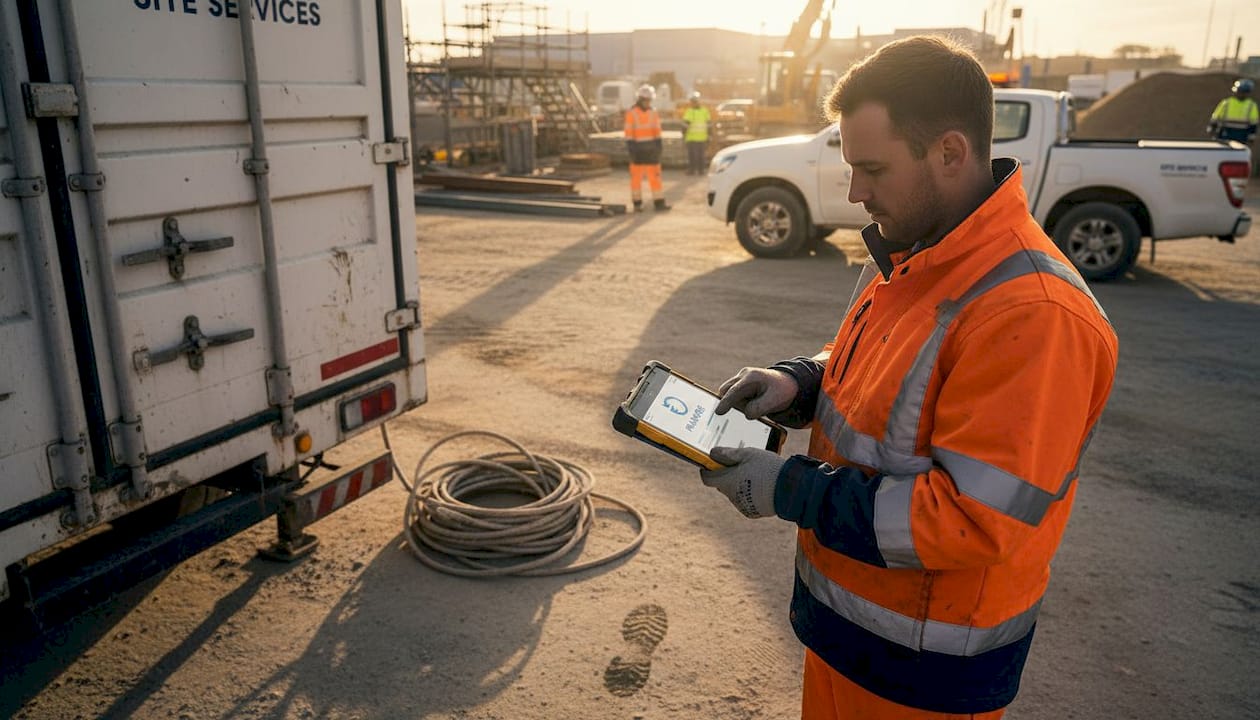
Digital work orders replace paper-based processes, giving technicians a clear, structured view of each job including asset history, required parts, safety procedures, and completion checklists. Instant communication tools allow field staff to consult with remote experts or supervisors without leaving the site. Asset tracking via mobile devices provides real-time location and condition data that feeds back into your central management system.
Key mobile capabilities to prioritise for your field workforce include:
- Digital work orders with embedded asset history and service documentation
- Real-time parts availability checks linked to central inventory
- In-app communication with back-office support and technical experts
- Photo and video capture for fault documentation and remote diagnosis
- Offline functionality for sites with limited connectivity
- Automated time logging to reduce administrative burden on technicians
Understanding the full benefits of mobile field service goes beyond convenience. It directly affects decision-making speed and accuracy. A technician with instant access to an asset’s full maintenance history makes better diagnostic decisions than one working from memory or paper records. Structured approaches to managing teams for field service should incorporate mobile enablement as a core component, not an optional add-on.
Pro Tip: Require technicians to submit real-time status updates at each stage of a job, arrival, diagnosis, repair, and completion. This data feeds your scheduling and reporting systems automatically, reducing back-office workload and giving you accurate performance metrics without additional data entry.
Adapt strategies for variable and remote industrial environments
For teams operating in especially remote or changeable settings, standard strategies must be adapted. Industrial sites such as offshore platforms, mining operations, and remote energy installations present connectivity challenges that cloud-dependent systems cannot reliably address.
Edge AI and adaptive systems are critical for reliable real-time decisions in remote or harsh industrial environments. Unlike cloud-only solutions, edge computing processes data locally on the device or at the site, eliminating latency and maintaining functionality even when network connectivity is unavailable or intermittent.
“Future-proofing field service in high-variability environments requires adaptive systems that can operate independently of centralised infrastructure while still feeding data back when connectivity is restored.” — BCG, The Next Frontier of Field Service
Implementing an edge-driven service workflow requires a structured approach. Follow these steps to build adaptive field service capability for remote sites:
- Audit your connectivity landscape. Map each site’s typical connectivity conditions, identifying where cloud-only tools will fail.
- Select edge-capable devices. Choose mobile and IoT hardware that can process and store data locally without relying on continuous network access.
- Configure offline workflows. Ensure your field service platform supports full functionality in offline mode, with automatic synchronisation when connectivity is restored.
- Deploy local diagnostic intelligence. Use edge AI models trained on your specific asset types to enable on-device fault detection and guided resolution.
- Establish data governance protocols. Define how locally captured data is validated, synced, and integrated into your central asset management records.
- Test and iterate. Run pilot deployments at your most challenging sites before rolling out across the full estate.
Connecting these capabilities to your broader asset management automation strategy ensures that remote site data contributes to organisation-wide performance analysis, rather than existing in isolation.
Our take: Why people and process still matter most
Technology investment in field service is accelerating. AI scheduling, edge computing, mobile platforms and predictive stocking are all demonstrably effective. But a pattern emerges repeatedly across industrial operations: organisations that invest heavily in tools without investing equally in people and process rarely achieve the results the technology promises.
The most common failure mode is not a bad tool. It is a good tool deployed into a poorly defined process, or adopted by a workforce that was not adequately trained or consulted. A dynamic scheduling algorithm is only as good as the data it receives. Predictive stocking only works if technicians actually log parts usage accurately.
Cross-functional communication matters as much as any software feature. When field technicians, back-office planners, and asset managers share a common operating picture and a continuous improvement mindset, performance compounds over time. The technology accelerates what good process and skilled people already do well.
If you are evaluating where to focus next, consider reading about how to increase field service profitability through a balanced approach that treats people, process, and technology as equally important levers.
Enhance your field service with purpose-built solutions
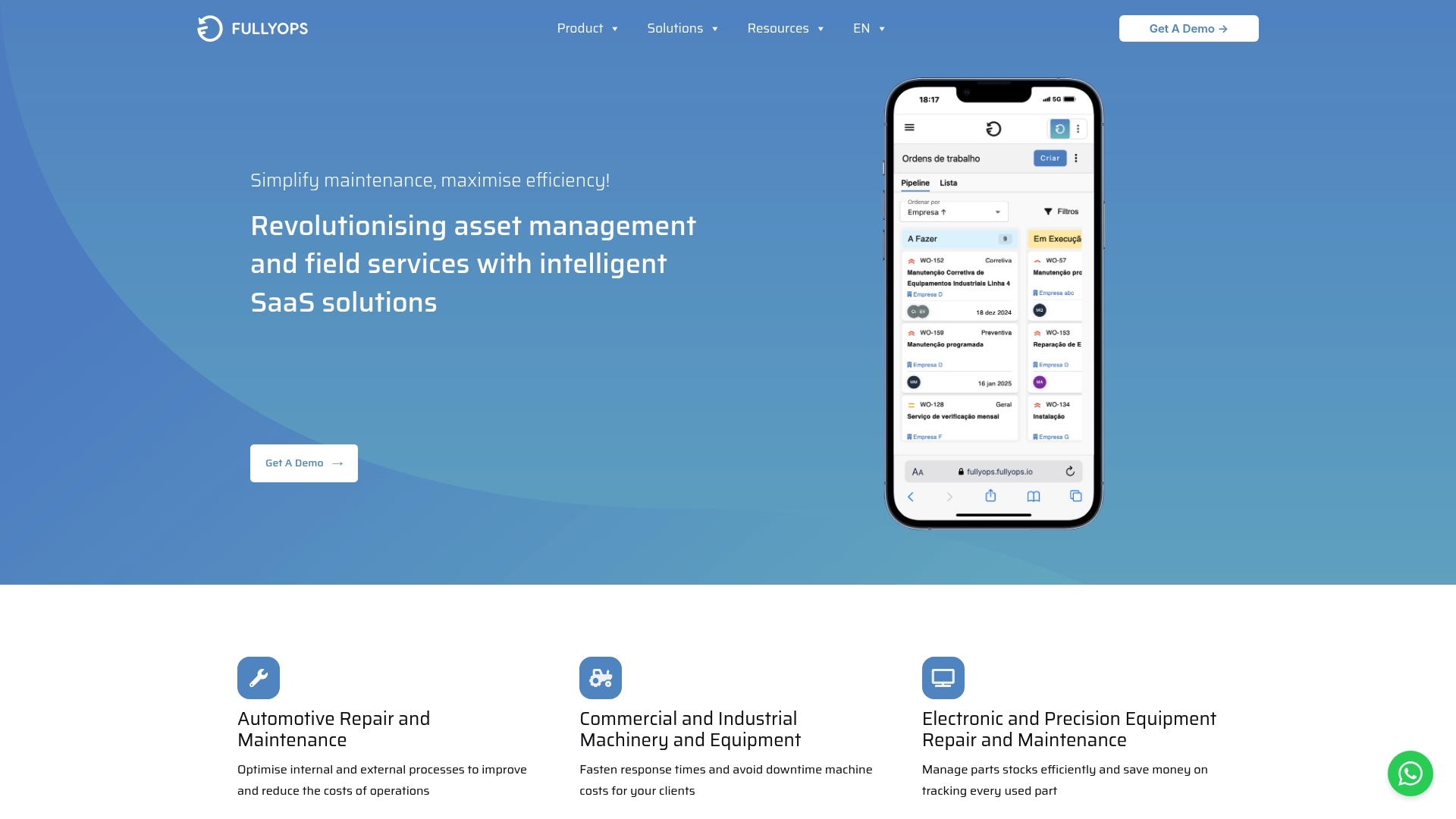
If the strategies in this article resonate with the challenges your team faces, FullyOps offers a purpose-built platform designed specifically for industrial field service and asset management. From work order management and real-time inventory tracking to automated reporting and performance analytics, the platform brings together the capabilities discussed here in a single, integrated environment. Explore the tutoriel sur l'allocation des ressources to see how smarter resource planning translates into measurable efficiency gains, or review the full approach to gestion du cycle de vie des actifs to understand how FullyOps supports proactive maintenance and long-term operational reliability.
Questions fréquemment posées
What is the main cause of failed field service visits?
Insufficient parts availability and incomplete asset information are the leading causes, with failed visits accounting for 25% of all field service delivery costs. Addressing parts availability through predictive stocking is the most direct way to reduce this figure.
How much can AI improve field service efficiency?
AI solutions improve efficiency by 10 to 30% and can reduce operational costs by as much as 26%, based on BCG’s analysis of field service organisations that have adopted AI-driven scheduling and remote resolution tools.
Are mobile solutions effective for field operations?
Yes. Mobile tools give technicians real-time access to asset data, parts availability, and guided workflows, which directly raises first-time fix rates. Scaling digital tools across the workforce is associated with up to 26% in cost savings.
Why is edge AI preferred in remote or harsh industrial sites?
Edge AI processes data locally, ensuring reliable real-time decision support even when network connectivity is absent or unreliable, which cloud-only solutions cannot guarantee in remote or harsh industrial environments.
Recommandé
- Gestion des services sur le terrain : Optimiser et augmenter l'efficacité - FullyOps
- 4 conseils pour augmenter la rentabilité des services sur le terrain - FullyOps
- Guide de planification des services sur le terrain pour un déploiement efficace des techniciens
- Gestion des services sur le terrain : Comment structurer, gérer et motiver votre équipe - FullyOps