

Equipment failures that seem unpredictable often share hidden patterns waiting to be uncovered. For maintenance managers in growing HVAC companies, relying on scattered service notes or informal documentation keeps these patterns invisible. Effective maintenance reporting transforms everyday repairs and breakdowns into a knowledge base that strengthens decision-making and reduces costly unplanned downtime. By adopting systematic data collection and analysis, you lay the groundwork for more reliable assets and more controlled maintenance costs.
Table des matières
- Defining Maintenance Reporting And Its Role
- Key Types Of Maintenance Reports Explained
- Digital Tools And Reporting Processes In HVAC
- Compliance, Accountability, And Data Standards
- Common Pitfalls And Best Practice Solutions
Principaux enseignements
| Point | Détails |
|---|---|
| Importance of Maintenance Reporting | Systematic maintenance reporting enhances visibility into HVAC performance, allowing for informed decision-making and proactive management of assets. |
| Structured Over Ad Hoc Reporting | Moving to structured reporting reduces the loss of crucial information, revealing patterns that aid in anticipating and mitigating equipment failures. |
| Digital Transformation of Reporting | Implementing digital tools streamlines data collection, providing real-time insights that promote timely and effective maintenance actions. |
| Compliance and Accountability | Accurate documentation not only meets regulatory requirements but also fosters accountability and continuous improvement in HVAC operations. |
Defining Maintenance Reporting And Its Role
Maintenance reporting is the systematic collection, documentation, and analysis of data about your HVAC equipment’s performance, failures, and repairs. It transforms scattered information—service calls, component replacements, breakdowns—into actionable intelligence that drives better decisions about your assets.
At its core, maintenance reporting answers three critical questions: What failed? Why did it fail? How do we prevent it next time? These answers directly impact your bottom line.
Why Maintenance Reporting Matters for HVAC Operations
Without proper maintenance reporting, you’re essentially flying blind. Your technicians complete work, but that knowledge vanishes instead of informing future maintenance strategy. Equipment fails unpredictably. Costs spiral.
When you implement systematic reporting, you gain visibility into patterns that aren’t obvious from individual service events. A compressor that fails every 18 months isn’t random—it’s a signal. A recurrent refrigerant leak points to installation issues or component wear.
Approches de maintenance centrées sur la fiabilité use detailed failure data to determine exactly which systems need attention, allowing you to focus resources on your most critical assets rather than spreading maintenance effort thinly across everything.
What Maintenance Reporting Actually Captures
Effective maintenance reporting documents:
- Equipment details: Asset identification, specifications, installation dates, warranty information
- Failure information: What component failed, failure mode, symptoms observed, root causes identified
- Maintenance actions: Work performed, parts replaced, technician notes, time spent, costs incurred
- Performance metrics: Downtime duration, repair completion time, asset uptime percentage
- Preventive history: Scheduled maintenance completed, inspection findings, condition assessments
This data becomes the foundation for optimising your asset maintenance workflow, enabling predictive decisions rather than reactive responses.
The Connection to Asset Reliability
Asset reliability doesn’t happen by accident. It results from understanding failure patterns and responding strategically. Maintenance reporting is how you build that understanding.
When your team documents why a condenser unit failed, you’re capturing knowledge that prevents identical failures at other locations. When reports show seasonal trends—more evaporator coil problems in humid months—you can adjust preventive schedules accordingly.
Maintenance reporting transforms individual repair events into a comprehensive knowledge base that continuously improves your entire fleet’s reliability.
This systematic approach reduces unplanned downtime, extends equipment lifespan, and cuts emergency repair costs significantly.
Moving from Ad Hoc to Structured Reporting
Many HVAC operations rely on informal reporting: technicians jotting notes, service managers remembering details, no centralised record. This approach fails because information gets lost, patterns remain hidden, and similar problems recur repeatedly.
Structured maintenance reporting establishes consistent data capture across all technicians and locations. Every repair follows the same documentation process. Every asset has a complete service history. This consistency enables analysis.
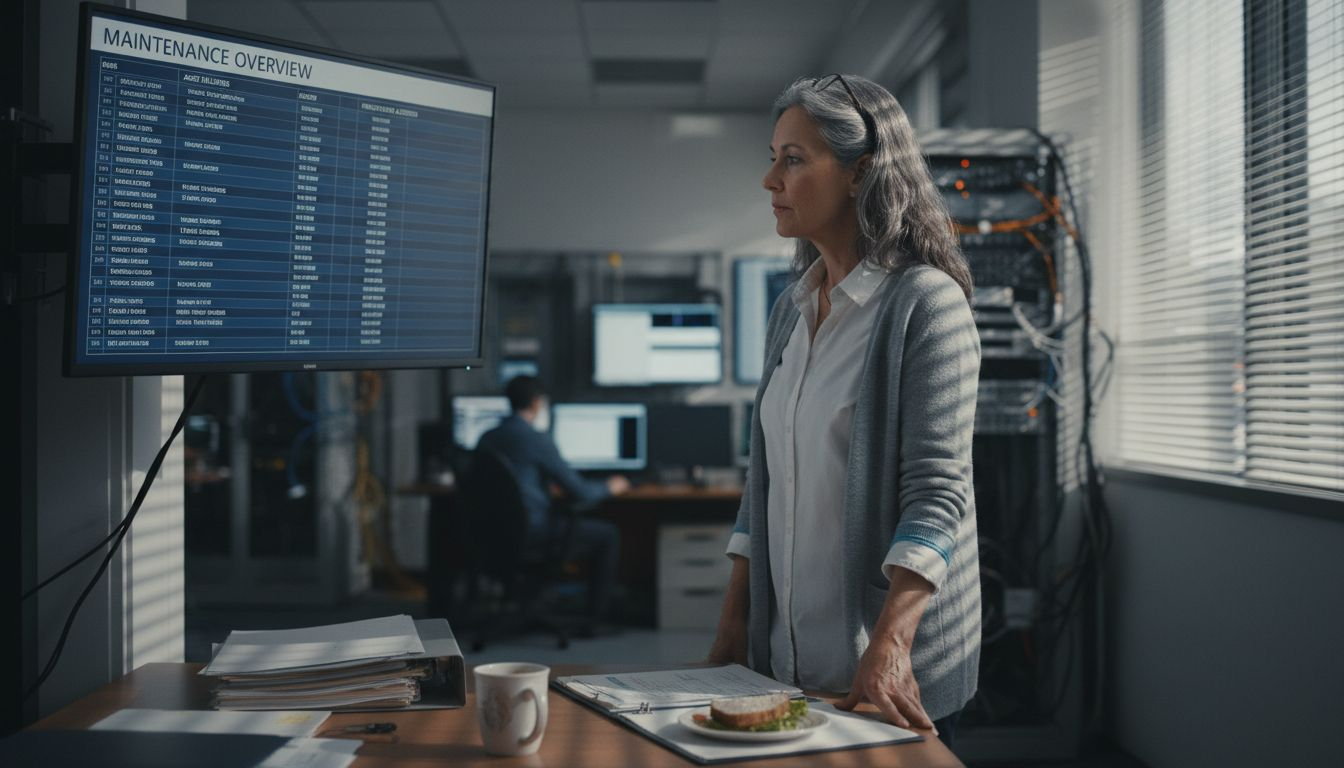
You don’t need perfect data from day one. Start with the essentials: what failed, what was done, what it cost. Expand from there as your processes mature.
Conseil de pro : Begin your maintenance reporting system by documenting failure mode and root cause for every unplanned repair—this single discipline will reveal your most expensive problem areas within 90 days.
Key Types Of Maintenance Reports Explained
Not all maintenance reports serve the same purpose. Your HVAC operation likely generates different types of reports depending on what happened and what decisions you need to make. Understanding each type helps you capture the right information and act on it effectively.
The reports you use should align with your maintenance strategy. A reactive repair operation needs different documentation than a preventive or predictive programme. Let’s explore the main categories.
Failure And Incident Reports
Failure reports document unplanned equipment breakdowns. They capture what went wrong, when it failed, and the immediate impact. These are your most critical data source because they reveal your most expensive problems.
A good failure report includes:
- Asset identification and location
- Failure mode (compressor seized, refrigerant leak, electrical fault)
- Environmental conditions at time of failure
- Downtime duration and business impact
- Root cause analysis findings
- Corrective actions taken
Reactive and preventive maintenance approaches both rely on failure reports, but they use them differently. Reactive teams use them to fix problems after they occur. Preventive teams use them to prevent similar failures elsewhere.
Preventive Maintenance Reports
These reports document scheduled maintenance work completed on equipment before failure occurs. They’re less dramatic than failure reports but far more valuable for long-term reliability.
Preventive maintenance reports track:
- Maintenance work scheduled and completed
- Components inspected, cleaned, or replaced on schedule
- Performance measurements before and after service
- Technician observations about equipment condition
- Parts used and labour hours invested
Your preventive reports become a historical record showing which maintenance activities actually prevent failures. Over time, this data reveals which scheduled tasks truly matter and which you can optimise.
Predictive And Diagnostic Reports
These reports capture condition monitoring data—vibration analysis, temperature trends, electrical signature analysis—that signal equipment problems before they become failures.
Predictive reports differ because they document:
- Current condition measurements versus baseline values
- Trend analysis showing equipment degradation over time
- Risk assessments predicting probable failure timeframes
- Recommendations for when to schedule maintenance
Predictive reports transform maintenance from a time-based schedule into a condition-based strategy, allowing you to extend intervals when equipment performs well and act urgently when degradation accelerates.
Asset Lifecycle And Cumulative Reports
These synthesise data across multiple individual reports to show the complete picture of an asset’s performance over months or years. They reveal patterns that individual reports hide.
When you combine failure reports with preventive maintenance records, you see your true maintenance costs per asset. You identify which equipment consistently underperforms. You spot serial problems across identical units at different locations.
This comprehensive view enables smarter capital planning. You know when replacement makes more sense than continued repair. You can apply lessons from one asset’s failures to identical equipment at other facilities.
Here’s a concise summary comparing the main types of HVAC maintenance reports and their strategic value:
| Report Type | Core Purpose | Typical Data Captured | Strategic Benefit |
|---|---|---|---|
| Failure Report | Document unplanned breakdowns | Root cause, downtime, corrective actions | Reveals costly failure patterns |
| Preventive Report | Record scheduled maintenance | Tasks completed, asset condition | Optimises reliability over time |
| Predictive Report | Monitor asset health trends | Sensor data, degradation analysis | Enables proactive repairs |
| Lifecycle Report | Aggregate asset history | Combined failures and maintenance | Informs capital decisions |
Choosing Your Report Types
You don’t need all report types simultaneously. Start with failure documentation and preventive records. These two types capture essential data with manageable effort. As you mature, add predictive elements where they matter most—your costliest equipment or most failure-prone systems.
Conseil de pro : Standardise your failure report template across all technicians and locations, then review accumulated failure data monthly to identify your top three problem areas worth targeting with preventive improvements.
Digital Tools And Reporting Processes In HVAC
Paper-based maintenance reporting dies hard in HVAC operations. Technicians scribble notes in the field. Service managers transcribe them into spreadsheets. Reports take weeks to compile. By then, the data feels stale.
Digital tools transform this chaotic process into something systematic and actionable. Real-time data collection feeds straight into analysis. Patterns emerge instantly. Decisions happen faster.
Why Digital Tools Matter For Reporting
Manual reporting processes hide information. A compressor failure gets documented on Tuesday. The technician notes the root cause. But that insight stays buried in a file until someone manually searches for it months later.
Digital systems make data discoverable immediately. When a second unit fails with identical symptoms, your system flags the pattern. You spot trends before they spread across your fleet.
IoT sensors and AI-driven analytics automatise real-time monitoring and fault detection, allowing you to identify problems before they cause failures. This shift from reactive to predictive reporting changes your entire maintenance posture.
Core Features Of Digital Reporting Platforms
Modern HVAC maintenance software centralises equipment data and streamlines reporting workflows. Look for these capabilities:
- Automated data capture: Technicians record information once, in the field, using mobile devices
- Centralised asset records: Complete equipment history accessible from anywhere
- Real-time alerts: Condition thresholds trigger notifications immediately
- Scheduled maintenance tracking: Preventive work logs automatically and reports completion
- Failure analytics: Trends and root cause patterns identified automatically
- Integration with business systems: Data flows to accounting, procurement, and planning tools
Digital reporting platforms eliminate manual data entry, accelerate insight discovery, and enable condition-based decisions that reduce downtime and stretch maintenance budgets further.
Considérations relatives à la mise en œuvre
Moving from manual to digital reporting requires more than installing software. Your team needs clear processes. Technicians must understand what data matters and why they’re collecting it.
Start with essential information: asset identification, work performed, failure modes, completion times, and costs incurred. Add complexity gradually as your team adapts. Rushing to capture everything overwhelms field workers and creates incomplete data.
Data Quality Drives Reporting Value
Garbage in, garbage out applies directly to maintenance reporting. A digital system amplifies both good and bad data. If technicians consistently enter quality information, your reports become reliable guides. If they rush through data entry, your reports generate false patterns.
Invest in training and standardised templates. Make data entry easier, not harder. When technicians see reports using their data to prevent future problems, they understand why accuracy matters.
Digital asset management platforms centralise equipment data and enable condition monitoring that improves reliability through better visibility and operational control. This visibility only works when data quality remains high throughout collection and analysis.
Conseil de pro : Start your digital implementation with one critical system or building, perfect your reporting process there, then expand to other locations once your team demonstrates consistent data quality.
Compliance, Accountability, And Data Standards
Maintenance reporting isn’t purely operational anymore. Regulators now require documented proof that your HVAC systems receive proper care. Building owners face legal liability if systems fail inspections. Your maintenance records become evidence of due diligence.
This reality changes how you approach reporting. It’s no longer just an internal tool—it’s a compliance document.
Regulatory Requirements For HVAC Maintenance
Different jurisdictions impose varying standards, but the pattern is consistent: system owners must maintain records demonstrating regular inspections and maintenance. In the United Kingdom, air conditioning inspection requirements mandate that buildings with systems over a certain capacity undergo regular compliance checks and maintain detailed documentation.
These regulations exist for good reason. Poorly maintained HVAC systems waste energy, pose safety risks, and contribute to poor indoor air quality. Your maintenance reports prove you’re preventing these problems.
What Regulators Actually Inspect
When compliance officers review your records, they’re looking for specific evidence:
- Inspection dates and findings: Clear proof that systems receive regular examination
- Maintenance completion: Documentation showing preventive work actually occurred
- Problem response: Evidence that failures triggered corrective action
- Component replacements: Records of parts changed, when, and why
- Technician credentials: Proof that qualified personnel performed the work
- Safety compliance: Notes confirming systems meet safety standards
Vague reports raise red flags. “Maintenance performed” tells inspectors nothing. “Replaced compressor due to burnt windings detected during electrical signature analysis” demonstrates competent diagnosis and proper response.
Data Standards For Long-Term Compliance
Establish consistent naming conventions, measurement units, and documentation practices across your operation. This seems tedious until an inspector arrives and finds reports using different terminology at different locations.
Standardised data also matters internally. When every technician records failure modes using identical language, your analysis software recognises patterns instantly. Without standardisation, identical problems get recorded differently, and patterns remain invisible.
Accountability Through Transparent Reporting
Maintenance reporting creates accountability. When technicians know their work gets documented, reviewed, and analysed, quality improves. When service managers see transparent cost and failure data, they make better resource decisions. When facility owners review reports, they understand their actual maintenance investment.
This transparency sometimes reveals uncomfortable truths. Perhaps one location consistently costs more to maintain. Perhaps certain equipment types fail repeatedly despite preventive efforts. But honest data enables honest decisions.
Compliance-ready maintenance reports serve dual purposes: they protect your business legally whilst providing the visibility needed to continuously improve your operations.
Building Your Compliance Documentation System
Design your reporting process with regulatory requirements in mind from the start. Don’t create one system internally, then scramble to compile compliance reports separately. Make them the same thing.
Capture the data regulators need as a matter of standard practice. Include technician credentials in every work record. Document inspection dates and findings systematically. Maintain chronological work histories for every asset.
Conseil de pro : Archive your maintenance reports by building or asset in a secure, searchable format accessible during inspections—digital systems with version control beat paper files every time, and inspectors appreciate rapid access to complete historical records.
Common Pitfalls And Best Practice Solutions
Many HVAC operations start maintenance reporting projects with genuine enthusiasm, then watch them falter. The system gets deployed, initial adoption looks promising, but within months data quality deteriorates and insights dry up. Patterns fail to emerge. Cost controls slip.
These failures aren’t accidents. They follow predictable pitfalls that you can avoid with informed planning.
The Data Quality Crisis
Garbage data poisons everything downstream. If technicians record inconsistent information—sometimes detailed, sometimes vague—your analysis software struggles to recognise patterns. A compressor failure documented as “failure” at one location and “compressor seized, burnt windings” at another location looks like two different problems.
Poor data quality typically stems from unclear requirements or cumbersome data entry processes. Technicians rushing between service calls don’t carefully categorise problems using your taxonomy. They take shortcuts.
Solution: Create crystal-clear data entry templates and train technicians why standardisation matters. When team members understand that consistent failure descriptions enable automatic pattern detection, they invest effort in accuracy. Make data entry quick and mobile-friendly.
Integration And System Silos
Maintenance reporting systems often exist separately from scheduling software, accounting systems, and asset management platforms. Data gets entered once in maintenance records but manually retyped into other systems. Inconsistencies creep in. Work orders reference assets differently than maintenance reports do.
This fragmentation hides total cost pictures. You see maintenance expenses in one system but can’t connect them to equipment ages in another system. Data quality issues and integration difficulties represent common challenges when implementing advanced maintenance technologies across HVAC operations.
Solution: Before selecting software, map your existing systems and define integration requirements. Require your reporting platform to integrate with or replace your existing tools rather than layering on top of them. Single-source data entry means better quality and lower costs.
Overwhelm From Over-Ambitious Scope
Organisations sometimes attempt to capture everything immediately. Advanced diagnostics, environmental readings, predictive parameters, historical context. Technicians drown in data entry requirements.
Quality suffers because the system demands too much. Implementation timelines slip. Teams revert to old processes.
Solution: Start minimal. Capture asset identification, work performed, failure mode, and cost. Prove the system works and delivers value. Expand features only after your team demonstrates consistent data quality.
Common Implementation Mistakes
Avoid these errors:
- Insufficient training: Assuming technicians understand the system without proper instruction
- No change management: Expecting instant adoption without addressing resistance
- Unclear ownership: No individual accountable for data quality or system maintenance
- Ignoring user feedback: Dismissing field technician concerns about cumbersome processes
- Rapid deployment: Rolling out across all locations simultaneously instead of piloting first
Building Sustainable Reporting Practices
Success requires ongoing attention. Assign clear accountability for data quality. Review reports regularly and use findings to guide decisions—when technicians see their data driving operational changes, they understand why accuracy matters.
The following table provides a quick reference for best practices to ensure data quality and effective maintenance reporting in HVAC operations:
| Best Practice | Implementation Focus | Impact sur les entreprises |
|---|---|---|
| Standardised templates | Clear forms and taxonomy for technicians | Consistent, analysable data |
| Single-source data entry | Integrate reporting with other systems | Reduces errors, saves admin costs |
| Regular review feedback | Monthly analysis and team updates | Drives continuous improvement |
| Minimal initial scope | Start small and expand slowly | Prevents staff overwhelm |
Create feedback loops. When analysis reveals a pattern, communicate findings back to the field teams. Help them understand what the data revealed and how it prevented future problems.
Maintenance reporting sustainability depends on continuous attention, clear data ownership, and visible connections between accurate reporting and better operational outcomes.
Conseil de pro : Start your reporting system with one location or building, refine your processes until you achieve consistent data quality, then document your proven approach before expanding to additional sites.
Enhance Your HVAC Maintenance Reporting with FullyOps
The article highlights the challenges of inconsistent maintenance data, siloed reporting systems, and the struggle to gain real-time insight into asset reliability. These pain points often lead to reactive repairs, unpredictable downtime, and overlooked failure patterns. FullyOps tackles these exact issues by offering a comprehensive SaaS platform designed to digitise and streamline your maintenance reporting processes. With features like centralised asset records, automated data capture, and real-time analytics, you can finally move from fragmented notes to actionable intelligence that drives predictive and preventive maintenance strategies.
Take control of your HVAC operations today. Discover how FullyOps empowers technicians, managers, and back-office teams to collaborate effortlessly, improve data quality, and reduce costly equipment failures. Don’t let poor reporting hold your maintenance program back. Visit FullyOps to explore our intelligent software tools that optimise your asset lifecycle management and field service workflows. Start transforming your maintenance reporting now for greater reliability and lower costs.
Questions fréquemment posées
What is maintenance reporting in HVAC systems?
Maintenance reporting is the systematic collection, documentation, and analysis of data concerning HVAC equipment’s performance, failures, and repairs. It helps to transform scattered information into actionable intelligence that supports better decision-making regarding asset management.
Why is maintenance reporting important for HVAC operations?
Without proper maintenance reporting, organizations lack visibility into equipment performance, leading to unpredictable failures and spiralling costs. Implementing systematic reporting allows for the identification of patterns and trends that can inform future maintenance strategies, improving overall equipment reliability.
What types of information does maintenance reporting capture?
Maintenance reporting typically captures equipment details, failure information, maintenance actions, performance metrics, and preventive history. This data serves as the foundation for optimising maintenance workflows and making predictive decisions.
How can digital tools enhance HVAC maintenance reporting?
Digital tools streamline maintenance reporting by automating data collection and allowing real-time access to information. These systems make it easier to identify patterns and trends in equipment performance, enabling proactive rather than reactive maintenance strategies.
Recommandé
- Terminologie de l'industrie pour une gestion réussie des actifs
- Rôle de l'automatisation dans la gestion des actifs - Transformer l'efficacité du chauffage, de la ventilation et de la climatisation