

Downtime costs the automotive industry an average of $22,000 per minute, a staggering figure that facility managers know too well. Disconnected asset management systems amplify this problem, creating data silos that delay critical decisions and trigger costly failures. Integration transforms these fragmented tools into a unified operational environment, streamlining maintenance workflows and reducing errors. This article explains how system integrations improve efficiency, enable predictive strategies, and cut downtime in industrial operations.
Table of Contents
- What System Integrations Mean In Industrial Asset Management
- Understanding Standards And Data Flow In Integration
- Benefits Of Integrating CMMS With ERP, SCADA And IoT Platforms
- How Integration Reduces Downtime And Boosts Maintenance Effectiveness
- Explore How FullyOps Supports Integrated Asset Management
- Frequently Asked Questions
Key takeaways
| Point | Details |
|---|---|
| Unified operations | Integrations connect diverse industrial systems into a single operational environment, eliminating data silos. |
| Structured data exchange | Standards like ISA-95 enable seamless communication across hierarchy levels from field devices to enterprise systems. |
| Real-time monitoring | Linking CMMS with ERP, SCADA, and IoT platforms supports condition-based maintenance and reduces unplanned failures. |
| Error reduction | Integration eliminates manual data entry, cutting stock discrepancies by up to 90% and accelerating processes. |
| Predictive strategies | Consolidated data enables risk-based maintenance, improving reliability and optimising resource allocation. |
What system integrations mean in industrial asset management
System integration in industrial automation involves combining subsystems into a unified, interoperable operational environment. This process requires translating disparate protocols, normalising data formats, and managing security across vendor-specific platforms. For facility managers, integration reconciles engineering environments that may use different communication standards or data structures.
Operational technology (OT) layers form the backbone of industrial integration. These layers include field devices like sensors and actuators, control networks such as PLCs and SCADA systems, and supervisory software. Integration involves at least one operational technology layer as a principal target, ensuring that data flows seamlessly from physical assets to management systems.
The unified platform created through integration delivers several operational advantages:
- Eliminates duplicate data entry across multiple systems
- Provides a single source of truth for asset status and performance
- Enables cross-functional visibility from shop floor to executive suite
- Reduces latency between data collection and actionable insights
- Supports compliance by maintaining consistent records across platforms
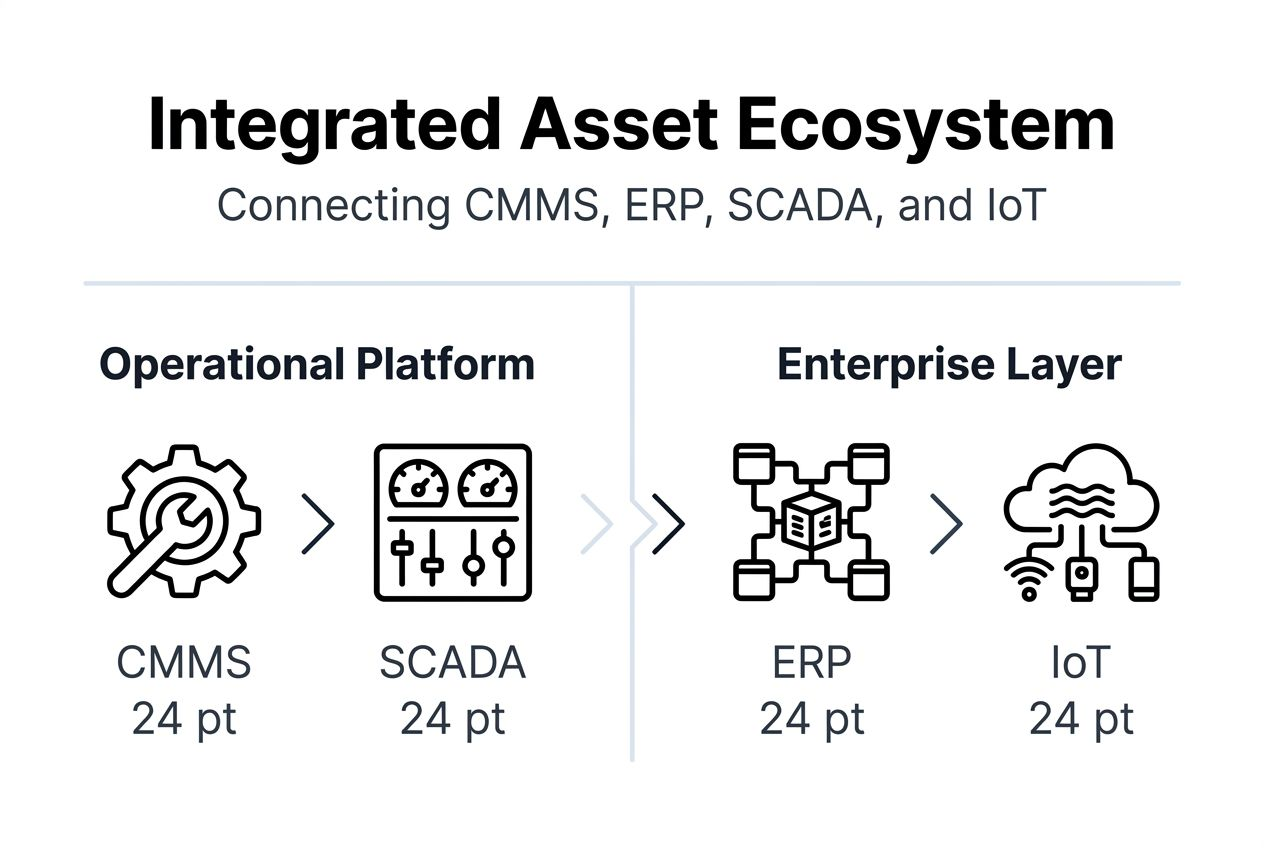
Effective integration transforms isolated tools into a cohesive ecosystem. Rather than managing separate databases for maintenance, inventory, and financial tracking, you gain a connected environment where information updates automatically across all relevant systems. This connectivity directly improves decision-making speed and accuracy.
Understanding standards and data flow in integration
Industrial standards provide the framework for effective system integration. The ISA-95 standard defines the functional hierarchy linking plant-floor control to MES and ERP systems with five levels, creating a common language for diverse platforms to communicate.
The ISA-95 hierarchy organises industrial operations into distinct functional layers:
| Level | Function | Typical systems |
|---|---|---|
| Level 0 | Physical processes | Sensors, actuators, field devices |
| Level 1 | Sensing and manipulation | PLCs, basic control systems |
| Level 2 | Monitoring and supervision | SCADA, HMI systems |
| Level 3 | Manufacturing operations | MES, CMMS, batch management |
| Level 4 | Business planning | ERP, asset management, finance |
This structured approach defines standardised data exchange models that enable seamless communication between levels. When your CMMS at Level 3 needs to pull sensor data from Level 0 devices, ISA-95 provides the interface specifications and data formats to make that exchange reliable and consistent.
The standard facilitates alignment between plant-floor operations and higher management systems. Production data flows upward to inform financial planning, while strategic decisions cascade downward to adjust operational parameters. This bidirectional flow improves responsiveness and ensures that business objectives translate into shop-floor actions.
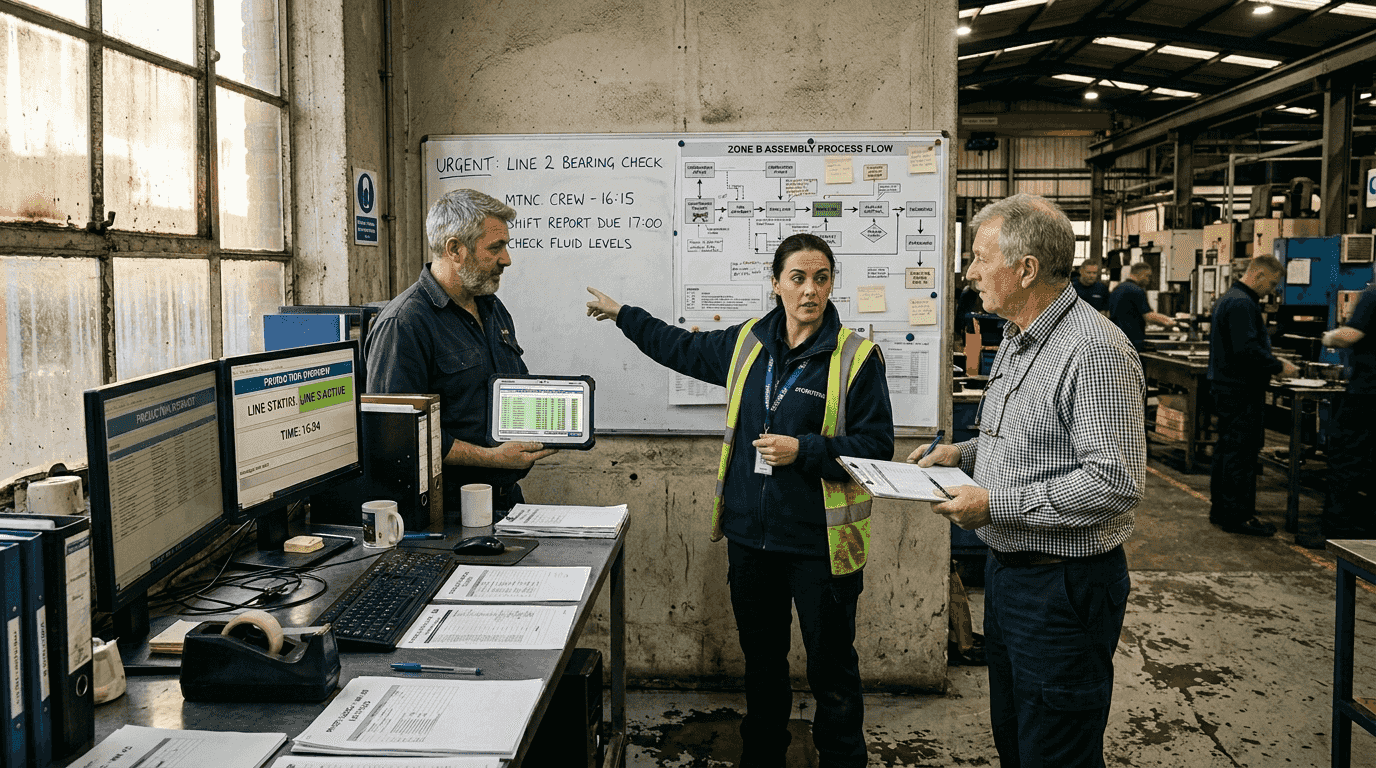
Structured data flow through the ISA-95 hierarchy enables improved decision-making and operational efficiency. Understanding the role of data asset lifecycle helps you design integration architectures that capture information at the right level and deliver it where it creates the most value.
Pro Tip: Map your existing systems to ISA-95 levels before planning integrations. This exercise reveals communication gaps and helps prioritise which connections deliver the highest operational impact.
Benefits of integrating CMMS with ERP, SCADA and IoT platforms
Integration eliminates manual data input, reducing errors and improving accuracy with up to 90% fewer stock discrepancies. When your CMMS automatically receives inventory updates from your ERP system, you avoid the double-entry mistakes that plague disconnected operations. This automation speeds up processes and frees maintenance teams to focus on value-adding activities rather than administrative tasks.
ERP links facilitate financial alignment across asset management functions. Integrating CMMS with ERP systems aligns asset IDs, cost centres, and depreciation schedules, ensuring that maintenance costs flow accurately into financial reports. You gain visibility into true asset lifecycle costs, enabling better capital planning and budget forecasting.
SCADA and IoT connections enable real-time monitoring of asset condition. Integrating CMMS with SCADA and IoT platforms enables real-time condition monitoring and predictive maintenance, transforming how you manage equipment health. Rather than waiting for scheduled inspections, sensors continuously stream performance data that triggers maintenance when actual conditions warrant intervention.
This connectivity supports a fundamental shift in maintenance strategy:
- Calendar-based schedules give way to condition-driven triggers
- Reactive repairs transition to predictive interventions
- Resource allocation aligns with actual asset needs rather than arbitrary timelines
- Maintenance becomes a proactive function that prevents failures instead of responding to them
The role of CMMS in maintenance expands significantly when integrated with operational systems. You gain a complete picture of asset performance, combining historical maintenance records with real-time operational data to identify patterns and optimise strategies.
Cloud based maintenance software benefits efficiency and downtime reduction by enabling integrations that were previously difficult or expensive to implement. Cloud platforms provide standardised APIs and pre-built connectors that simplify linking CMMS, ERP, SCADA, and IoT systems.
Pro Tip: Start with high-impact, low-complexity integrations like linking your CMMS to inventory systems. Early wins build organisational support for more ambitious integration projects.
How integration reduces downtime and boosts maintenance effectiveness
Downtime carries crushing costs in industrial environments. The automotive sector faces average losses of $22,000 per minute when production stops, making integration a critical defence against unplanned failures. These figures extend across manufacturing, processing, and logistics operations where asset availability directly determines revenue.
Integration consolidates data to identify risks early and trigger maintenance before failures occur. A well-planned CMMS integration flips the script on disconnected software stacks that drain time, money, and insight, transforming reactive maintenance cultures into predictive, data-driven operations.
The shift from calendar-based to risk-driven maintenance delivers measurable improvements:
- Identify degrading assets through continuous condition monitoring rather than periodic inspections
- Schedule interventions during planned downtime windows instead of emergency shutdowns
- Optimise spare parts inventory based on actual failure predictions rather than historical averages
- Allocate skilled technicians to high-priority assets identified through integrated risk scoring
- Track maintenance effectiveness by correlating interventions with subsequent performance improvements
Real-time condition data replaces calendar-based maintenance with risk-based triggers, ensuring that resources focus on assets most likely to fail. This precision reduces unnecessary interventions on healthy equipment while catching degradation before it causes costly breakdowns.
Streamlined workflows accelerate repairs when failures do occur. Integrated systems automatically generate work orders, assign appropriate technicians based on skills and location, reserve necessary parts from inventory, and update asset records upon completion. This automation eliminates communication delays and ensures that every step proceeds without manual coordination.
Data richness from integration translates into improved operational decisions across your organisation. The work order management process reduces downtime by connecting maintenance execution with asset performance analytics, creating a continuous improvement loop.
Maintenance optimisation in 2026 cuts downtime and saves costs through sophisticated integration strategies that were impractical just a few years ago. Modern platforms support the data volumes and processing speeds necessary to deliver actionable insights in real time.
Pro Tip: Quantify downtime costs for your critical assets before implementing integration. This baseline provides clear ROI metrics and helps prioritise which systems to connect first.
Explore how FullyOps supports integrated asset management
FullyOps offers comprehensive tools for asset lifecycle management that connect maintenance planning with operational execution. The platform integrates work order management, inventory tracking, and performance analytics into a unified environment designed for industrial operations.
Our resource allocation tutorial demonstrates how integrated data improves technician scheduling and parts planning. You gain visibility across your entire operation, enabling proactive decisions that reduce emergency repairs and extend asset lifespan.
Facility managers using FullyOps achieve measurable improvements in uptime and maintenance efficiency. The platform supports the integration strategies discussed throughout this article, providing APIs and connectors for ERP, SCADA, and IoT systems. Discover how maintenance optimisation in 2026 can transform your operations.
Frequently asked questions
What are the main challenges when integrating asset management systems?
Challenges include incompatible data formats, security concerns bridging IT and OT networks, and vendor-specific protocols that resist standardisation. Detailed planning and use of industry standards like ISA-95 help mitigate these challenges. Starting with well-defined integration objectives and phasing implementation reduces risk and builds organisational capability.
How does Industrial IoT enhance integration in asset management?
Industrial IoT and smart manufacturing transform factories into connected, data-driven systems that enable real-time data collection and analysis. This connectivity supports predictive maintenance strategies by streaming continuous condition data from assets to analytics platforms. IIoT devices provide the sensor layer that feeds integrated maintenance systems with actionable information.
What metrics best measure the return on investment from integrations?
Common metrics include downtime reduction measured in hours or production units, maintenance cost savings from predictive strategies, and improved data accuracy reflected in inventory discrepancies. Operational efficiency gains like faster month-end closing and reduced emergency repair frequency also indicate positive ROI. Understanding the role of data asset lifecycle helps you identify which metrics matter most for your organisation.
How long does a typical system integration project take?
Timelines vary based on system complexity and organisational readiness, but most CMMS integrations complete within three to six months. Simple API connections between cloud platforms may take weeks, whilst complex OT integrations involving legacy SCADA systems can extend to a year. Phased approaches deliver early value whilst building toward comprehensive integration. Visit our asset management blog for detailed implementation guides.
Recommended
- Asset Management Trends 2026: Transforming HVAC Operations
- Role of Data in Asset Lifecycle: Driving Efficiency and Cost Savings
- Role of Automation in Asset Management – Transforming HVAC Efficiency
- 7 Proven Resource Management Strategies for Asset Efficiency