

Managing assets across multiple sites can quickly become complicated when manual processes slow response times and leave room for error. Efficient asset tracking and dependable scheduling are essential for minimising costly downtime, especially in fast-paced HVAC operations. With Field Service Automation now harnessing AI and real-time data, this approach introduces smarter ways to coordinate technicians, monitor equipment, and keep every workflow aligned. Discover how automating key field service tasks unlocks greater control and reliability for your critical infrastructure.
Índice
- Defining Field Service Automation And Its Purpose
- Core Features And How Automation Works
- Types Of Field Service Automation Solutions
- Key Use Cases In HVAC And Asset-Intensive Sectors
- Implementation Challenges And Common Mistakes
- Measuring ROI And Future Trends In Automation
Principais conclusões
| Ponto | Detalhes |
|---|---|
| Field Service Automation Enhances Efficiency | Automating scheduling, dispatching, and asset tracking significantly reduces operational inefficiencies and human errors. |
| Diverse Solution Types Cater to Various Needs | Different automation solutions, such as mobile workforce management and predictive maintenance, address specific operational challenges across industries. |
| Strategic Implementation is Crucial | Thorough planning, effective change management, and comprehensive staff training are essential for successful automation adoption. |
| Measuring ROI Demonstrates Value | A multi-dimensional approach to ROI assessment helps organisations understand the financial and operational benefits of automation investments. |
Defining Field Service Automation and Its Purpose
Field Service Automation represents a transformative technological approach that fundamentally reshapes how organisations manage and execute maintenance and support operations. By leveraging advanced digital technologies, businesses can streamline complex field service workflows, reducing manual interventions and enhancing overall operational efficiency.
At its core, Field Service Automation utilises intelligent software systems to manage critical operational tasks such as scheduling, dispatching, asset tracking, and communication. These technologies integrate artificial intelligence, machine learning, and real-time data processing to automate traditionally labour-intensive processes. The primary objective is to eliminate inefficiencies, minimise human error, and create a more responsive, data-driven service ecosystem that can rapidly adapt to changing maintenance requirements.
The key components of Field Service Automation typically encompass several interconnected technological capabilities. These include advanced scheduling algorithms that optimise technician routing, digital work order management systems, real-time asset tracking, predictive maintenance tools, and integrated communication platforms. By centralising these functions, organisations can achieve unprecedented levels of operational visibility, enabling faster decision-making and more precise resource allocation.
Pro Tip: Start by mapping your current field service processes and identify repetitive manual tasks that could be automated to maximise efficiency and reduce operational overhead.
Core Features and How Automation Works
Field Service Automation leverages sophisticated technological capabilities to transform traditional operational workflows. Scheduling and dispatching systems represent the fundamental backbone of these advanced solutions, enabling organisations to optimise resource allocation with unprecedented precision. These intelligent platforms analyse technician skills, geographical location, availability, and job complexity to generate the most efficient work assignments.

The core technological components encompass several interconnected features that work seamlessly to streamline field operations. These include mobile applications for real-time data capture, GPS tracking for location monitoring, digital work order management systems, and comprehensive inventory tracking mechanisms. By integrating these automated workflow solutions, businesses can eliminate manual processes, reduce administrative overhead, and create a more responsive operational environment.
Automation works through complex algorithmic processes that continuously analyse and optimise field service parameters. The system automatically matches technicians with jobs based on their specific expertise, calculates optimal routing to minimise travel time, provides real-time updates to managers, and generates comprehensive performance analytics. This intelligent approach allows organisations to dramatically improve operational efficiency, reduce response times, and enhance overall service quality by transforming data into actionable insights.
The table below highlights key ways automation impacts business outcomes:
| Area of Impact | Automation Effect | Business Value |
|---|---|---|
| Scheduling | Automated routing | Lower travel costs |
| Asset Tracking | Continuous monitoring | Fewer equipment losses |
| Performance Analytics | Data-driven insights | Improved decision-making |
| Communication | Instant updates | Tempos de resposta mais rápidos |
Pro Tip: Conduct a thorough audit of your current field service processes to identify specific areas where automation can deliver the most significant operational improvements.
Types of Field Service Automation Solutions
Field service automation encompasses a diverse range of technological solutions designed to address specific operational challenges across different industries. Automation in asset management enables organisations to implement targeted digital strategies that transform traditional maintenance and support workflows. These solutions can be broadly categorised into several distinct types, each addressing unique operational requirements and technological capabilities.
The primary categories of field service automation solutions include mobile workforce management systems, predictive maintenance platforms, enterprise resource planning (ERP) integrations, and comprehensive field service management software. Mobile workforce management systems focus on real-time technician tracking, job assignment, and communication, allowing organisations to optimise resource deployment and enhance operational visibility. Predictive maintenance platforms leverage advanced analytics and machine learning to anticipate equipment failures, schedule proactive interventions, and minimise unexpected downtime.
Enterprise-level automation solutions often integrate multiple technological components to create holistic operational ecosystems. These sophisticated platforms combine scheduling algorithms, inventory management tools, customer communication interfaces, and detailed reporting mechanisms. By interconnecting these technological capabilities, businesses can achieve comprehensive operational oversight, reduce administrative complexity, and generate actionable insights that drive continuous improvement across field service operations.
Here is a quick overview of common field service automation solutions and their core focus:
| Solution Type | Main Functionality | Typical Benefit |
|---|---|---|
| Mobile Workforce Management | Real-time technician tracking | Improved job allocation accuracy |
| Manutenção Preditiva | Failure forecasting and alerts | Redução do tempo de inatividade do equipamento |
| ERP Integration | Unified resource planning | Streamlined data management |
| Field Service Management Software | End-to-end service coordination | Enhanced operational visibility |
Pro Tip: Evaluate your current operational challenges and select automation solutions that directly address your most critical performance bottlenecks.
Key Use Cases in HVAC and Asset-Intensive Sectors
Field service automation has transformed operational strategies across multiple asset-intensive industries, with HVAC systems representing a prime example of technological integration. Asset lifecycle management has become increasingly sophisticated, enabling organisations to move beyond traditional reactive maintenance approaches. In the HVAC sector, automation solutions provide critical capabilities for monitoring equipment performance, predicting potential failures, and scheduling proactive maintenance interventions.
Specific use cases demonstrate the profound impact of automation across different operational contexts. In commercial building management, automated systems track multiple HVAC units simultaneously, monitoring temperature regulation, energy consumption, and mechanical performance. Predictive maintenance algorithms can detect early warning signs of potential equipment breakdown, allowing managers to schedule maintenance before catastrophic failures occur. Industrial settings leverage similar technologies to manage complex heating, ventilation, and cooling systems across large manufacturing facilities, ensuring consistent environmental conditions and minimising operational disruptions.
The most advanced field service automation solutions integrate comprehensive data collection, real-time monitoring, and intelligent analytics to transform asset management practices. These platforms enable organisations to develop detailed performance profiles for each piece of equipment, track maintenance histories, predict replacement timelines, and optimise resource allocation. By centralising critical operational data and providing actionable insights, automation technologies empower maintenance teams to make more informed strategic decisions, reduce unexpected downtime, and extend the operational lifespan of critical infrastructure.
Pro Tip: Implement a phased automation strategy that prioritises your most critical and high-risk assets to maximise immediate operational improvements.
Implementation Challenges and Common Mistakes
Implementing field service automation is a complex process that requires strategic planning and a nuanced understanding of organisational dynamics. Asset lifecycle management demands comprehensive approaches that address potential pitfalls before they significantly impact operational efficiency. Many organisations encounter substantial challenges during digital transformation, including resistance to technological change, inadequate staff training, and misalignment between automation capabilities and existing workflows.
Common implementation mistakes often stem from rushed technological adoption without proper infrastructure preparation. Organisations frequently underestimate the importance of comprehensive staff training, resulting in low system adoption rates and suboptimal performance. Technical integration challenges can arise from incompatible legacy systems, insufficient data migration strategies, and poorly defined operational requirements. These issues can lead to fragmented automation efforts, reduced operational visibility, and diminished return on technological investments.
Successful field service automation implementation requires a holistic approach that encompasses technological, human, and strategic considerations. Organisations must develop robust change management strategies, invest in comprehensive staff training programmes, and create clear communication channels that explain the benefits of automation. Gradual, phased implementation allows teams to adapt incrementally, identify potential challenges early, and build confidence in new technological systems. Continuous performance monitoring, regular system evaluations, and flexible adaptation strategies are crucial for maintaining the effectiveness of automation technologies.
Pro Tip: Conduct a thorough organisational readiness assessment before implementing field service automation to identify potential resistance points and develop targeted mitigation strategies.
Measuring ROI and Future Trends in Automation
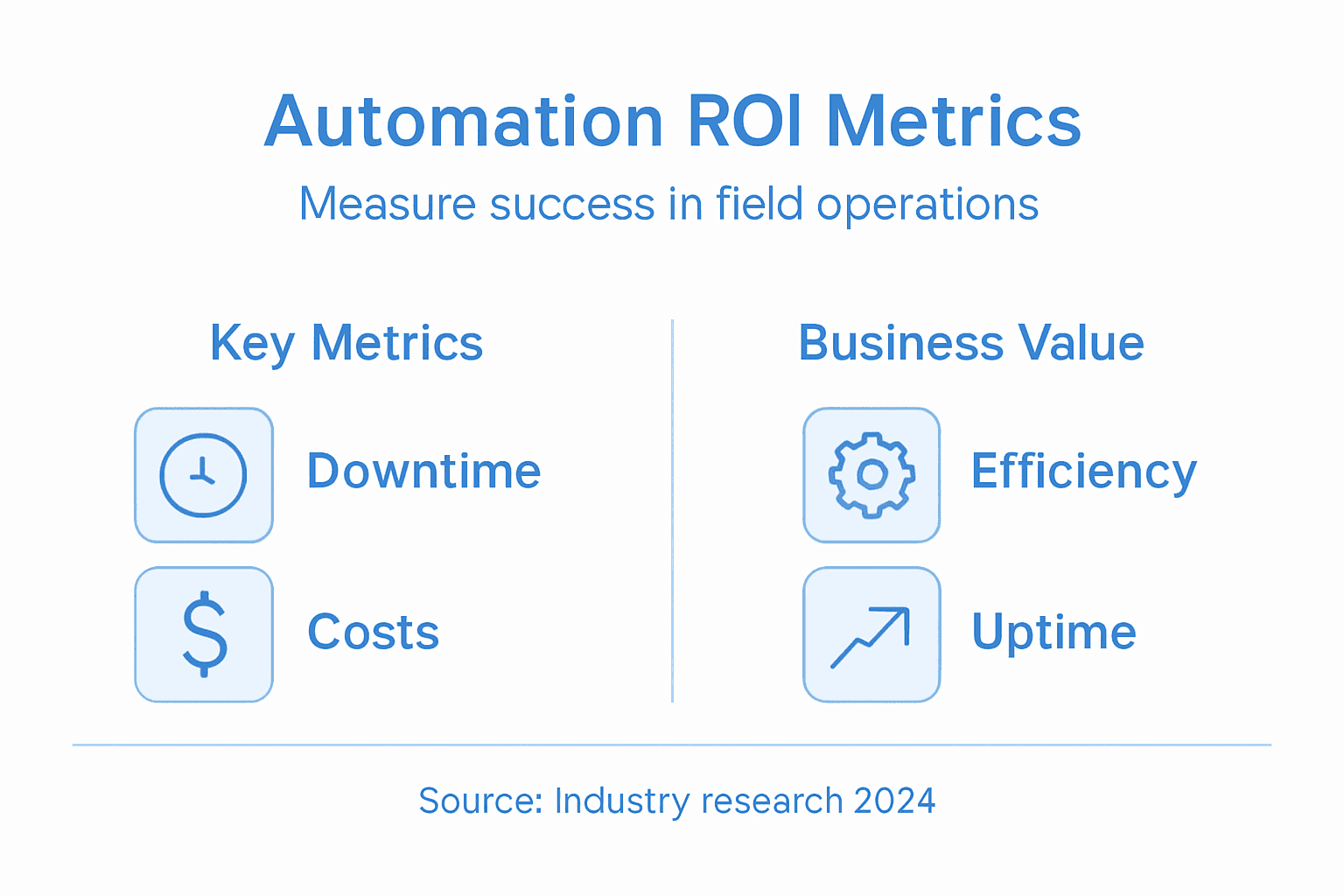
Measuring the return on investment (ROI) for field service automation requires a comprehensive approach that evaluates both tangible and intangible performance metrics. Increasing profitability in field services demands sophisticated analytical frameworks that capture the multidimensional impact of technological transformation. Key performance indicators typically include reduced operational costs, improved technician productivity, decreased equipment downtime, enhanced customer satisfaction, and more precise resource allocation.
The primary quantitative metrics for assessing field service automation ROI involve comparing pre-automation and post-implementation operational parameters. These measurements encompass direct cost reductions, such as decreased labour hours, minimised travel expenses, and reduced maintenance intervention times. Advanced organisations also track indirect benefits like improved first-time fix rates, enhanced scheduling efficiency, real-time asset performance monitoring, and more accurate predictive maintenance capabilities. By developing comprehensive measurement frameworks, businesses can substantiate the strategic value of technological investments.
Future automation trends indicate a significant shift towards more intelligent, predictive, and integrated technological ecosystems. Emerging technologies such as artificial intelligence, machine learning, Internet of Things (IoT) sensors, and advanced analytics are converging to create increasingly sophisticated field service management platforms. These developments promise more granular operational insights, enhanced decision-making capabilities, and unprecedented levels of operational efficiency. Organisations that proactively embrace these technological advancements will be better positioned to adapt to rapidly evolving market demands and maintain competitive advantages.
Pro Tip: Develop a robust, multi-dimensional measurement framework that captures both quantitative financial metrics and qualitative operational improvements when evaluating automation investments.
Unlock the Full Potential of Field Service Automation with FullyOps
Managing complex field operations and asset lifecycles can be overwhelming without the right technology. This article highlights the challenges of scheduling, resource allocation, and real-time data tracking that many organisations face. If you aim to reduce downtime, improve asset reliability, and automate maintenance workflows, FullyOps offers solutions designed precisely for those critical needs. With tailored modules for technicians, managers, and back-office teams, our SaaS platform transforms your field service operations into a streamlined, data-driven powerhouse.
Experience intelligent scheduling, seamless work order management, and comprehensive operational analytics with a FullyOps. Start transforming your field service challenges into opportunities for efficiency now by visiting https://fullyops.com and exploring how our technology empowers asset-intensive sectors through smarter automation.
Perguntas mais frequentes
What is Field Service Automation?
Field Service Automation is a technological approach that uses intelligent software systems to manage and streamline maintenance and support operations, reducing manual tasks and improving operational efficiency.
How does Field Service Automation improve scheduling and dispatching?
Field Service Automation leverages advanced scheduling algorithms to optimise technician assignments based on their skills, geographic location, availability, and job complexity, resulting in better resource allocation and lower travel costs.
What are the key components of a Field Service Automation solution?
Key components of Field Service Automation solutions include mobile applications for real-time data capture, GPS tracking for location monitoring, digital work order management systems, predictive maintenance tools, and integrated communication platforms.
What challenges might organisations face when implementing Field Service Automation?
Common challenges include resistance to change from staff, inadequate training, integration issues with existing systems, and misaligned automation capabilities with current workflows, which can lead to fragmented automation efforts.