

Many maintenance teams spend more time firefighting emergencies than executing planned work. Incomplete asset data, inefficient scheduling, and reactive habits drain budgets and morale. This guide delivers a detailed workflow integrating asset inventory, CMMS automation, IoT sensors, and AI analytics to transform your preventive maintenance operations. Following this structured approach reduces downtime, slashes maintenance costs, and ensures regulatory compliance across your facilities.
Table of Contents
- Prerequisites and Asset Inventory
- Step-by-Step Preventive Maintenance Workflow
- CMMS Integration and Workflow Automation
Key Takeaways
| Point | Details |
|---|---|
| Effective preventive maintenance requires detailed asset inventory, trained personnel, and CMMS integration | Comprehensive data and automation form the foundation for reliable workflows |
| A stepwise workflow ensures efficient scheduling, execution, and continuous improvement | Structured processes eliminate guesswork and reduce emergency repairs |
| Predictive maintenance with IoT and AI can reduce costs by up to 30% and limit breakdowns | Advanced technologies forecast failures before they cause downtime |
| Common mistakes include poor asset data and manual scheduling, which reduce efficiency | Automation and regular audits prevent costly workflow breakdowns |
| Success metrics include downtime reduction, cost savings, and extended equipment life | Measurable outcomes prove ROI and guide ongoing optimization |
Prerequisites and Asset Inventory
Before implementing an effective preventive maintenance workflow, you need solid groundwork. Think of this as laying the foundation before building your house. Without proper preparation, even the best workflow crumbles under operational pressure.
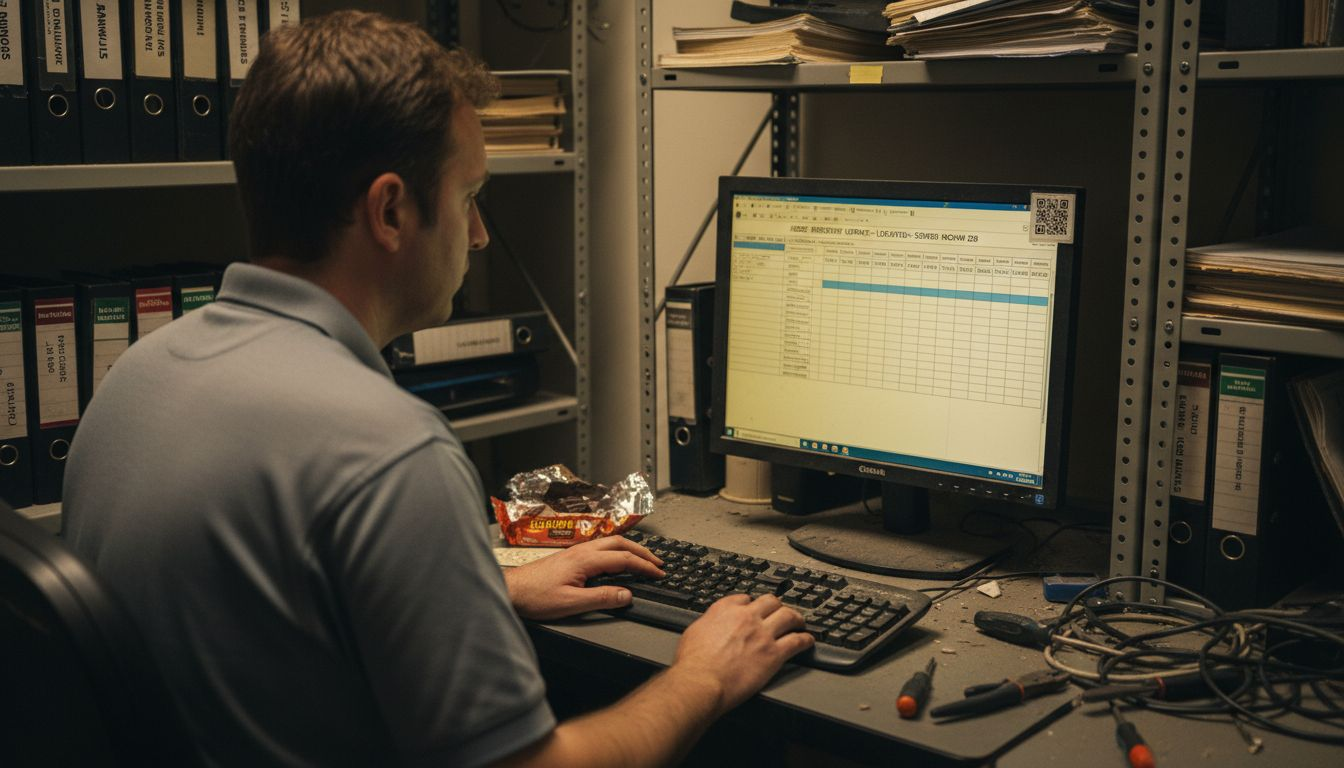
Comprehensive asset inventory stands as your first priority. You need detailed records covering equipment specifications, maintenance history, operational criticality, and location data. A detailed asset inventory reduces unplanned downtime by 15%, proving that time invested in documentation pays immediate dividends. This inventory becomes your single source of truth.
Trained maintenance personnel and strong management commitment create the human infrastructure. Your team must understand equipment systems, safety protocols, and data collection procedures. Management must allocate budget, prioritize preventive work over reactive firefighting, and support continuous improvement initiatives.
Reliable CMMS software centralizes your operations. This digital hub manages schedules, tracks work orders, stores asset documentation, and generates performance reports. Modern CMMS platforms integrate with resource management strategies that optimize technician allocation and inventory control.
Clear maintenance policies and measurable goals align team efforts. Document standard operating procedures, define response timeframes, and establish key performance indicators. These guidelines ensure consistency regardless of which technician handles the task.
Essential prerequisite elements:
- Complete asset register with criticality classifications
- Maintenance skill assessments and training plans
- Functional CMMS platform with mobile access
- Written maintenance policies and procedures
- Management budget allocation and support
- Safety equipment and compliance documentation
Pro Tip: Schedule quarterly asset inventory audits to catch new equipment, decommissioned assets, and specification changes. Stale data undermines even the best workflow design.
Step-by-Step Preventive Maintenance Workflow
With prerequisites in place, you can execute a proven workflow that transforms maintenance from chaotic to controlled. This sequence builds momentum, with each step reinforcing the next.
1. Conduct detailed asset inventory and classify by criticality
Identify every piece of equipment requiring maintenance. Assign criticality ratings based on safety impact, production importance, and failure consequences. High-criticality assets demand more frequent attention and tighter monitoring.
2. Develop baseline maintenance schedules based on manufacturer and usage data
Extract recommended service intervals from equipment manuals. Adjust frequencies based on actual operating hours, environmental conditions, and historical failure patterns. Defined steps include asset ID, schedule creation, resource allocation, execution, and continuous improvement, forming an interconnected system.
3. Implement CMMS to centralize data, automate scheduling, manage work orders
Configure your CMMS with asset records, maintenance tasks, and resource assignments. Enable automated work order generation based on calendar dates, meter readings, or condition triggers. This eliminates manual scheduling errors that cause missed maintenance.
4. Deploy IoT sensors for real-time monitoring with predictive analytics integrations
Install vibration sensors, temperature monitors, and performance meters on critical equipment. Connect sensor feeds to analytics platforms that detect anomaly patterns indicating impending failures. This transforms static schedules into dynamic, condition-based maintenance.
5. Execute scheduled maintenance using CMMS workflows with data collection
Technicians receive mobile work orders detailing tasks, safety requirements, and spare parts needed. They complete procedures, record observations, capture photos, and log actual time spent. This data feeds continuous improvement.
6. Analyze collected data to optimize and continuously improve schedules
Review completion rates, time variance, repeat failures, and cost trends monthly. Adjust task frequencies, refine procedures, and reallocate resources based on evidence. Your workflow becomes smarter with every maintenance cycle.
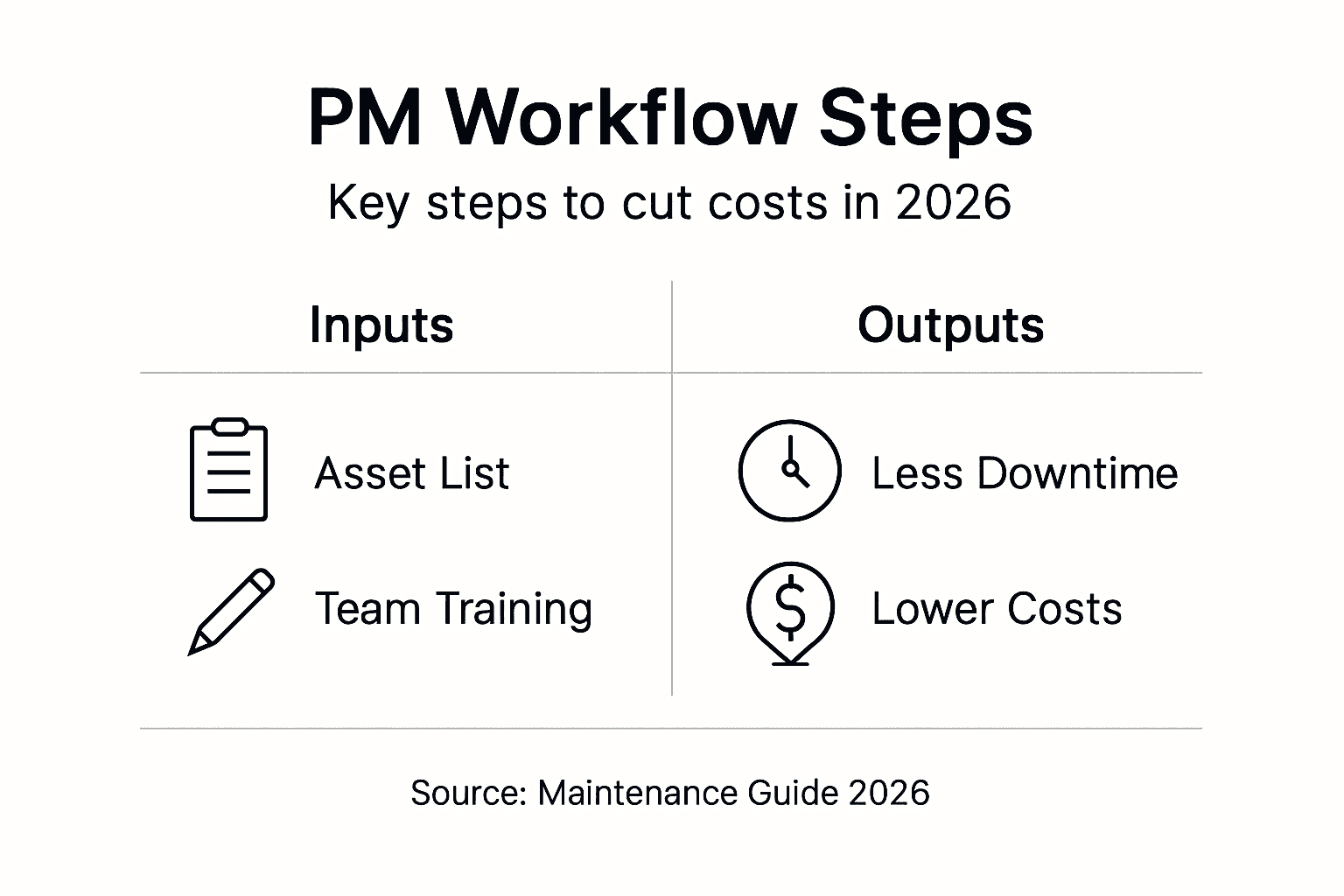
The table below maps workflow stage inputs and outputs:
| Workflow Stage | Key Inputs | Primary Outputs |
|---|---|---|
| Asset Inventory | Equipment specs, location data | Criticality classifications, maintenance needs |
| Schedule Development | Manufacturer guidelines, usage patterns | Task lists, frequency assignments |
| CMMS Implementation | Asset data, task definitions | Automated work orders, resource calendars |
| IoT Deployment | Equipment operating parameters | Real-time condition data, failure predictions |
| Maintenance Execution | Work orders, procedures | Completed tasks, observation records |
| Data Analysis | Performance metrics, cost data | Schedule optimizations, process improvements |
Integrate these steps with proven asset maintenance workflow guide principles and follow the five-step process for preventive maintenance for comprehensive adoption. Master creating maintenance schedules that balance workload and asset needs, then streamline your work order management process for maximum efficiency. Consider adapting your approach using a comprehensive facility management checklist that covers all operational aspects.
Pro Tip: Conduct monthly workflow reviews with your maintenance team. Frontline technicians spot bottlenecks and improvement opportunities that management dashboards miss.
CMMS Integration and Workflow Automation
Computerized maintenance management systems transform preventive maintenance from paper-based chaos into streamlined digital operations. Think of CMMS as your maintenance command center, coordinating every moving part.
CMMS provides a centralized repository accessible to technicians, supervisors, procurement staff, and executives simultaneously. Everyone views the same asset information, eliminating version control issues and communication gaps. Real-time updates mean your spare parts team sees work orders the moment they generate.
Automated scheduling removes human error from routine task generation. The system creates work orders based on calendar intervals, equipment runtime hours, or production cycles. You configure the rules once, and maintenance happens on time without manual intervention. This consistency prevents the
Recommended
- How to Overcome the Challenges of Adopting Preventive Maintenance: A Five-Step Process – FullyOps
- Work Order Management Process to Reduce Downtime
- Asset Maintenance Workflow Guide for Optimal Efficiency
- Asset Management & Field Service Blog Insights
- Commercial Roof Maintenance: Extend Lifespan 30-100% Guide
- Schedule Annual HVAC Service: 25% Longer Life, 20% Savings