

TL;DR:
- Data-driven reporting reduced mean time to repair by over 30% in industrial plants.
- Effective reporting turns operational data into actionable intelligence, improving safety and reducing costs.
- Modern software tools automate data collection and analysis, enabling proactive maintenance strategies.
Data-driven reporting cut mean time to repair by over 30% in an industrial plant, challenging the widespread assumption that reporting is little more than a compliance exercise. For facility managers overseeing complex industrial operations, this figure represents something far more significant: a lever for genuine operational transformation. This guide examines why reporting is central to modern facility management, how methods have evolved from reactive paperwork to strategic intelligence, and what steps you can take to extract measurable value from your reporting processes. Whether you manage a single site or a multi-facility portfolio, the principles covered here apply directly to your day-to-day challenges.
Table des matières
- Why facility reporting matters for operational success
- The evolution from reactive to strategic maintenance reporting
- How advanced software solutions optimise reporting
- Best practices for maximising value from facility reporting
- Why strategic reporting is the overlooked key to proactive facility management
- Achieve operational excellence with advanced reporting tools
- Questions fréquemment posées
Principaux enseignements
| Point | Détails |
|---|---|
| Strategic reporting boosts efficiency | Shifting from reactive to proactive reporting enables predictive maintenance and fewer failures. |
| Advanced software is essential | CMMS and integrated systems automate, benchmark, and transform reporting for operational gains. |
| Prioritise safety-critical assets | Effective reporting focuses on escalation and compliance, improving both safety and business outcomes. |
| Continuous improvement pays off | Regularly reviewing and refining reporting practices ensures sustained value and optimal facility performance. |
Why facility reporting matters for operational success
Building on the value outlined above, it is crucial to understand exactly why reporting is so fundamental to industrial facility management. At its core, reporting is the mechanism through which operational data becomes actionable intelligence. Without structured reporting, patterns in equipment behaviour go undetected, safety risks accumulate quietly, and maintenance teams operate on instinct rather than evidence.
Robust reporting underpins both safety and regulatory compliance in ways that are difficult to replicate through other means. In industries where a single equipment failure can trigger a production halt or a safety incident, the ability to track, escalate, and resolve issues systematically is not optional. Safety-critical reporting must prioritise assets with the highest risk profiles and embed clear escalation protocols, ensuring that hazardous conditions reach the right people before they become incidents. Facilities that have adopted this approach report measurable reductions in unplanned downtime, particularly on assets such as compressors, boilers, and electrical distribution systems.
The business impact of missed or inaccurate reporting is equally significant. When data is incomplete, maintenance teams cannot distinguish between recurring faults and isolated incidents. This leads to wasted labour, unnecessary parts expenditure, and a growing backlog of unresolved issues. Improving HVAC asset reliability, for example, depends heavily on consistent fault logging and trend analysis over time.
Several common pitfalls undermine reporting effectiveness in industrial settings:
- Data overload: Receiving too many alerts or reports from multiple systems makes it difficult to identify what truly matters.
- Under-reporting: Technicians who skip logging minor faults create blind spots that allow small problems to escalate.
- No Fault Found (NFF) cases: When a reported fault cannot be reproduced during inspection, the underlying cause often goes unaddressed, leading to repeat failures.
- Inconsistent formats: Reports compiled in different formats across teams make benchmarking and trend analysis unreliable.
“Effective facility reporting is not about generating more data. It is about generating the right data, at the right time, for the right people.”
Addressing these pitfalls requires both process discipline and the right tools. Facilities that treat reporting as a strategic priority, rather than a bureaucratic obligation, consistently outperform those that do not.
The evolution from reactive to strategic maintenance reporting
With the stakes established, it is time to explore how reporting methods have evolved over recent decades. The shift from reactive to strategic reporting is one of the most significant changes in modern facility management.
Reactive reporting is straightforward: a fault occurs, a technician responds, and the event is logged after the fact. This approach captures what happened but offers little insight into why it happened or how to prevent recurrence. Strategic reporting, by contrast, uses structured data collection and analysis to anticipate failures before they occur, enabling planned interventions rather than emergency responses.
Two frameworks have driven this evolution:
- FRACAS (Failure Reporting, Analysis, and Corrective Action System): A structured methodology that captures failure data, analyses root causes, and tracks corrective actions to closure. FRACAS moves reporting from reactive to proactive, directly addressing the NFF problem through automation and telemetry.
- CMMS (Computerised Maintenance Management System): A digital platform that integrates work order management, asset history, and reporting into a single system, supporting proactive uptime management across facilities of all sizes.
The table below illustrates the key differences between reactive and proactive reporting approaches:
| Fonctionnalité | Reactive reporting | Proactive reporting |
|---|---|---|
| Trigger | Fault occurrence | Scheduled or condition-based |
| Data capture | Manual, post-event | Automated, real-time |
| Analysis depth | Incident-level | Trend and root cause |
| Outcome | Record of events | Prevention of recurrence |
| Benchmarking | Rarely used | Integral to process |
| Cost impact | High unplanned costs | Reduced lifecycle costs |
The role of le reporting dans la gestion d'actifs has expanded significantly as telemetry and IoT sensors have become more accessible. Condition monitoring data can now feed directly into reporting systems, flagging anomalies before they manifest as failures.
Pro Tip: If your facility uses vibration or temperature sensors on critical assets, configure your reporting system to trigger escalation alerts at defined thresholds rather than waiting for manual inspection cycles. This single change can eliminate a significant proportion of unplanned failures.
How advanced software solutions optimise reporting
As reporting matures, the role of advanced technology becomes impossible to ignore. Modern reporting software does far more than store records. It standardises data capture, automates workflows, and surfaces insights that would take hours to extract manually.
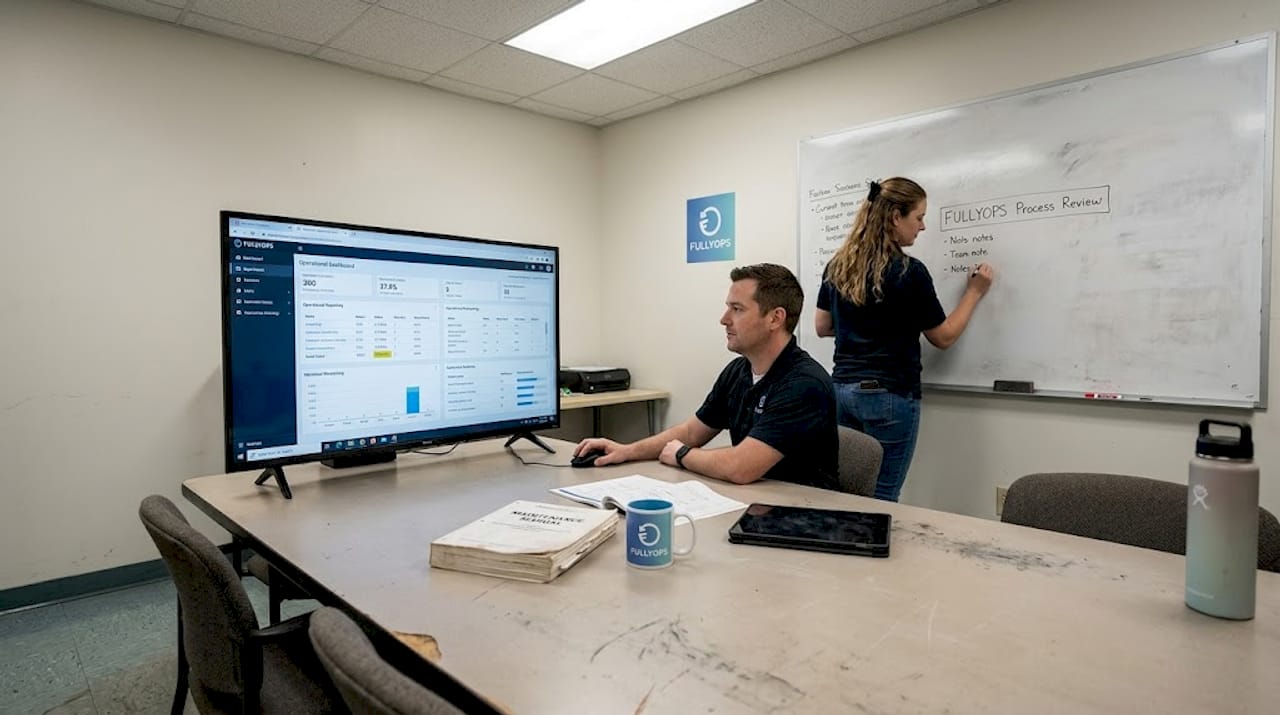
CMMS automates data capture, standardises reports, and enables benchmarking against industry standards set by bodies such as IFMA and BOMA. This means facility managers can compare their performance against sector benchmarks, identify gaps, and set realistic improvement targets.
The table below summarises key reporting features available in advanced platforms:
| Fonctionnalité | Operational benefit |
|---|---|
| Automated work order generation | Reduces response time and manual effort |
| Real-time dashboards | Instant visibility of asset and team status |
| Escalation rules | Ensures critical issues reach the right person |
| Historical trend analysis | Identifies recurring faults and failure patterns |
| Compliance report generation | Simplifies audit preparation |
| Integration with IoT sensors | Enables condition-based maintenance triggers |
The actionable benefits of adopting advanced reporting software are well documented:
- Faster MTTR: Automated alerts and structured workflows reduce the time between fault detection and resolution.
- Reduced costs: Planned maintenance, triggered by accurate reporting, consistently costs less than emergency repair.
- Improved compliance: Standardised reports provide auditable records that satisfy regulatory requirements without additional manual effort.
For facilities considering a transition, cloud-based maintenance software offers particular advantages in terms of accessibility and scalability. A maintenance management software comparison can help identify which platform best fits your operational profile.
Pro Tip: When configuring escalation rules for safety-critical tasks, set two-tier alerts: an initial notification to the responsible technician and a secondary alert to the facility manager if the task remains unacknowledged after a defined period. This prevents critical issues from falling through the gaps.
Best practices for maximising value from facility reporting
New tools are vital, but getting the most value also demands process discipline and continuous improvement. Even the most capable reporting software will underdeliver if the underlying processes are poorly defined.
Here are the practical steps that deliver the greatest reporting improvements:
- Integrate real-time dashboards with structured analysis: Dashboards provide immediate visibility, but they must be paired with regular structured reviews to translate data into decisions. FRACAS and CMMS, when integrated, enable real-time dashboards and more effective work order management.
- Establish clear benchmarking processes: Define which KPIs matter most for your facility, set baseline measurements, and review progress quarterly. Without benchmarks, improvement is difficult to quantify.
- Automate alerts for critical assets: Manual monitoring is inconsistent. Automated alerts, configured around asset criticality, ensure that high-priority issues are never missed.
- Schedule regular data reviews: Monthly or quarterly reviews of reporting data help identify trends that daily monitoring might obscure.
- Close the loop on corrective actions: Every reported fault should have a documented resolution. Open-ended work orders are a reliable indicator of reporting process failure.
The most common pitfalls to avoid include:
- Data overload: Too many alerts desensitise teams and lead to important notifications being ignored. Filter ruthlessly.
- Poor action follow-up: Reporting without follow-through generates records but not results. Assign ownership to every corrective action.
- Lack of benchmarking: Without reference points, it is impossible to know whether performance is improving or declining.
Automation and maintenance efficiency are closely linked. Facilities that automate routine reporting tasks free their teams to focus on analysis and improvement rather than data entry.
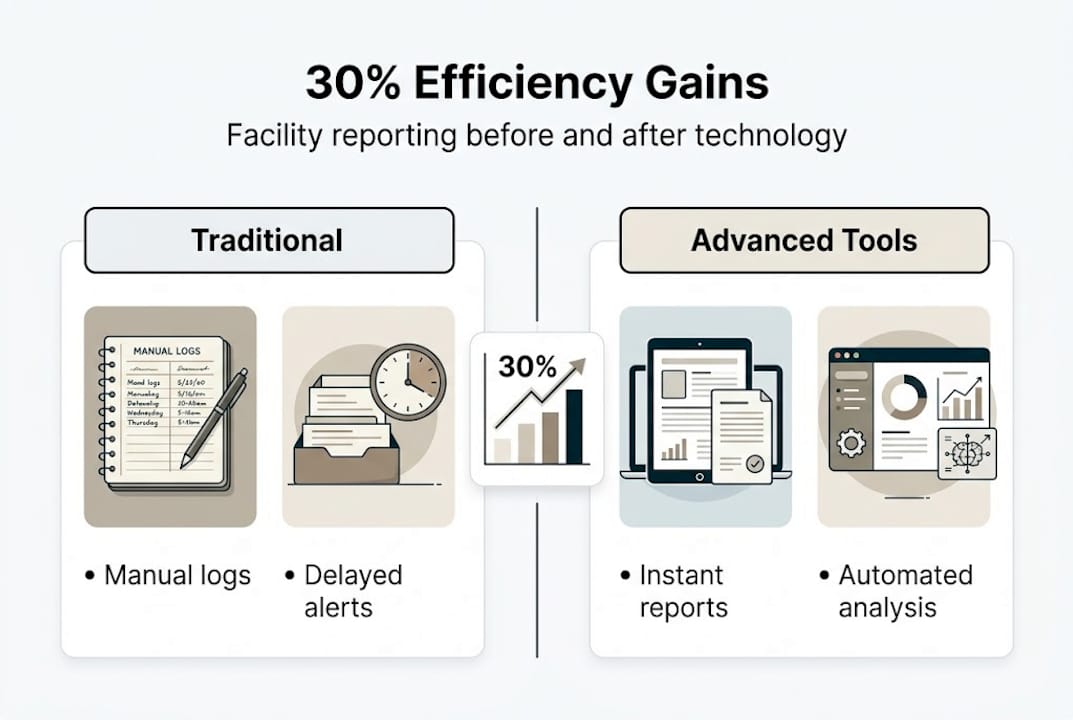
Pro Tip: Review your dashboard configuration every six months. As your facility’s asset base and risk profile change, the metrics that matter most will shift. Outdated dashboards can create a false sense of control.
Why strategic reporting is the overlooked key to proactive facility management
Most facility management teams acknowledge that reporting is important. Fewer treat it as a genuine strategic asset. This distinction matters more than it might appear.
In practice, many teams use reporting systems primarily to satisfy compliance requirements or to document incidents after they occur. The data is captured, the boxes are ticked, and the reports are filed. But the analytical potential of that data, the ability to identify failure patterns, predict asset degradation, and optimise maintenance schedules, remains largely untapped.
The facilities that consistently outperform their peers are not necessarily those with the most advanced equipment. They are the ones that use reporting data to make better decisions, faster. They treat every work order, every fault log, and every sensor reading as a source of operational intelligence rather than a bureaucratic obligation.
Shifting to this mindset requires a deliberate change in how reporting is positioned within the organisation. It should be the first lever facility managers pull when seeking sustainable efficiency improvements, not an afterthought. When reporting is treated as a strategic function, it becomes the foundation for predictive maintenance, informed capital planning, and continuous operational improvement.
Achieve operational excellence with advanced reporting tools
Effective reporting is not simply a technical capability. It is an operational discipline that, when properly supported by the right software, delivers measurable gains in efficiency, safety, and cost control. FullyOps provides facility managers with the tools to move beyond reactive record-keeping and into genuinely strategic operations management.
From resource allocation for asset managers to maintenance tracking tools designed for industrial teams, FullyOps brings together work order management, real-time dashboards, and automated reporting in a single platform. If you are ready to put your reporting data to work and build a more proactive, efficient facility operation, explore how gestion du cycle de vie des actifs within FullyOps can support your goals.
Questions fréquemment posées
How does facility reporting reduce maintenance costs?
By identifying trends and inefficiencies early, facility reporting enables targeted interventions that lower both downtime and repair expenses. Data-driven reporting reduced MTTR and CoM significantly in a documented industrial plant case study.
What is the difference between FRACAS and CMMS reporting?
FRACAS is a strategic, failure-focused system designed to analyse root causes and drive corrective action; CMMS integrates reporting with work order management and automation. FRACAS addresses NFF via telemetry; CMMS enables real-time dashboards and structured workflows.
How do I avoid data overload in facility reporting?
Implement clear escalation rules, prioritise critical asset reporting, and regularly review dashboard settings to filter non-essential data. Data overload from multi-vendor sources is a recognised challenge that requires deliberate configuration and ongoing governance.
Why is reporting important for safety compliance?
Consistent, prioritised reporting ensures hazardous issues are identified and escalated before incidents can occur, fulfilling regulatory obligations. Safety-critical reporting reduces unplanned work and ensures escalation protocols are followed systematically across all asset classes.
Recommandé
- Facility management checklist: boost efficiency and asset control
- Gestion des services sur le terrain : Optimiser et augmenter l'efficacité - FullyOps
- Rapports de maintenance : Améliorer la fiabilité des actifs CVC