

Resumo:
- A análise operacional utiliza dados em tempo real para apoiar decisões operacionais imediatas, reduzindo os tempos de resposta. Complementa o BI tradicional ao permitir respostas rápidas, deteção de anomalias e alertas prontos a decidir nos fluxos de trabalho existentes. Uma implementação bem-sucedida depende de uma arquitetura de dados unificada, integração no fluxo de trabalho e políticas de decisão claras para impulsionar melhorias mensuráveis.
A analítica operacional define-se como a prática de aplicar a análise de dados em tempo real ou quase em tempo real para monitorizar, orientar e melhorar as decisões operacionais do dia a dia. Ao contrário dos relatórios estratégicos, atua sobre fluxos de dados em direto para reduzir o tempo médio até à deteção (MTTD) e o tempo médio de resposta (MTTR) a problemas operacionais. Os enquadramentos da Gartner, ferramentas como o Databricks e o Scoop Analytics, e o conceito de inteligência operacional estão todos inseridos nesta disciplina. Para os gestores de operações e analistas, compreender o papel da analítica nas operações é a base para reduzir o tempo de inatividade, cortar custos e construir uma operação genuinamente reativa.
Como é que a análise operacional difere do BI tradicional?
A analítica operacional e a business intelligence (BI) tradicional resolveem problemas diferentes, e confundi-las conduz a más escolhas de ferramentas e a expectativas não cumpridas. Os processos de análise operacional processam dados em direto fluxos para apoiar decisões que estão a acontecer agora, como por exemplo se deve redirecionar uma linha de produção ou escalar um pedido de manutenção. O BI, pelo contrário, olha para o passado. Agrega dados históricos para apoiar a análise estratégica, a relatoria de tendências e o planeamento trimestral.
A diferença prática nota-se no tempo de resposta. Um painel de BI pode indicar-lhe que o tempo de inatividade da máquina aumentou 12% no mês passado. Um sistema de analítica operacional diz-lhe que um ativo específico se está a degradar neste momento e sinaliza-o antes de ocorrer a falha. O primeiro informa a estratégia; o segundo impulsiona a ação.
A inteligência operacional posiciona-se como uma camada acima da analítica básica. Notificações prontas a decidir, baseadas em exceções fornecer contexto sobre o que aconteceu, porque aconteceu e em que padrão se enquadra, em vez de simplesmente mostrar uma métrica vermelha num ecrã. Esta distinção é importante porque os gestores que recebem alertas sem contexto continuam a enfrentar um fosso de decisão.
| Dimensão | Análise operacional | BI Tradicional |
|---|---|---|
| Atualidade dos dados | Em tempo real ou quase em tempo real | Histórico, processado em lote |
| Uso principal | Decisões táticas do dia a dia | Planeamento estratégico e relato |
| Tipo de saída | Alertas contextuais, indicadores de anomalias | Painéis de controlo, relatórios de tendências |
| horizonte de decisão | Minutos para horas | Dias para meses |
| Métrica-chave | MTTD, MTTR | KPIs, relatórios de desvios |
A analítica operacional complementa em vez de substituir o BI. Os dois sistemas gerem diferentes ciclos de controlo: um lida com a capacidade de resposta tática, o outro apoia o planeamento e a avaliação comparativa a longo prazo. As equipas de operações que os tratam como substitutos acabam tipicamente com lacunas em ambos.
Que técnicas analíticas impulsionam a eficiência operacional?
Vários métodos analíticos distintos sustentam as modernas plataformas de análise operacional, e cada um cumpre um propósito específico no ciclo de decisão.
- Pipelines de dados em fluxo contínuo ativar a ingestão e análise contínuas de dados de sensores, máquinas e transacionais. Ferramentas como o Databricks Lakeflow processam estes fluxos sem a latência dos trabalhos em lote, tornando a deteção de anomalias possível em segundos em vez de horas.
- Análise preditiva utiliza padrões históricos e modelos de aprendizagem automática para prever estados futuros, sendo mais comummente aplicada à saúde de equipamentos e à previsão de procura. Os modelos de manutenção preditiva, por exemplo, estimam a vida útil restante e sinalizam ativos antes da falha.
- Análise prescritiva vai mais longe, recomendando ações específicas sob restrições. Os sistemas centrados na decisão utilizam IA para previsões e motores de otimização para selecionar rapidamente a melhor ação disponível, equilibrando objetivos concorrentes como custo, disponibilidade e risco.
- Motores de deteção de anomalias monitorizar sinais operacionais continuamente e detetar desvios em relação ao comportamento esperado. Estes estão frequentemente integrados diretamente nos painéis operacionais, tornando os resultados visíveis para os chefes de turno e planeadores sem necessidade de consultar um sistema separado.
- Integração de modelos de IA e ML integra modelos treinados em fluxos de trabalho operacionais para que as previsões despoletem respostas automatizadas ou ordens de trabalho prioritárias, em vez de ficarem confinadas a um ambiente de ciência de dados desligado do chão de fábrica.
A analítica no contexto das operações comerciais é importante aqui. Estas técnicas não são exclusivas da produção. A logística, a gestão de instalações, os serviços públicos e as operações de assistência técnica aplicam todos os mesmos métodos a diferentes tipos de dados, desde a telemetria de veículos até às leituras de sistemas de gestão de edifícios.
Dica profissional: Comece pela deteção de anomalias nos seus ativos de maior custo ou risco antes de construir modelos preditivos. Os sucessos precoces da deteção de anomalias geram confiança organizacional na tomada de decisões baseada em dados e criam os conjuntos de dados rotulados que melhoram a precisão dos modelos preditivos ao longo do tempo.

Que fatores maximizam o impacto da análise de dados nas operações?
Implementar ferramentas de analítica é a parte mais simples. Fazer com que produzam melhorias operacionais mensuráveis exige atenção à arquitetura, ao design de fluxos de trabalho e ao comportamento organizacional. Quatro fatores determinam consistentemente se a analítica traz resultados ou dececiona.
-
Arquitetura de dados unificada. Os espaços de nomes uniformizados reduzem o tempo de integração de dados em aproximadamente 80% e os tempos do ciclo de tomada de decisão em cerca de 40%. Isto acontece porque a consistência do estado dos dados e a latência de integração condicionam a análise quase em tempo real muito mais do que o cálculo do modelo. Se os seus dados de sensores, registos de ERP e registos de manutenção estiverem em sistemas separados, sem um esquema partilhado, a sua camada de análise funcionará sempre com informação incompleta ou desatualizada.
-
Incorporação de fluxos de trabalho. A incorporação de análises diretamente em ferramentas operacionais fecha a lacuna da última milha. Um dado analítico que exija que um gestor inicie sessão numa plataforma de análise separada, interprete um gráfico e depois atualize manualmente uma ordem de trabalho perde a maior parte do seu valor devido à fricção e ao atraso. Os alertas e as recomendações devem chegar à pessoa responsável pela ação dentro das suas ferramentas e rotinas existentes.
-
Alertas contextuais, prontos a decidir. Sinalizadores de anomalias em bruto geram fadiga de alertas. Os sistemas de inteligência operacional eficazes investigam a anomalia e entregam uma notificação que explica o que aconteceu, porque é significativa e qual é a resposta recomendada. Isto reduz a carga cognitiva sobre os supervisores de turno e os planeadores, permitindo decisões mais rápidas e seguras.
-
Colaboração entre analistas e operadores. O problema da última milha é tanto organizacional quanto técnico. Os analistas que constroem modelos sem compreender as restrições operacionais produzem recomendações que as equipas da linha da frente ignoram. A colaboração regular entre analistas de dados e funções operacionais, incluindo chefes de turno, planeadores de manutenção e técnicos de campo, produz resultados analíticos que são tecnicamente sólidos e operacionalmente exequíveis.
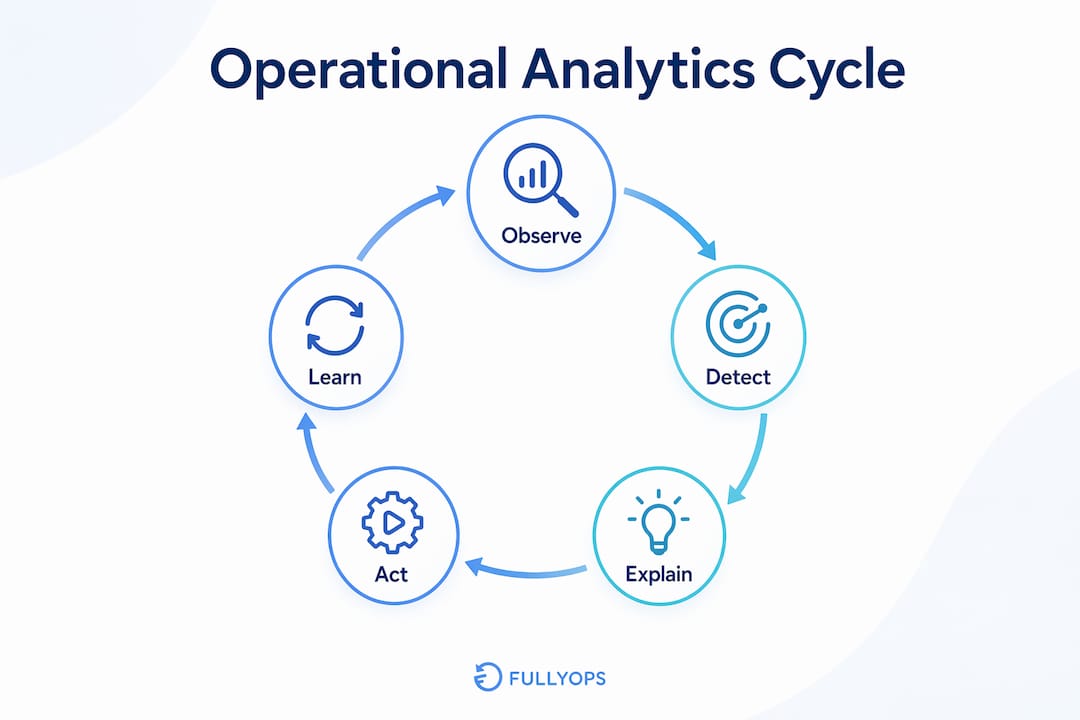
A analítica operacional apoia um ciclo repetívelobservar, detetar, explicar, agir e aprender. Cada ciclo gera feedback que melhora o seguinte. As equipas de operações que fecham este ciclo com uma clara atribuição de responsabilidades e medição registam ganhos de eficiência compostos ao longo do tempo.
Como é que a análise preditiva pode transformar a manutenção e a alocação de recursos?
A analítica preditiva e prescritiva proporcionam os seus benefícios mensuráveis mais claros em duas áreas: planeamento de manutenção e afetação de recursos. Ambas envolvem compromissos complexos sob restrições, que é precisamente onde a tomada de decisões baseada em dados supera a intuição e os horários fixos.
Na manutenção, a transição da intervenção baseada no tempo para a intervenção baseada na condição é a principal proposta de valor. A manutenção preditiva combinada com gémeos digitais reduziu as falhas não planeadas em 28%. e custos de manutenção em 22% num estudo de 2026, atribuídos a uma maior sensibilidade na deteção de anomalias e a uma priorização informada por decisões. Os gémeos digitais criam um modelo em direto de cada ativo, permitindo que a camada de analítica simule trajetórias de degradação e recomende o momento de intervenção que minimize tanto o risco de falha como os gastos desnecessários em manutenção.
O o papel da análise na manutenção estende-se para além do agendamento. Regras operacionais explícitas e intervenções priorizadas com base na vida útil remanescente e no risco determinam quais os ativos que recebem atenção primeiro, como o tempo dos técnicos é alocado e quais as peças sobressalentes que precisam de ser pré-posicionadas. Isto é a analítica prescritiva na prática: não apenas prever a falha, mas recomendar a ação específica que melhor equilibra o custo, o risco e a disponibilidade de recursos.
| Caso de uso | Método analítico | Resultado medido |
|---|---|---|
| Redução de falhas não planeadas | Manutenção preditiva com gémeos digitais | Redução de 28% em falhas não planeadas |
| Redução de custos de manutenção | Programação baseada em condições | Redução de 22% nos custos de manutenção |
| Melhoria do ciclo de decisão | Arquitetura de dados unificada | ~40% ciclos de tomada de decisão mais rápidos |
| Redução da latência de integração | Arquitetura de namespace unificado | Redução de ~80% no tempo de integração de dados |
A alocação de recursos apresenta um padrão semelhante. Os gestores de operações que equilibram a disponibilidade de técnicos, a criticidade dos ativos, o tempo de viagem e a disponibilidade de peças enfrentam um problema combinatório que as folhas de cálculo gerem deficientemente. As plataformas de analítica prescritiva avaliam milhares de cenários em segundos, recomendando alocações que otimizam todos os constrangimentos em simultâneo. O impacto na eficiência operacional é direto: menos técnicos inativos, tempos de resposta mais curtos e melhor utilização de ativos.
Dica profissional: Ao implementar modelos de manutenção preditiva, defina as suas políticas de decisão antes de implementar o modelo. Saber antecipadamente que ação um determinado nível de risco despoleta, seja uma ordem de trabalho imediata, uma inspeção agendada ou uma pré-encomenda de peças, evita o modo de falha comum em que previsões precisas não produzem nenhuma alteração operacional porque ninguém concordou sobre o que fazer com elas.
Analytics nas operações: o que a maioria dos guias erra
A maioria dos artigos sobre o impacto da análise de dados nas operações concentra-se quase inteiramente na tecnologia. Falam longamente sobre plataformas, algoritmos e painéis de controlo, e depois tratam a implementação como uma mera nota de rodapé. Na minha experiência, isso está exatamente ao contrário.
A tecnologia é a parte mais fácil. O Databricks, as plataformas de analítica operacional concebidas para o efeito e as ferramentas modernas de CMMS tornaram a capacidade analítica acessível a equipas de operações de quase qualquer dimensão. O que determina consistentemente se essas ferramentas produzem resultados é saber se os resultados chegam à pessoa certa, no formato certo, no momento certo do seu fluxo de trabalho. Um alerta que chega 20 minutos após o fecho de uma janela de decisão não é um sistema quase em tempo real. É um sistema lento.
O outro erro que vejo repetidamente é tratar a análise de dados como uma atualização de relatórios em vez de uma arquitetura de decisão. Os diretores de operações que implementam painéis de controlo e lhes chamam análise continuam a tomar decisões exatamente da mesma forma que sempre o fizeram. Estão apenas a olhar para gráficos melhores. A verdadeira mudança acontece quando os resultados da análise são integrados na criação de ordens de trabalho, na programação de recursos e nos protocolos de escalamento, de modo a que o sistema esteja ativamente a moldar as decisões em vez de se limitar a informá-las passivamente.
O equilíbrio entre BI e análise operacional também merece um tratamento mais honesto. O BI não está obsoleto. A análise de tendências mensais, os relatórios de variação orçamental e o planeamento de capacidade exigem agregação histórica. As organizações que obtêm mais valor da análise são aquelas que utilizam ambas de forma deliberada: análise operacional para ciclos de controlo tático e BI para revisão estratégica. Tentar fazer ambas com a mesma ferramenta, ou descartar uma em favor da outra, cria pontos cegos.
Comece com um objetivo específico e mensurável. Reduza o MTTD nos seus cinco principais ativos críticos em 30% em seis meses. Esse tipo de meta força as conversas certas sobre a qualidade dos dados, a integração de fluxos de trabalho e a responsabilidade nas decisões. Objetivos vagos produzem resultados vagos.
— Pedro
Coloque a analítica ao serviço das suas operações com a Fullyops
O Fullyops foi concebido para gestores de operações que precisam de análises integradas diretamente nos seus fluxos de trabalho de manutenção e assistência técnica, e não numa ferramenta de relatórios separada. A plataforma painel de ordens de trabalho em tempo real liga os dados operacionais às decisões na linha da frente, dando aos chefes de turno e planeadores o contexto de que precisam sem mudarem de sistema. Para as equipas que trabalham na alocação de recursos, o tutorial de atribuição de recursos demonstra como otimizar a implementação de técnicos e ativos utilizando dados operacionais em tempo real. A Fullyops também suporta fluxos de trabalho de manutenção preditiva, relatórios automáticos e controlo de inventário, tornando-se um ponto de partida prático para equipas prontas para passar de operações reativas para operações baseadas em dados.
FAQ
O que é análise operacional?
A analítica operacional é a utilização de dados em tempo real ou quase em tempo real para monitorizar e orientar decisões operacionais imediatas, reduzindo o tempo médio de deteção e resposta a problemas. Difere do BI tradicional ao atuar sobre fluxos de dados em direto em vez de relatórios históricos.
Como é que a análise de dados melhora a eficiência operacional?
A analítica melhora a eficiência ao detetar anomalias mais cedo, permitindo a manutenção baseada no estado e otimizando a alocação de recursos sob restrições. Os estudos mostram que as arquiteturas de dados unificadas, por si só, podem reduzir os tempos do ciclo de tomada de decisões em aproximadamente 40%.
Qual é a diferença entre a análise preditiva e a presuntiva nas operações?
A analítica preditiva prevê estados futuros, tais como a probabilidade de falha de equipamento, enquanto a analítica prescritiva recomenda a ação específica a tomar dadas essas previsões e as restrições atuais. Ambas são utilizadas em conjunto em fluxos de trabalho avançados de manutenção e planeamento.
Quais são as ferramentas utilizadas para a análise operacional?
As ferramentas comuns de análise para operações incluem o Databricks Lakeflow para pipelines de dados em fluxo, motores de deteção de anomalias incorporados em painéis operacionais, e plataformas CMMS como a Fullyops que integram manutenção preditiva e gestão de ordens de trabalho com dados operacionais em direto.
Porque é que os projetos de análise operacional falham?
A maioria das falhas resulta não de maus modelos, mas sim de uma fraca integração nos fluxos de trabalho. Quando os resultados analíticos não são incorporados nas ferramentas e nos processos que as equipas da linha da frente já utilizam, os *insights* chegam demasiado tarde ou exigem demasiado esforço de interpretação manual para impulsionar uma ação atempada.
Principais conclusões
A análise operacional apenas produz resultados mensuráveis quando os seus outputs são integrados diretamente nos fluxos de trabalho da linha da frente, apoiados por uma arquitetura de dados unificada e vinculados a políticas de decisão explícitas.
| Ponto | Detalhes |
|---|---|
| Definir antes de implementar | Defina objetivos específicos, como a redução do MTTD, antes de selecionar ferramentas ou criar modelos. |
| Unifique a sua arquitetura de dados | Os namespaces unificados reduzem a latência de integração em cerca de 80%, tornando a análise em tempo real viável. |
| Integrar os resultados nos fluxos de trabalho | A analítica que exige um início de sessão separado ou interpretação manual perde a maior parte do seu valor operacional. |
| Combinar preditivo e prescritivo | A previsão de falhas só é útil quando uma política de decisão define qual a ação que se segue a cada pontuação de risco. |
| Utilizar BI e análise operacional em conjunto | A analítica operacional lida com ciclos de controlo tático; o BI apoia o planeamento estratégico e a *benchmarking*. |
Recomendado
- O papel da análise de dados na manutenção: um guia prático
- O papel da analítica na gestão de instalações
- Como otimizar o desempenho operacional em 2026
- Principais tendências de gestão de instalações 2026: o seu guia estratégico