

Selecting the right asset tracking solution in 2026 presents a complex challenge for operations managers navigating an expanding market of technologies and vendors. Understanding core advantages helps you improve efficiency, reduce operational costs, and enhance workplace safety across industrial environments. This article clarifies key benefits of modern asset tracking systems, compares leading technologies, and provides practical considerations to guide your purchase decisions. Whether you manage manufacturing facilities, warehouses, or field service operations, knowing which advantages matter most for your specific context enables smarter investment choices and measurable returns.
Table of Contents
- Evaluating Asset Tracking Solutions: Key Criteria For Industrial Sectors
- Top Asset Tracking Advantages In Industrial Operations
- Comparing Asset Tracking Technologies: Pros And Cons
- Making The Right Asset Tracking Decision For Your Organisation
- Explore FullyOps Asset Management Solutions
Key takeaways
| Point | Details |
|---|---|
| Real-time visibility | Continuous asset location monitoring boosts utilisation rates and reduces search time across facilities |
| Automated workforce monitoring | Automated time and attendance, workforce and resource monitoring, and zone monitoring reduce manual errors and operational costs |
| Enhanced worker safety | Wearable devices enable instant alerts and faster emergency response in hazardous zones |
| Data-driven maintenance | Integration with existing systems supports proactive scheduling and optimised resource allocation |
Evaluating asset tracking solutions: key criteria for industrial sectors
Choosing an asset tracking system requires evaluating several essential criteria that directly impact operational performance. Real-time location systems deliver continuous visibility into asset positions, enabling you to monitor equipment movement across production floors, storage areas, and transport routes. This capability proves particularly valuable in large facilities where manual tracking consumes significant labour hours and introduces delays.
Integration potential stands as another critical factor. Your chosen solution must connect seamlessly with existing enterprise resource planning systems, computerised maintenance management software, and workforce management platforms. Systems that operate in isolation create data silos and limit your ability to generate actionable insights from combined operational information.
Scalability determines whether your investment remains viable as operations expand. Solutions designed for small facilities often struggle when asset counts grow or additional sites require coverage. Evaluate whether vendors offer flexible licensing models and whether their infrastructure supports distributed deployments without performance degradation.
Safety features deserve careful attention in industrial environments. Automated time and attendance, workforce and resource monitoring, and zone monitoring are key features that protect workers whilst improving operational oversight. Zone monitoring capabilities alert supervisors when personnel enter restricted areas or when equipment moves beyond designated boundaries.
Cost effectiveness extends beyond initial purchase prices. Consider total ownership costs including installation, training, ongoing maintenance, and subscription fees. Solutions requiring extensive infrastructure investments may deliver lower long-term value compared to cloud-based platforms with predictable monthly costs.
When assessing potential solutions, create a weighted scoring matrix that reflects your operational priorities:
- Real-time tracking accuracy and update frequency
- Integration capabilities with current systems
- Scalability for future growth requirements
- Safety and compliance features
- Total cost of ownership over three to five years
- Vendor support and system reliability
Pro Tip: Prioritise solutions offering trial periods or pilot programmes. Testing systems in your actual operational environment reveals compatibility issues and performance limitations that specifications alone cannot predict. Review your asset tracking checklist operational efficiency 2026 requirements before committing to long-term contracts.
Top asset tracking advantages in industrial operations
Modern asset tracking systems deliver measurable advantages that transform how industrial operations manage resources and maintain productivity. Understanding these benefits helps you justify investments and set realistic performance expectations.
-
Real-time asset visibility increases utilisation and reduces downtime. Knowing precise equipment locations eliminates time wasted searching for tools, vehicles, or machinery. Operations managers report utilisation improvements of 15 to 25 percent after implementing comprehensive tracking systems. This visibility also prevents duplicate purchases when teams assume assets are lost rather than temporarily misplaced.
-
Automated alerts for asset status and location improve safety and reduce loss. Systems configured with geofencing capabilities notify supervisors immediately when high-value equipment leaves designated areas or when maintenance schedules approach. These proactive notifications prevent theft, ensure regulatory compliance, and reduce the risk of equipment failures from missed servicing intervals.
-
Wearable safety devices protect workers and enable fast response. Integrating real-time alerts and wearable safety devices can significantly improve safety by monitoring worker locations in hazardous zones and triggering automatic alerts during emergencies. Personal safety tags detect falls, prolonged immobility, or entry into restricted areas, enabling rapid response that can prevent serious injuries or fatalities.
-
Operational cost reductions stem from streamlined processes and resource management. Automated tracking eliminates manual data entry, reduces administrative overhead, and improves inventory accuracy. Facilities report labour savings of 20 to 30 percent in asset management tasks after deployment. Better resource allocation also reduces overtime costs by ensuring the right equipment reaches the right location at scheduled times.
These advantages compound when you implement tracking across multiple asset categories simultaneously. Combining equipment tracking with workforce monitoring and inventory management creates a unified operational picture that supports better decision-making at every level. Understanding why automate asset tracking helps you recognise opportunities beyond basic location monitoring.
Pro Tip: Leverage platforms that combine asset tracking with maintenance management and work order systems. Integrated solutions deliver greater value than standalone tracking tools by connecting asset data directly to maintenance schedules, performance analytics, and resource planning. Explore advantages of field service software efficiency to understand how unified platforms maximise operational gains.
Comparing asset tracking technologies: pros and cons
Selecting the right technology requires understanding how different tracking methods align with your operational environment and asset characteristics. Each approach offers distinct advantages and limitations.
| Technology | Strengths | Limitations | Best suited for |
|---|---|---|---|
| RFID | Low cost per tag, no batteries required for passive tags, bulk reading capability | Limited range (1-10 metres), requires line of sight or proximity, infrastructure investment | High-volume inventory, tool tracking, access control |
| GPS | Unlimited outdoor range, precise location data, works independently | Poor indoor performance, higher power consumption, ongoing subscription costs | Vehicle fleets, outdoor equipment, mobile assets |
| Barcode scanning | Minimal cost, simple implementation, widely compatible | Requires manual scanning, no real-time tracking, labour intensive | Inventory management, check-in/check-out systems, audit trails |
| RTLS | Continuous real-time location, indoor/outdoor coverage, zone monitoring | Higher initial investment, infrastructure requirements, complexity | Manufacturing facilities, warehouses, safety-critical environments |
| Bluetooth Low Energy | Moderate cost, good battery life, smartphone compatibility | Limited range (10-50 metres), requires gateway infrastructure | Personnel tracking, smaller facilities, hybrid environments |
RFID systems excel in scenarios requiring rapid identification of multiple items simultaneously. Warehouses use passive RFID tags to track thousands of inventory items as they pass through loading docks or storage transitions. However, the technology struggles with real-time location precision and requires readers positioned at strategic checkpoints.
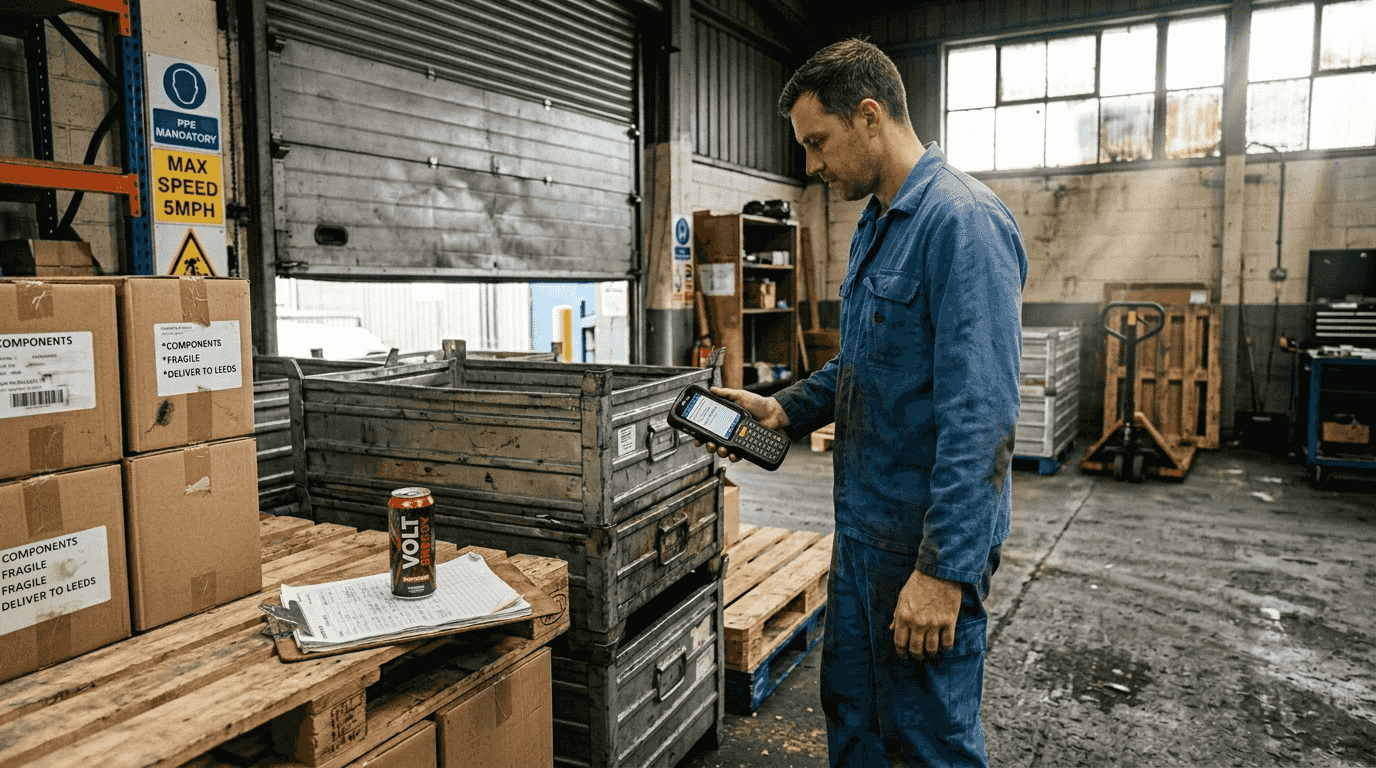
GPS tracking dominates fleet management and outdoor asset monitoring but becomes unreliable inside buildings or covered facilities. Battery life concerns also limit GPS applications for smaller tools or equipment that cannot accommodate frequent recharging.
Barcode systems remain popular for budget-conscious operations but introduce labour costs and delays through manual scanning requirements. They work well for periodic audits but cannot support real-time operational decisions.
RTLS platforms deliver the most comprehensive tracking capabilities, combining precise indoor positioning with outdoor coverage and advanced features like zone monitoring and automated alerts. The technology requires upfront infrastructure investment but provides the richest data for optimising complex operations.
When choosing technology, consider these decision factors:
- Asset mobility patterns and operational environment (indoor, outdoor, or mixed)
- Required location accuracy and update frequency
- Number of assets and expected growth
- Integration requirements with existing systems
- Budget for initial deployment and ongoing operations
Review top asset tracking methods for efficient field operations to explore implementation strategies for different technologies. Many organisations benefit from hybrid approaches that combine multiple technologies based on specific asset categories and tracking requirements.
Making the right asset tracking decision for your organisation
Balancing cost, benefits, integration ease, and scalability requires a structured approach to solution selection and implementation. Start by clearly defining your operational needs and safety requirements. Document current pain points, quantify losses from misplaced assets, and identify specific processes that tracking could improve. This baseline assessment provides measurable targets for evaluating potential solutions.
Prioritise solutions that integrate smoothly with maintenance and workforce management systems already in place. Data flowing between asset tracking, work order management, and preventive maintenance scheduling creates powerful synergies that standalone systems cannot match. Integration reduces duplicate data entry, improves accuracy, and enables comprehensive reporting across operational functions.
Evaluate scalability for future growth by asking vendors about expansion capabilities, licensing flexibility, and infrastructure requirements for additional sites or asset categories. Solutions that scale linearly with your growth protect initial investments and avoid costly migrations as operations expand.
Plan for training and change management from the project’s beginning. Even the most capable tracking system fails without proper user adoption. Develop training programmes that address different user roles, create clear procedures for daily operations, and establish metrics for monitoring system utilisation. Engage frontline workers early to gather feedback and address concerns before full deployment.
Implement in phases to manage risk and validate benefits:
- Pilot deployment in a single department or facility
- Measure baseline performance metrics before activation
- Train users and refine procedures based on initial feedback
- Expand to additional areas after demonstrating clear value
- Integrate with broader operational systems once tracking stabilises
This phased approach allows you to prove return on investment, adjust configurations based on real-world performance, and build organisational confidence in the technology. It also reduces disruption by limiting the scope of any technical issues during initial deployment.
Consider partnering with vendors offering comprehensive support services, including installation assistance, ongoing technical support, and regular system updates. Reliable vendor relationships prove invaluable when troubleshooting issues or expanding capabilities. Explore resource allocation tutorial asset management resources to understand how tracking data enhances broader operational planning.
Explore FullyOps asset management solutions
FullyOps provides a comprehensive platform that connects asset tracking with maintenance management, work order processing, and resource allocation in one integrated system. Our solutions help industrial operations reduce downtime, improve asset utilisation, and enhance workforce productivity through intelligent automation and real-time visibility.
Explore our resource allocation tutorial asset management to discover how unified data improves scheduling accuracy and resource deployment. Learn about asset lifecycle management strategies that extend equipment lifespan whilst reducing total ownership costs. Discover the latest maintenance optimisation 2026 tools designed to cut downtime and deliver measurable cost savings across your operations. Our platform scales with your organisation, supporting growth from single facilities to multi-site enterprises with consistent performance and reliability.
Frequently asked questions
What are the most effective asset tracking advantages for industrial operations?
Real-time visibility stands as the most impactful advantage, enabling operations managers to locate equipment instantly, improve utilisation rates, and reduce time wasted searching for assets. Automated monitoring and alerts prevent loss, ensure compliance with maintenance schedules, and enhance worker safety through zone monitoring and emergency response capabilities. These benefits combine to deliver measurable cost reductions and operational efficiency gains across manufacturing, warehousing, and field service environments.
How do wearable safety devices improve asset tracking and worker safety?
Wearable devices equipped with location tracking and sensor technology monitor worker positions in real-time, particularly in hazardous industrial zones. Integrating real-time alerts and wearable safety devices can significantly improve safety by detecting falls, prolonged immobility, or unauthorised zone entry. These systems trigger immediate alerts to supervisors, enabling faster emergency response that can prevent serious injuries. The combination of personnel tracking with equipment monitoring creates comprehensive situational awareness across facilities.
Can asset tracking automate workforce monitoring and reduce operational costs?
Automated time and attendance, workforce and resource monitoring, and zone monitoring are key features that eliminate manual timekeeping errors and improve labour allocation accuracy. Automation reduces administrative overhead by 20 to 30 percent whilst providing precise data for payroll, compliance reporting, and productivity analysis. Better resource allocation also minimises overtime costs by ensuring personnel and equipment align with scheduled work requirements.
Which asset tracking technology works best for indoor industrial facilities?
Real-time location systems deliver the most comprehensive capabilities for indoor environments, providing continuous position updates, zone monitoring, and integration with safety systems. RFID offers a cost-effective alternative for checkpoint-based tracking where continuous monitoring is unnecessary. Bluetooth Low Energy provides a middle ground with moderate costs and reasonable accuracy for smaller facilities. Technology selection depends on required precision, asset density, and integration needs with existing operational systems.
How quickly can organisations expect returns from asset tracking investments?
Most industrial operations achieve positive returns within 12 to 18 months through reduced asset losses, improved utilisation, and lower labour costs. Facilities with high-value equipment or significant search time report faster payback periods, sometimes within six to nine months. Comprehensive tracking systems that integrate with maintenance management and workforce scheduling deliver greater long-term value by optimising multiple operational processes simultaneously. Establishing clear baseline metrics before implementation enables accurate measurement of actual returns.
Recommended
- Asset tracking checklist for operational efficiency 2026
- 7 Top Asset Tracking Methods for Efficient Field Operations
- Why Automate Asset Tracking for Field Service Success
- Asset Tracking Step by Step for Efficient HVAC Management