

En resumen:
- True compliance is a continuous operational discipline that ensures safety, reliability, and regulatory adherence.
- Implementing structured frameworks like ITIL creates traceable evidence and prevents compliance from being superficial.
- Embedding compliance into daily operations and using automation transforms it into operational strength, not just a checklist.
Passing an audit is not the same as being compliant. Many operations managers in asset-heavy industries discover this distinction the hard way, when a process that satisfied every checklist item still fails to prevent downtime, safety incidents, or regulatory penalties. True compliance in service management is not a bureaucratic exercise. It is a continuous operational discipline that protects asset reliability, supports workforce safety, and sustains customer trust. This guide moves beyond the surface-level understanding of compliance to give you practical, structured strategies for embedding it into your service management and asset maintenance operations where it genuinely matters.
Índice
- Why compliance matters in service management
- How ITIL and modern frameworks shape compliance
- The risks of compliance ‘theatre’ and how to avoid them
- Practical steps for embedding compliance into operations
- A fresh perspective: compliance as operational muscle, not just a mandate
- Tools and resources to support compliance-driven service management
- Preguntas más frecuentes
Principales conclusiones
| Punto | Detalles |
|---|---|
| True compliance drives results | Going beyond audits, real compliance strengthens operational resilience and asset performance. |
| Frameworks matter | ITIL and related methodologies provide the structure required to make compliance actionable and sustainable. |
| Avoid compliance theatre | Passing audits is not enough—focus on evidence, ongoing monitoring, and concrete improvements. |
| Integrate compliance daily | Embed compliance actions into regular asset management routines and team habits for best results. |
Why compliance matters in service management
Having established the gap between apparent and real compliance, let’s clarify why compliance is absolutely essential for service management. For operations managers overseeing industrial facilities, machinery, or field service teams, compliance is not a background function. It sits at the centre of every operational decision, from how preventive maintenance is scheduled to how incidents are documented and escalated.
The core objectives of compliance in service management include:
- Safety: Ensuring that field technicians, operators, and end users are protected through standardised procedures and well-maintained assets.
- Reliability: Reducing unplanned downtime by ensuring maintenance activities are completed on schedule and to a defined standard.
- Legal adherence: Meeting industry regulations, health and safety legislation, and sector-specific standards that carry financial and reputational consequences when breached.
- Performance accountability: Creating measurable benchmarks for service quality that can be reviewed, improved, and reported against.
Compliance frameworks provide the structural backbone for achieving these objectives. ITIL processes such as incident, problem, change, and supplier management form the core methodology for compliance in service management, extending to AI-enabled services with specific SLAs for model accuracy and bias. These frameworks are not theoretical constructs. They define who is responsible for what, when evidence must be captured, and how deviations are handled and recorded.
The operational impact of robust compliance is tangible. When maintenance teams follow standardised procedures, assets experience fewer unexpected failures. When incident management processes are consistently applied, root causes are identified faster and systemic problems are resolved rather than patched. Customers and regulatory bodies alike develop confidence in operations that demonstrate ongoing, documented compliance rather than periodic, audit-triggered bursts of activity.
Comprender compliance strategies in facilities management also reveals how different asset classes require tailored approaches. The compliance requirements for HVAC systems in a commercial building differ significantly from those for high-pressure industrial pumps or automated production lines. A well-designed maintenance compliance guide will account for these differences rather than applying a one-size approach.
The bottom line is this: compliance failures cost money, damage reputations, and in some sectors carry criminal liability. By contrast, organisations that embed compliance into their service management culture consistently reduce reactive maintenance costs, shorten mean time to repair, and build a documented performance record that supports continuous improvement.
How ITIL and modern frameworks shape compliance
Now that we’ve established compliance’s importance, let’s examine the frameworks that make true compliance actionable. ITIL is the most widely adopted service management framework globally, and its relevance to industrial operations extends well beyond IT infrastructure. Its structured approach to service delivery translates directly to asset maintenance, field service coordination, and regulatory evidence management.
The key ITIL processes that operations managers should understand and apply include:
| ITIL process | Compliance role | Operational example |
|---|---|---|
| Incident management | Captures deviations and failures with full traceability | Logging an unplanned pump failure with cause, response, and resolution |
| Problem management | Identifies root causes to prevent recurrence | Investigating repeated seal failures across a production line |
| Change management | Controls modifications to assets or processes | Authorising and documenting a firmware update on control systems |
| Supplier management | Ensures third-party quality aligns with standards | Auditing a maintenance contractor’s certification and work records |
Each of these processes creates a compliance trail. Not just a record that something was done, but evidence of what was done, by whom, when, and why. This distinction matters enormously in regulatory audits and internal reviews.
ITIL processes such as incident, problem, change, and supplier management also extend to AI-enabled services with specific SLAs for model accuracy and bias, which is increasingly relevant as industrial operations adopt predictive maintenance algorithms and automated decision-making tools. When an AI system recommends a maintenance action, the compliance question is not just whether the action was taken, but whether the recommendation was reviewed, validated, and recorded with sufficient justification.
Frameworks like ITIL also work well alongside optimising field service management practices, where technician activities, travel times, and task completions need to be captured accurately for both billing and regulatory purposes. Field service automation benefits further enhance compliance by removing manual data entry errors and ensuring that work orders, part usage, and sign-offs are recorded in real time.
For change management specifically, a common failure point is documentation that records the change but not the decision logic behind it. Why was this modification approved? What risk assessment was conducted? What alternatives were considered? These questions arise in serious incident investigations and regulatory reviews. Operations managers who build the habit of documenting decision rationale, not just outcomes, position their teams for far greater resilience.
Pro Tip: When implementing ITIL change management for asset modifications, require a brief written justification for every approved change. Over time, this creates an invaluable knowledge base that accelerates future decision-making and satisfies even the most detailed regulatory enquiries.
The risks of compliance ‘theatre’ and how to avoid them
With the right processes in place, compliance should drive performance. But what happens when it’s only for show? Compliance theatre is a specific and costly problem in industrial service management. It refers to the practice of maintaining documentation, audit trails, and procedural checklists that satisfy external reviewers without actually reducing operational risk.
The distinction between genuine compliance and theatre is not always visible from outside the organisation. Audit scores can be high while real resilience is low. Consider the following comparison:
| Indicator | Compliance theatre | Genuine compliance |
|---|---|---|
| Documentación | Forms completed after the fact | Records captured at the point of activity |
| Incident response | Closed quickly to keep metrics clean | Investigated thoroughly to prevent recurrence |
| Preparación de auditoría | Intensive activity before audits | Consistent evidence throughout the year |
| Technician behaviour | Follows procedures when observed | Follows procedures as standard practice |
| Corrective actions | Assigned but rarely followed up | Tracked, verified, and closed with evidence |
“Edge cases: AI-specific incidents such as bias and drift, documentation gaps despite maintenance (for example, FDA Form 483 observations), and compliance theatre where audits pass but real resilience lacks” represent some of the most dangerous failure modes in regulated industries.
The risk is compounded in operations that rely on automated or AI-assisted systems. An algorithm may flag a maintenance need, and a technician may complete the work, but if neither the flag nor the decision to act on it is documented with sufficient detail, a compliance gap exists. Regulatory bodies are increasingly scrutinising these records, particularly in sectors governed by standards such as ISO 55001 for asset management or FDA regulations for manufacturing equipment.
To shift from box-ticking to real maintenance compliance, operations managers can take the following steps:
- Audit your audit process: Review how your team prepares for compliance reviews. If activity spikes before inspections, this is a strong indicator of theatre rather than embedded compliance.
- Review closed incidents: Check a sample of recently closed maintenance incidents to confirm that root causes were identified and corrective actions were completed, not just assigned.
- Test your records: Ask whether a new team member could reconstruct the decision logic behind a major maintenance change using only the documentation available. If not, the records are insufficient.
- Engage frontline teams: Technicians and field engineers often know exactly where the gaps are. Create safe channels for them to report documentation shortfalls or procedural workarounds without fear of blame.
- Measure outcomes, not just activity: Track metrics such as repeat failure rates, mean time between failures, and first-time fix rates alongside compliance scores. Misalignment between these figures signals a compliance quality problem.
Pro Tip: Introduce a brief monthly review of compliance metrics that explicitly asks whether scores reflect genuine operational performance. This conversation, repeated consistently, normalises outcome-based thinking across your management team.
Practical steps for embedding compliance into operations
To overcome the pitfalls of compliance theatre, here are the practical steps you can take to make compliance a living part of your operation. Embedding compliance means integrating it into the daily rhythm of asset management rather than treating it as a periodic project or a prerequisite for external inspection.
The following numbered approach gives operations managers a structured pathway:
- Map compliance requirements to specific assets and processes: Identify which regulatory standards, internal policies, and contractual obligations apply to each asset class. This creates a clear compliance scope rather than a generic obligation.
- Integrate compliance controls into work order workflows: Every preventive and corrective maintenance work order should include mandatory compliance fields, such as hazard checks, part traceability, and technician sign-offs, embedded in the workflow rather than added as optional extras.
- Automate evidence capture where possible: Use digital tools to capture timestamps, GPS locations, photographic records, and part serial numbers at the point of activity. This eliminates retrospective documentation and improves accuracy.
- Schedule regular compliance reviews alongside operational reviews: Compliance should appear on the agenda of standard operational meetings, not only in dedicated audit preparation sessions.
- Close the loop on corrective actions: Every identified compliance gap should be assigned an owner, a deadline, and a verification step. Open corrective actions that are never closed are a common source of regulatory findings.
- Build lessons learned into the maintenance programme: After significant incidents or near-misses, conduct structured reviews and use the findings to update procedures, training, and preventive maintenance schedules.
Complementing this approach, the following practices support a culture of genuine compliance:
- Share compliance performance data openly with field teams, including both positive results and areas needing improvement.
- Recognise technicians who raise documentation concerns or identify procedural gaps before they become incidents.
- Use real-time monitoring data, such as vibration analysis or temperature trending, to provide objective evidence for maintenance decisions rather than relying solely on scheduled inspections.
- Benchmark against industry standards periodically to ensure your compliance framework remains current with evolving regulations.
True compliance demands evidence beyond audits, including decision rationale and real-time data, while theatre creates false security without operational resilience. Applying these field service optimisation tips in combination with a structured compliance framework delivers measurable improvements in both regulatory standing and operational performance.
When compliance is genuinely embedded, the benefits extend beyond audit scores. Asset reliability improves because maintenance decisions are based on documented evidence rather than intuition. Workforce safety increases because procedures are followed consistently rather than selectively. And regulatory confidence grows because inspectors see a continuous record of disciplined, evidenced activity rather than a tidied-up snapshot.
A fresh perspective: compliance as operational muscle, not just a mandate
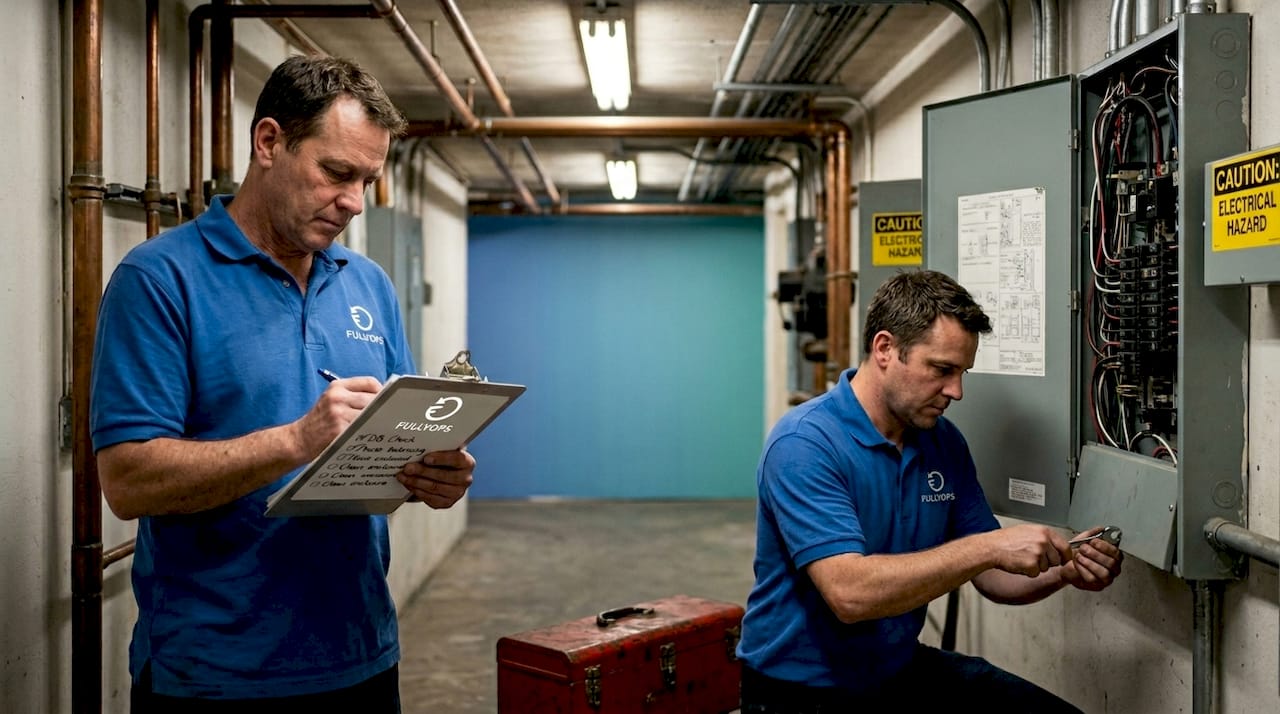
With practical steps in hand, it’s time to challenge some common assumptions about compliance and examine what actually drives results. In our experience working with operations teams across industrial and field service environments, the organisations that perform best under regulatory scrutiny are rarely the ones with the most polished audit reports. They are the ones that have made compliance a habit, built into every work order, every shift handover, and every corrective action.
True compliance demands evidence beyond audits, including decision rationale and real-time data, rather than theatre that creates false security without genuine resilience. This distinction separates organisations that are merely audit-ready from those that are genuinely operationally mature. Operational maturity shows up in the small decisions: a technician who documents why they deviated from a standard procedure, a supervisor who questions a corrective action closure that lacks verification evidence, a manager who asks what the data actually shows rather than what the report says.
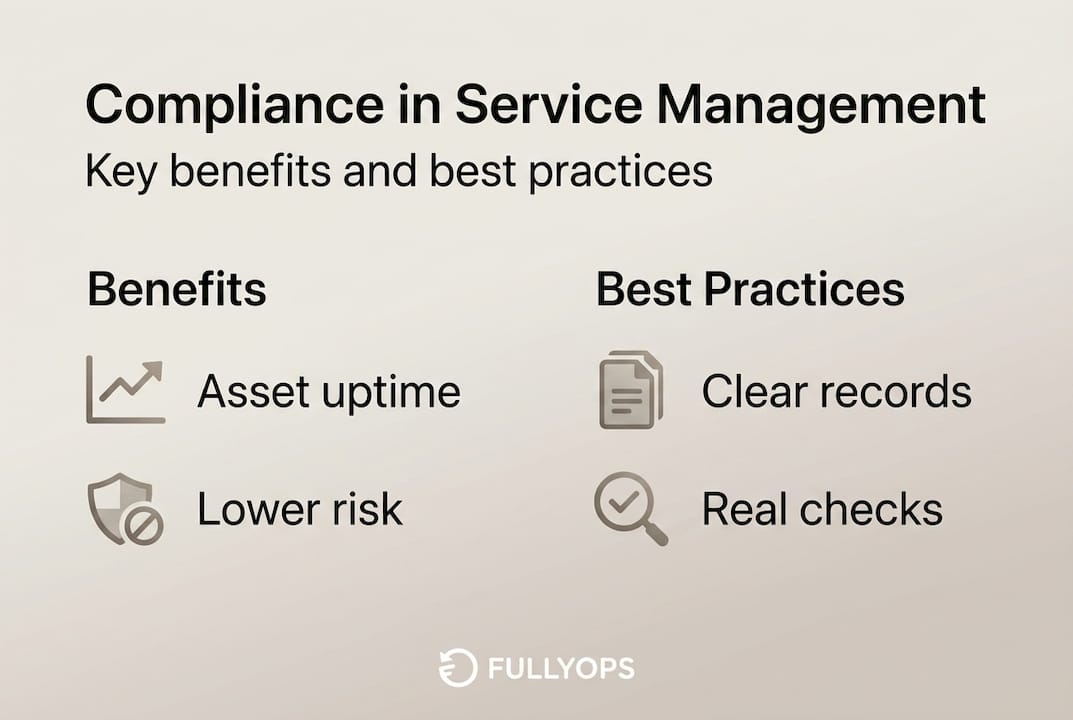
For operations managers aiming to transform their asset management approach, the starting point is deceptively simple. Require the “why” behind every compliance action, automate data collection wherever workflows allow it, and make compliance performance visible and discussable in everyday operations. Teams that engage with compliance as a discipline, rather than a periodic obligation, consistently outperform those that treat it as a hurdle to clear before moving on to “real” work.
Tools and resources to support compliance-driven service management
If you’re ready to implement these compliance strategies, the right tools can accelerate your progress considerably. Digital platforms designed for industrial service management can automate compliance evidence capture, generate audit-ready reports, and integrate maintenance records with regulatory documentation requirements, removing much of the manual burden that drives teams towards theatre-style compliance.
FullyOps offers a dedicated SaaS platform built for operations managers in asset-heavy industries, supporting work order management, real-time intervention tracking, performance analytics, and system integrations. Exploring the available asset management systems for maintenance will help you identify which features align best with your compliance framework. For a broader view of available options, the overview of top maintenance management software covers the leading platforms and their compliance capabilities in practical detail.
Preguntas más frecuentes
What is compliance in service management?
Compliance in service management means ensuring all processes meet legal, regulatory, and industry standards, supporting safety, reliability, and quality. ITIL processes such as incident, problem, change, and supplier management form the core methodology, extending to AI-enabled services with specific SLAs for model accuracy and bias.
How does compliance improve asset maintenance?
Effective compliance ensures maintenance practices are standardised and auditable, directly reducing unplanned downtime and increasing long-term asset reliability. Structured ITIL processes provide the traceability and consistency needed for both regulatory adherence and operational performance improvement.
What are examples of compliance ‘theatre’?
Compliance theatre includes documentation gaps despite maintenance, AI-specific issues such as unaddressed model bias or data drift, and situations where audits pass but underlying operational risks remain unresolved.
What steps ensure compliance is more than just an audit requirement?
Embed compliance into daily work order workflows, document the decision logic behind maintenance actions, and use real-time monitoring data to provide continuous evidence of operational resilience rather than periodic audit-ready snapshots.
Recomendado
- ¿Qué es el cumplimiento de mantenimiento? Una guía para gerentes de operaciones
- Understanding compliance in facilities management: key strategies