

TL;DR:
- SLA management is a continuous operational discipline that ensures vendors meet contractual performance commitments. It involves ongoing monitoring, measurement, and enforcement of KPIs embedded into daily workflows, fostering strategic vendor relationships. Proper integration and ownership of SLAs prevent service quality erosion and enable proactive, data-driven improvements.
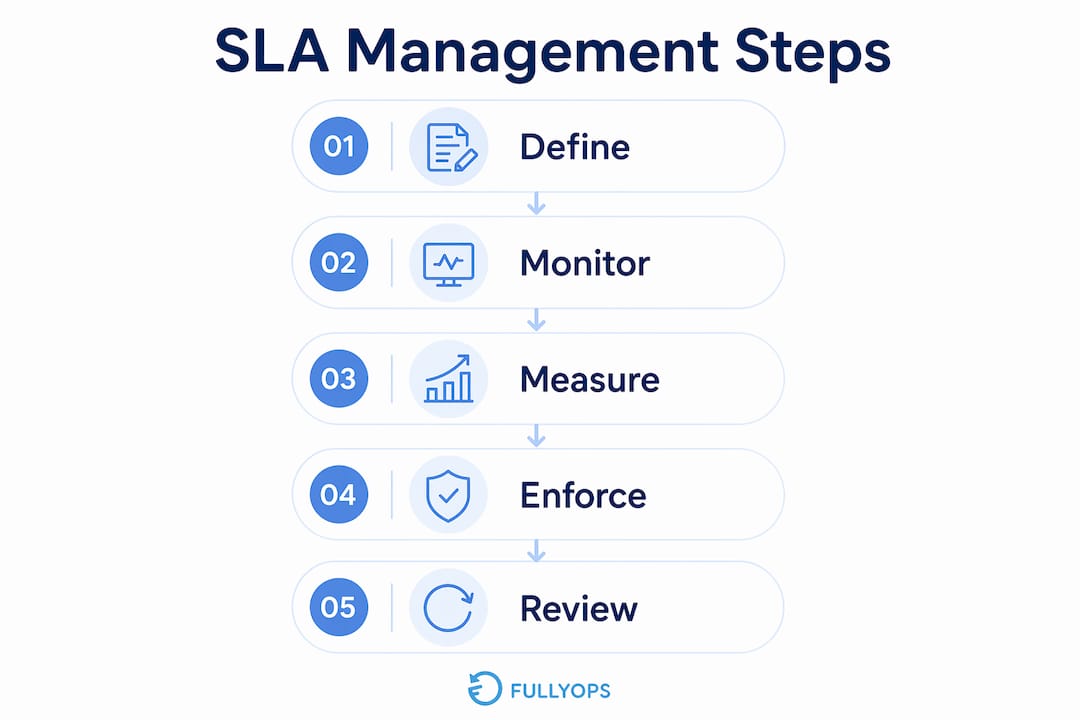
SLA management is defined as the ongoing operational discipline of defining, monitoring, measuring, and enforcing performance commitments agreed between a service provider and a client to ensure services meet business expectations throughout the contract lifecycle. For operations managers and maintenance professionals, this is not a one-time contract step. It is a continuous process that governs how vendors perform, how technicians prioritise work, and how your organisation holds service partners accountable day after day. Frameworks such as ITIL and platforms such as ServiceNow have long recognised SLA management as a core operational discipline, and its relevance extends well beyond IT into facilities management, industrial maintenance, and field service operations.
What is SLA management and what does it involve?
SLA management, formally known as service level agreement management, is the structured process of translating contractual service commitments into measurable, monitored, and enforceable operational actions. A service level agreement defines what a provider will deliver, to what standard, and within what timeframe. SLA management is what happens after that document is signed.

The process operates across two distinct phases. The first is the negotiation and definition phase, where scope, key performance indicators, reporting requirements, and remedy processes are agreed upon. The second is the ongoing monitoring and enforcement phase, where actual performance is tracked against those commitments and corrective action is taken when gaps appear. Most organisations focus heavily on the first phase and neglect the second entirely, which is where service quality erodes.
A standard SLA framework includes four critical elements:
- Scope and service responsibilities: what services are covered, who delivers them, and what is excluded
- Measurable KPIs: response time, uptime percentage, resolution time, and first-fix rate
- Reporting requirements: how performance data is collected, presented, and reviewed
- Remedy process: service credits, escalation procedures, or termination rights when targets are missed
Common performance indicators used in maintenance and field service contexts include mean time to respond (MTTR), asset uptime, scheduled maintenance completion rate, and technician dispatch time. These metrics give operations teams a factual basis for vendor conversations rather than relying on anecdotal feedback.
Pro Tip: Structure your SLAs as schedules attached to a Master Services Agreement rather than standalone documents. This maintains operational agility to update KPIs as your operational needs change without renegotiating the full legal contract.
| SLA component | Purpose |
|---|---|
| Scope definition | Clarifies service boundaries and prevents disputes |
| KPIs | Provides measurable targets for vendor performance |
| Reporting cadence | Creates a regular forum for performance review |
| Remedy process | Defines consequences and escalation paths for breaches |
How does SLA management differ from service level management?
These two terms are frequently used interchangeably, but they describe distinct disciplines with different ownership, scope, and enforcement mechanisms. Understanding the difference prevents fragmented accountability, which is one of the most common causes of poor service outcomes.
SLA management governs external vendor relationships. It focuses on what a third-party service provider has contractually committed to deliver and whether they are meeting those commitments. Ownership typically sits with procurement, operations, or a contract manager. Service level management, by contrast, focuses on internal IT or business service delivery. It governs how internal teams meet the expectations of internal customers, often within an ITIL or ITSM framework.
| Dimension | SLA management | Service level management |
|---|---|---|
| Focus | External vendor performance | Internal service delivery |
| Ownership | Operations, procurement, contract manager | IT service manager, internal team leads |
| Enforcement | Contract remedies, service credits | Internal KPIs, team performance reviews |
| Tools | Contract management, CMMS, field service platforms | ITSM platforms such as ServiceNow, Jira Service Management |
The operational risk of confusing these two disciplines is significant. When procurement negotiates an SLA and then hands the contract to operations without sharing breach history or performance context, the operations team inherits obligations they cannot effectively enforce. Fragmented responsibility leads directly to inconsistent service levels and missed escalation windows.
Pro Tip: Assign a named SLA owner within your operations team for every active vendor contract. This person is responsible for reviewing performance data monthly and escalating breaches before they become patterns.
What are the best practices for managing SLAs effectively?
Effective SLA management requires treating service level agreements as living operational tools rather than archived contract documents. The organisations that extract the most value from their SLAs are those that integrate performance data into daily workflows and review it regularly. SLA management protects business relationships by transforming operational performance into a strategic advantage through continuous review and adjustment of service metrics.
The following practices reflect operational maturity in SLA governance:
-
Integrate SLA targets into work order systems. When a technician opens a work order, they should immediately see the applicable SLA response and resolution targets. Embedding SLA commitments into work order and dispatch systems creates real-time urgency awareness that reactive contract reviews cannot replicate.
-
Conduct structured performance reviews. Monthly or quarterly review meetings with vendors should be agenda-driven, data-backed, and documented. Use accumulated SLA performance data to identify recurring failure patterns, not just individual incidents.
-
Treat SLAs as schedules, not standalone contracts. Viewing SLAs as living documents and attaching them as schedules to Master Services Agreements allows KPIs to be updated as operational demands evolve without triggering a full contract renegotiation.
-
Share breach history across teams. When procurement and operations operate in silos, the operations team often inherits a vendor relationship without knowing its performance history. Shared visibility of breach records enables faster, more decisive responses to recurring issues.
-
Shift from punitive to collaborative enforcement. Applying service credits every time a target is missed can damage vendor relationships without improving performance. A more effective approach is to use breach data as the basis for a structured improvement plan, with escalation to financial remedies only when improvement targets are not met.
-
Review SLA targets as your business changes. A response time target set two years ago may no longer reflect your current operational risk profile. SLA management should function as a strategic feedback loop that helps operational teams adjust their approach as business needs evolve.
Pro Tip: Do not wait for a breach to review SLA performance. Set automated alerts at 80% of the allowable response or resolution window so your team can intervene before a target is missed, not after.
How can SLA management be integrated into daily operations?
True SLA operational maturity is achieved by embedding SLA commitments directly into daily work order and dispatch systems. For maintenance and field service teams, this means SLA data must be visible at the point of task assignment, not buried in a contract folder reviewed once a quarter.
Practical integration covers several operational layers:
- Real-time monitoring dashboards: Platforms that display live SLA status across all active work orders allow supervisors to identify at-risk tickets before they breach. Colour-coded urgency indicators tied to SLA countdown timers are a standard feature in mature field service management platforms.
- Automated dispatch prioritisation: When a new service request is logged, the system should automatically assign priority based on the applicable SLA tier. A critical asset with a four-hour response SLA should be dispatched before a non-critical request with a 48-hour window, without requiring manual triage.
- Technician-level SLA visibility: Field technicians working through a work order management process should see the SLA deadline for each task alongside the job details. This removes ambiguity about urgency and reduces the risk of missed targets caused by poor prioritisation.
- Vendor performance reporting: SLA management systems generate operational data that tracks response and resolution times across all vendor interactions. This accumulated performance data informs contract renewal discussions and supports evidence-based vendor management.
| Integration point | Operational benefit |
|---|---|
| Work order system | Technicians see SLA deadlines at task level |
| Dispatch automation | Priority assigned by SLA tier without manual input |
| Performance dashboard | Real-time visibility of at-risk and breached SLAs |
| Vendor reporting | Data-backed contract reviews and renewal decisions |
SLAs are not only relevant to large corporations. Small and mid-size businesses with time-sensitive or continuous service obligations must adopt SLA management to clarify accountability and prevent disputes. For a facilities team managing HVAC maintenance contracts or a manufacturing operation relying on third-party equipment servicing, the same principles apply regardless of company size. Effective field service management depends on having SLA targets embedded in the tools your team uses every day, not stored in a document management system that nobody opens between contract renewals.
Key takeaways
SLA management delivers operational value only when it is treated as a continuous discipline embedded in daily workflows, not as a periodic contract review exercise.
| Point | Details |
|---|---|
| SLA management is ongoing | It spans the full contract lifecycle, from negotiation through daily monitoring and enforcement. |
| Four core components | Every SLA framework requires scope, KPIs, reporting requirements, and a remedy process. |
| SLA vs service level management | SLA management governs external vendors; service level management governs internal teams. Confusing the two fragments accountability. |
| Integration drives maturity | Embedding SLA targets into work order and dispatch systems creates real-time urgency awareness that transforms service outcomes. |
| Breach data is an asset | Accumulated SLA performance data informs vendor reviews, contract renewals, and workflow adjustments. |
Why SLA management deserves more operational attention than it gets
Most operations teams I have worked with treat SLA management as a procurement responsibility. The contract is signed, the SLA schedule is filed, and the operations team inherits a vendor relationship with no visibility of what was agreed or how the vendor has performed historically. This is the single most common reason why service quality drifts without anyone being able to explain why.
The shift that makes the biggest difference is not a new contract clause or a more aggressive penalty structure. It is giving your operations team direct visibility of SLA commitments at the point where work is being done. When a technician can see that a particular asset has a four-hour response SLA and the clock is already at three hours, behaviour changes immediately. No escalation meeting required.
I have also seen organisations spend considerable effort enforcing breach penalties while the underlying performance problem persists. Applying service credits month after month is not SLA management. It is a billing adjustment. Real SLA management uses breach data as the starting point for a structured conversation with the vendor about root causes and corrective actions. The organisations that do this well tend to have fewer breaches over time, not more credits to claim.
For maintenance professionals specifically, the opportunity is to influence how SLA commitments are written in the first place. Procurement teams often set response and resolution targets without consulting the operations team that will live with them. If you manage assets with defined criticality levels, those criticality tiers should map directly to SLA response windows. That alignment between asset risk and contractual obligation is where SLA management becomes genuinely useful rather than administrative overhead.
— Pedro
How Fullyops supports SLA management in maintenance operations
Fullyops is built for operations teams that need SLA commitments to be visible where work actually happens. The platform links SLA targets directly to work orders, giving technicians and supervisors real-time awareness of response and resolution deadlines at the task level. Automated prioritisation means high-urgency SLA tiers are dispatched without manual triage, reducing the risk of missed targets caused by workload pressure. Performance dashboards provide the asset management visibility needed to conduct evidence-based vendor reviews and adjust service targets as operational demands change. For maintenance teams managing multiple vendor contracts across industrial or field service environments, Fullyops provides the operational infrastructure to move from reactive contract review to proactive SLA governance.
FAQ
What is a service level agreement in simple terms?
A service level agreement is a formal contract between a service provider and a client that defines the performance standards the provider must meet, including response times, uptime targets, and resolution windows. It establishes measurable expectations and the consequences of failing to meet them.
What is the difference between an SLA and an OLA?
An SLA (service level agreement) governs the relationship between a service provider and an external client, while an OLA (operational level agreement) governs internal teams within the same organisation. OLAs support the delivery of SLA commitments by defining how internal departments coordinate to meet external targets.
How do you monitor SLA compliance effectively?
SLA compliance is monitored by tracking KPIs such as response time, resolution time, and uptime against agreed targets in real time. Platforms that integrate SLA data with work order systems allow supervisors to identify at-risk tickets before a breach occurs rather than reporting on failures after the fact.
Why is SLA management important for small businesses?
Small and mid-size businesses with time-sensitive service obligations need SLA management to clarify accountability and prevent disputes with vendors. Without it, service expectations remain informal and difficult to enforce when performance falls short.
How often should SLAs be reviewed and updated?
SLAs should be reviewed at least annually, and whenever there is a significant change in operational requirements, asset criticality, or vendor performance patterns. Structuring SLAs as schedules to a Master Services Agreement makes it straightforward to update KPIs without renegotiating the full contract.
Recommended
- What Is Asset Management and Its Impact on Maintenance Efficiency
- Role of SaaS in Operations – Transforming Maintenance
- Examples of maintenance strategies for operational leaders
- What is maintenance compliance? A guide for operations managers