

En resumen:
- Properly selecting and tailoring preventive maintenance tasks enhances equipment reliability and minimizes downtime.
- Mechanical, lubrication, electrical, and risk-based checks are essential examples of effective PM activities.
- Using asset criticality and failure modes guides focused, cost-effective maintenance, avoiding over-maintenance.
Operation managers in industrial settings face a constant balancing act: keeping equipment running, maintaining safety standards, and controlling maintenance budgets without sacrificing reliability. Choosing the right preventive maintenance (PM) examples is where that balancing act either succeeds or fails. Not every routine task delivers equal value, and a poorly chosen checklist can waste resources or, worse, miss the failures that matter most. This guide cuts through the complexity by presenting proven PM examples across mechanical, lubrication, electrical, and risk-based categories, giving you a structured basis for selecting tasks that genuinely protect asset longevity and reduce unplanned downtime.
Índice
- Understanding preventive maintenance: goals and selection criteria
- Mechanical tasks: inspection and alignment as core PM examples
- Lubrication management: beyond greasing—sampling, standards, and contamination control
- Electrical and control system tasks: proactive checks that prevent downtime
- Risk-based and reliability-centred PM: matching tasks to failures and asset criticality
- Our perspective: preventive maintenance examples only work if tailored, not templated
- Tools to turn PM examples into results
- Preguntas más frecuentes
Principales conclusiones
| Punto | Detalles |
|---|---|
| Mechanical checks matter | Scheduled inspections, alignment, and tension checks are the backbone of asset longevity. |
| Lubrication quality is key | Proper oil type, sampling, and controlling contamination are crucial for reducing wear and failures. |
| Electrical system PM prevents costly downtime | Regular checks of terminals, wiring, and safety systems catch hidden issues before breakdowns. |
| Adopt risk-based PM | Choosing and tailoring tasks based on asset risk and criticality avoids wasted effort and ensures real reliability benefits. |
Understanding preventive maintenance: goals and selection criteria
Preventive maintenance is a planned approach to servicing assets before failure occurs, rather than reacting once something breaks down. In industrial contexts, it covers everything from routine inspections to calibration, lubrication, and safety checks, all scheduled at defined intervals to keep equipment in peak operating condition. The goal is not simply to perform tasks on a calendar, but to intercept failures before they carry real operational or financial consequences.
Why do the specific examples you choose matter so much? Because maintenance reliability steps determine whether your PM programme actually prevents failures or just creates paperwork. A well-built checklist focuses effort on tasks with meaningful impact. A poorly built one treats all assets equally, regardless of criticality or failure risk. Preventive maintenance programmes are organised as regular inspections and servicing, with task groupings for mechanical, electrical, lubrication, and safety checks, providing a useful structural framework for any industrial operation.
Selecting the right PM tasks requires weighing several criteria:
- Asset criticality: How severely does failure affect production, safety, or compliance?
- Risk of failure: What is the likelihood and consequence of a specific failure mode?
- Regulatory requirements: Which tasks are legally mandated in your sector?
- Cost versus benefit: Does the task cost less than the failure it prevents?
- Asset lifecycle stage: Newer assets may need less intervention; ageing equipment requires closer attention.
Research consistently shows that up to 70% of unexpected failures can be avoided with a robust PM programme. That figure is significant, but only achievable when failure-mode-driven task selection helps allocate preventive work to where it meaningfully prevents breakdowns, not just on a calendar basis. Thinking about cutting costs without sacrificing reliability? Explore cutting preventive maintenance costs as a complementary strategy once your task selection is solid.
Mechanical tasks: inspection and alignment as core PM examples
Mechanical checks form the backbone of any industrial PM programme. These are the tasks most directly linked to physical wear, stress, and fatigue on components such as gears, bearings, chains, belts, and couplings. Performed consistently, they prevent the kind of progressive deterioration that leads to catastrophic, unplanned failures.
Standard mechanical PM examples include inspecting gear teeth for wear or pitting, checking chain tension and lubrication, measuring bearing temperatures or vibration levels, conducting shaft alignment checks, and adjusting belt tension to manufacturer specifications. As production machinery PM checklist guidelines confirm, inspecting and lubricating moving parts, checking belt alignment and tension, inspecting guards and emergency stops, and calibrating sensors are all standard items in effective PM programmes.

| Frecuencia | Tarea | Asset type |
|---|---|---|
| Semanal | Inspect belt tension and alignment | Conveyors, compressors |
| Mensual | Check bearing condition and temperature | Motors, pumps |
| Mensual | Inspect gear mesh and lubrication | Gearboxes, drives |
| Trimestralmente | Shaft alignment measurement | Coupled rotating equipment |
| Annually | Full mechanical inspection and component replacement | All rotating assets |
For operations managing HVAC preventive maintenance examples, many of these mechanical principles apply directly to fan assemblies, drive belts, and compressor units.
Common pitfalls that undermine mechanical PM effectiveness:
- Skipping checks during high-production periods, assuming the equipment is fine
- Insufficient documentation of findings, making trend analysis impossible
- Replacing components on a fixed schedule without assessing actual condition
- Failing to re-check alignment after any maintenance intervention
Pro Tip: Record every mechanical condition finding digitally, not just pass/fail results. Over time, trending data on belt tension readings or bearing temperatures will reveal deterioration patterns weeks before failure, giving you a genuine window to intervene.
Lubrication management: beyond greasing—sampling, standards, and contamination control
Lubrication is arguably the most underestimated element of preventive maintenance. Many operations treat it as a simple, repetitive task: apply grease, change oil, repeat. The reality is far more nuanced, and getting it wrong is expensive.
Effective lubrication PM examples include applying the correct lubricant type and quantity at manufacturer-specified intervals, monitoring oil condition through regular sampling, and testing hydraulic oil for contamination or degradation. SKF lubrication best practices emphasise proper sampling of hydraulic oil as foundational to preventive programmes, directly preventing premature bearing failures.
Both inadequate lubrication and contamination drive more than 60% of premature bearing failures, making lubrication management one of the highest-leverage preventive activities available to any industrial operation.
| Test parameter | Recommended frequency | What it reveals |
|---|---|---|
| Particle count | Mensual | Wear debris and system cleanliness |
| Water content | Mensual | Contamination from seals or environment |
| Viscosity | Trimestralmente | Lubricant degradation |
| Acid number | Trimestralmente | Oxidation and additive depletion |
Consequences of poor lubrication PM:
- Accelerated bearing and gear wear, leading to premature replacement costs
- Hydraulic system failures caused by contaminated fluid
- Increased energy consumption from friction
- Compliance violations where lubrication standards are regulatory requirements
Pro Tip: Train your team to follow sample integrity protocols when collecting oil samples, using clean sampling ports, correct containers, and consistent sampling points. The quality of your analysis is only as good as the quality of the sample. For further lubrication PM tips, structured guidance on sampling and interval management is available to help your team standardise these practices.
Electrical and control system tasks: proactive checks that prevent downtime
Electrical failures are among the most disruptive and hazardous events in any industrial facility. Unlike mechanical wear, electrical faults often develop invisibly, with no visible warning until a component fails or, worse, causes a safety incident. Proactive electrical PM is therefore not just about reliability, it is about compliance and worker safety.
Key electrical PM examples include thermal imaging scans to identify hot spots in switchgear and motor connections, tightening terminal block connections to specified torque values, performing insulation resistance tests on motor windings, and testing ground fault detection and safety circuit functionality. Scheduled electrical checks also include electrical torqueing, ground fault testing, and sensor calibration as standard preventive requirements.
Essential electrical PM steps:
- Inspect wiring and cable insulation for wear, cracking, or heat damage
- Tighten all terminal connections to manufacturer torque specifications
- Conduct insulation resistance testing on motors and transformers
- Perform thermal scans on control panels and distribution boards
- Test and verify all safety relay and emergency stop circuits
- Calibrate sensors and instrumentation to maintain measurement accuracy
Recommended routine:
- Weekly: Visual inspection of control panels, indicator lights, and alarm systems
- Monthly: Tighten terminals and inspect wiring integrity
- Quarterly: Insulation resistance testing on critical motors
- Annually: Full thermal scan, safety circuit testing, and sensor calibration
Red flags indicating emerging electrical faults include intermittent tripping, unusual heat near terminals, discolouration on wiring or contacts, and persistent nuisance alarms. Effective maintenance reporting for reliability tracks these symptoms over time to detect patterns before they escalate.
Risk-based and reliability-centred PM: matching tasks to failures and asset criticality
Robust PM is not about doing as much as possible. It is about doing the right things. This is the core insight behind reliability-centred maintenance (RCM), a methodology that identifies specific failure modes for each asset and assigns preventive tasks only where they have proven value in preventing or detecting those failures.
A typical RCM process works as follows: identify what each asset is required to do, determine how it can fail functionally, assess the consequences of each failure mode, and then define the most cost-effective preventive task, whether that is a time-based inspection, a condition-monitoring activity, or an accepted run-to-failure decision for non-critical components. RCM-based task selection considers asset failure modes and criticality, rather than event intervals, so effort is matched with risk of failure and its consequences.
| Approach | Pros | Contras | Best for |
|---|---|---|---|
| Calendar-driven PM | Predictable scheduling, easy to manage | May over-maintain or miss condition changes | Low-criticality assets, regulatory compliance |
| Risk-based PM | Focused effort, better resource use | Requires data and analysis | High-criticality, complex assets |
Benefits of avoiding over-maintenance through risk-based thinking:
- Reduced labour hours spent on tasks with minimal failure-prevention value
- Lower parts consumption from unnecessary component replacement
- Extended asset life through fewer unnecessary interventions
- Better allocation of skilled technician time to genuinely critical tasks
For example, a critical pump in a continuous process facility warrants vibration analysis and oil sampling at frequent intervals. A non-essential fan serving a storage area may only need a quarterly visual check. Understanding these distinctions is what separates reactive maintenance operations from genuinely reliable ones. For practical guidance on overcoming preventive maintenance challenges, a structured approach to transitioning from calendar-based to risk-based thinking is essential.
Our perspective: preventive maintenance examples only work if tailored, not templated
Here is something that standard PM guides rarely say plainly: copying a checklist from another facility is a starting point at best, and a liability at worst. The examples covered in this article represent proven, industry-recognised practices. However, applying them without adaptation to your specific assets, failure history, and operational context will produce results that range from mediocre to actively misleading.
We have seen operations where teams religiously followed interval-based lubrication schedules, only to find bearing failures persisting at the same rate as before. The issue was not the lubricant or the frequency; it was contamination entering through worn seals that no calendar-based task was designed to detect. Shifting to oil sampling and condition monitoring caught the real problem.
The PM examples in this guide are not a recipe. They are a reference framework. The maintenance steps that matter are the ones you have validated against your own asset failure data. Start with proven examples, then measure outcomes, adapt tasks, and remove what does not deliver. That discipline, applied consistently, is what separates operations that maintain from operations that truly manage reliability.
Tools to turn PM examples into results
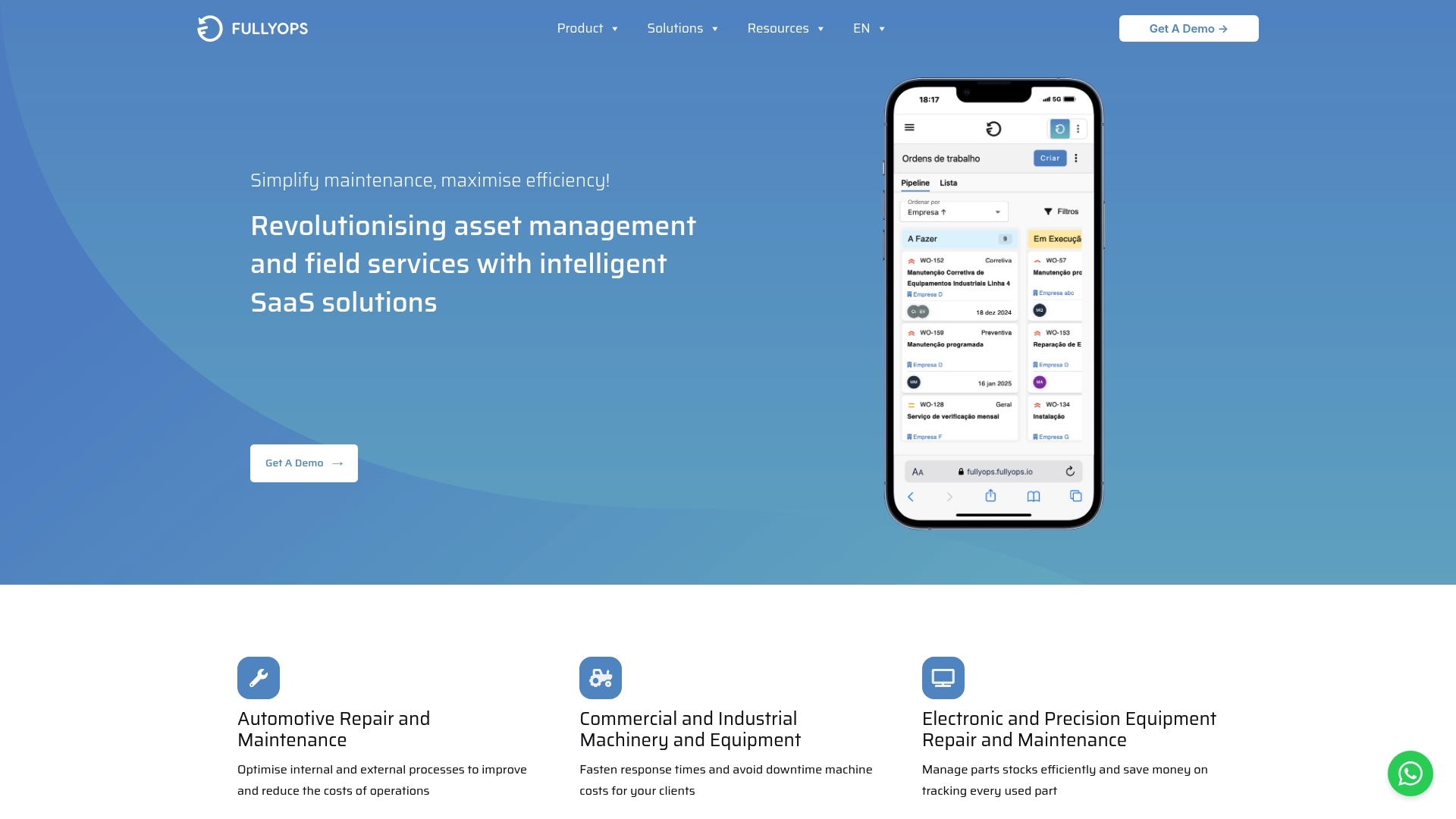
Selecting the right preventive maintenance examples is only the first step. Turning those examples into consistently executed, measurable routines requires tools that support scheduling, tracking, and analysis at scale. FullyOps provides industrial operations teams with a platform designed to make PM task management straightforward and accountable. From building tailored lista de verificación de cumplimiento de mantenimiento workflows to tracking intervention history across your asset base, the platform connects your PM strategy to daily operational reality. Explore tipos de sistemas de gestión de activos to understand which approach fits your facility, or review the full PM manager guide for a practical foundation.
Preguntas más frecuentes
What are the most common preventive maintenance tasks in industry?
The most common tasks include inspection and lubrication of moving parts, belt alignment, sensor calibration, electrical torque and insulation checks, and safety circuit testing. These are confirmed as standard PM items across industrial settings.
How often should preventive maintenance be performed?
Preventive maintenance frequency varies by asset but is typically performed daily, weekly, monthly, or quarterly based on asset criticality and manufacturer guidance. PM intervals range from weekly to annual depending on task type and equipment risk.
Why is oil sampling important in preventive maintenance?
Oil sampling identifies lubrication contamination and wear particles before failures develop, providing early warning of internal component degradation. SKF identifies proper hydraulic oil sampling as pivotal for proactive maintenance programmes.
How do you decide which PM examples to use?
Use asset criticality, risk of failure, and regulatory requirements to select PM tasks tailored to your operation rather than relying solely on generic checklists. RCM-based task selection matches PM activity with criticality and specific failure modes for more targeted results.
Can preventive maintenance reduce over-maintenance?
Yes, by applying risk-based strategies you can avoid unnecessary PM tasks and focus resources where failure consequences are greatest. RCM and risk-based approaches prevent over-maintenance by concentrating effort on tasks with genuine failure-prevention value.