

En resumen:
- Proactive maintenance strategies like RCM, PdM, and PM improve equipment reliability and reduce costs.
- Effective implementation requires asset criticality assessment, standardized procedures, and KPI monitoring.
- Cultivating a strong maintenance culture with leadership support and continuous improvement drives long-term success.
Maintenance best practices: Boost efficiency and asset life
Industrial operations are growing more complex every year, and the pressure to reduce unplanned downtime while controlling costs has never been greater. Yet many operations managers still rely on reactive habits, patching failures as they occur rather than building a structured, proactive programme. The gap between top-performing plants and average facilities is measurable and significant, and it often comes down to which maintenance strategies are in place, how consistently they are applied, and whether the right performance metrics guide decision making. This article gives you an evidence-backed framework covering selection criteria, core methodologies, implementation steps, and benchmarking tools to build a results-driven maintenance programme.
Índice
- Establishing selection criteria for maintenance strategies
- Core maintenance methodologies: PM, PdM, and RCM explained
- Implementing maintenance best practices: Steps for operational success
- Benchmarking and continuous improvement in maintenance management
- Why the real maintenance revolution starts with culture, not just technology
- Accelerate your maintenance improvements with expert solutions
- Preguntas más frecuentes
Principales conclusiones
| Punto | Detalles |
|---|---|
| Prioritise critical assets | Focusing resources where failures impact most ensures the best returns from your maintenance programme. |
| Match method to asset | Choose preventive, predictive, or hybrid approaches based on asset value and failure risk. |
| Track and benchmark KPIs | Monitoring OEE, MTBF, and compliance lets you measure progress and spot gaps versus top industry performers. |
| Invest in digital systems | Well-implemented CMMS and data quality are essential foundations for long-term maintenance success. |
| Culture drives results | Team upskilling, leadership buy-in, and a mindset of improvement are the true keys to sustained efficiency. |
Establishing selection criteria for maintenance strategies
Not all assets are equal, and not all maintenance strategies suit every situation. Before choosing between preventive maintenance (PM), predictive maintenance (PdM), or reliability-centred maintenance (RCM), operations managers need a clear set of criteria to guide that decision objectively. Without this framework, teams risk over-maintaining low-criticality assets while neglecting the equipment whose failure would cause the most damage.
The first and most important criterion is asset criticality. Ask what happens when this asset fails: does it halt an entire production line, create a safety hazard, or simply slow one workstation? The answers directly shape how much resource to invest in that asset’s upkeep. Following criticality, consider these additional selection factors:
- Asset value and replacement cost: High-value equipment justifies sophisticated monitoring and prevention strategies.
- Failure consequences: Safety, environmental, regulatory, and financial impacts all influence strategy selection.
- Regulatory requirements: Certain sectors, such as food processing and pharmaceutical manufacturing, mandate specific inspection schedules and audit trails.
- Data availability: PdM requires reliable sensor output and historical failure data; without it, PM may be the more practical starting point.
- Workforce and technology readiness: Even the most advanced strategy fails if technicians lack the training or tools to execute it.
Según 7 key best practices for manufacturing maintenance programmes, leading teams prioritise assets by criticality, standardise standard operating procedures and checklists, integrate computerised maintenance management systems (CMMS) or enterprise asset management (EAM) platforms for automation and scheduling, train their workforce consistently, deploy hybrid PM and PdM strategies, track KPIs continuously, and foster continuous improvement through root cause analysis. These seven pillars provide a strong starting scaffold for any selection process.
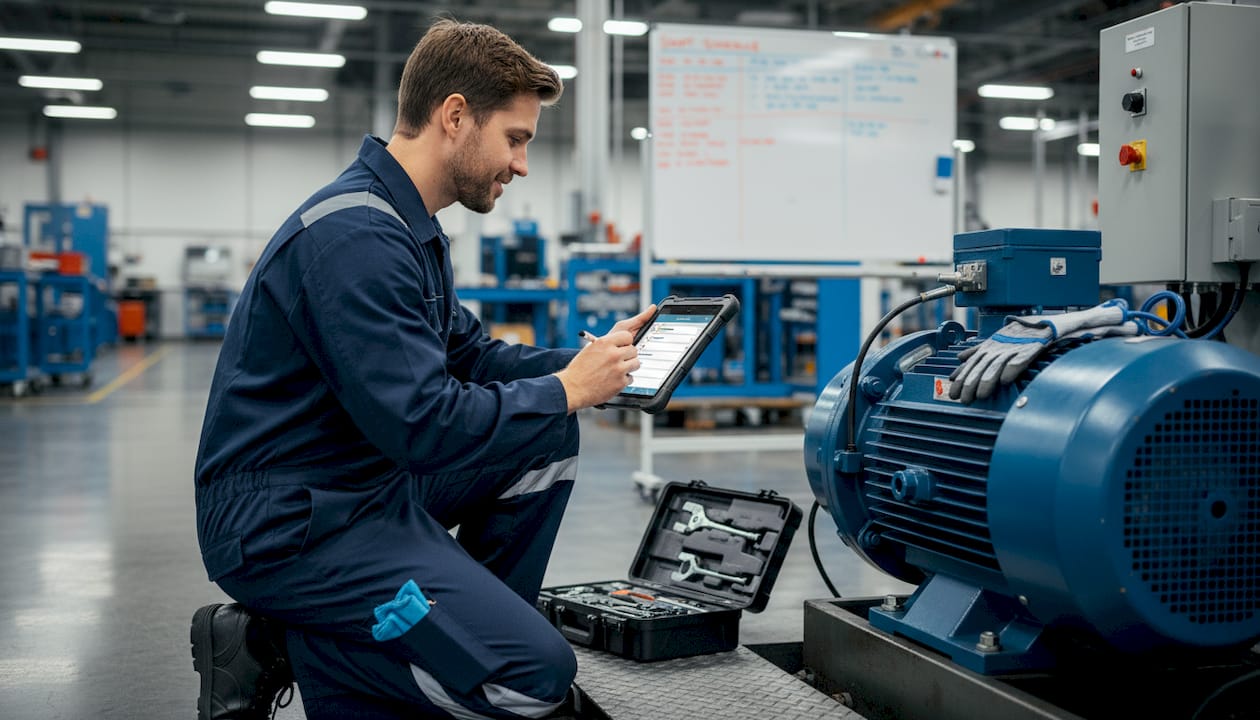
Defining PM, PdM, and RCM at this stage also matters. PM uses time or usage-based schedules to prevent failures before they occur. PdM uses real-time condition data to trigger maintenance only when specific thresholds are reached. RCM analyses each failure mode systematically to select the optimal strategy for that specific failure. Embedding knowledge of these three approaches into your selection criteria prevents teams from defaulting to a single method when a layered or hybrid solution would serve far better.
Pro Tip: Before scaling your maintenance programme across all assets, pilot your chosen approach on the ten most critical assets in your facility. This limits risk, generates real-world data, and builds team confidence before broader rollout.
Standardising checklists and integrating digital tools into your workflow also pays dividends here. A well-structured proceso de mantenimiento preventivo reduces variability, captures institutional knowledge, and creates the audit trail regulators and quality teams expect.
Core maintenance methodologies: PM, PdM, and RCM explained
Understanding the mechanics of each methodology is essential before committing resources. Each approach has clear strengths, genuine limitations, and a defined range of asset types and operational contexts where it delivers the most value.
Preventive maintenance (PM) operates on fixed schedules based on time elapsed or usage measured in hours, cycles, or kilometres. It is straightforward to plan, easy to assign, and works well for assets with predictable wear patterns, such as conveyor belts, filters, and lubricated bearings. The risk is over-maintenance: tasks performed too frequently add unnecessary cost and, paradoxically, can introduce failure by disturbing components that were operating within tolerance.
Predictive maintenance (PdM) shifts maintenance timing to condition thresholds using sensors that monitor vibration, temperature, oil quality, or electrical signatures. Because work is only triggered when readings approach failure thresholds, PdM avoids unnecessary interventions and extends asset life more precisely. The trade-off is the upfront investment in sensor hardware, data infrastructure, and analytical capability.
Reliability-centred maintenance (RCM) is the most systematic approach. Rather than applying a blanket strategy, RCM analyses each asset’s functions, the ways those functions can fail, and the consequences of each failure mode. It then selects the best combination of PM, PdM, condition monitoring, or run-to-fail for that specific failure mode. As manufacturing plant best practices for 2026 confirm, key methodologies span PM (time and usage-based), PdM (condition-based using sensors), and RCM (function-focused analysis selecting the optimal strategy per failure mode).
RCM and PdM are not competing approaches: they are often complementary. RCM defines which strategy fits each failure mode, and PdM provides the condition data that makes that strategy executable with precision.
| Methodology | Typical cost | ROI potential | Best asset fit | Risk profile |
|---|---|---|---|---|
| Preventive (PM) | Low to medium | Moderate | Predictable wear assets | Risk of over-maintenance |
| Predictive (PdM) | Medium to high | High (up to 10x) | High-value, monitored assets | Data quality dependency |
| RCM | High (upfront) | Very high | Complex, critical systems | Requires analytical expertise |
A common misconception is that PdM is always superior to PM. In reality, PdM only outperforms PM when there is enough high-quality sensor data and analytical capacity to act on it. For low-criticality, low-cost assets with predictable failure patterns, PM is more efficient. Hybrid approaches, where PM covers routine tasks and PdM monitors critical parameters in parallel, consistently outperform single-method programmes. Refer to the pasos de mantenimiento preventivo that support PM as a foundation layer within a broader strategy.
Implementing maintenance best practices: Steps for operational success
Choosing the right methodology means little without a disciplined, structured implementation. Teams that rush from strategy selection to full deployment without intermediate steps routinely struggle with inconsistent results, low technician buy-in, and poor data quality that undermines future decision making.
A proven sequence for embedding best practices into daily operations follows these steps, aligned with RCM implementation guidance from reliability engineering practice:
- Conduct asset criticality analysis: Rank all assets using a structured criticality matrix that scores safety impact, production impact, failure frequency, and repair cost. This prioritises where to focus your programme first.
- Perform functional failure analysis and FMEA: For each critical asset, identify its required functions, the ways those functions can fail, and the effects of each failure. Failure mode and effects analysis (FMEA) quantifies risk so strategy selection is evidence-based, not instinct-based.
- Select the maintenance mix: Assign PM, PdM, condition monitoring, or run-to-fail to each failure mode based on criticality, failure pattern, and data availability. Document the reasoning for each decision.
- Deploy with standardised work orders: Translate each maintenance task into a standardised work order with clear instructions, required tools, safety steps, and estimated time. This is where CMMS integration proves essential for scheduling and tracking.
- Monitor KPIs from day one: Establishing performance baselines before the programme matures gives you the comparison point you need to demonstrate improvement.
- Refine through root cause analysis: When failures do occur or KPIs slip, treat each event as a learning opportunity rather than a crisis. Structured root cause analysis prevents recurrence and feeds continuous improvement.
The KPIs your team tracks will define what you can improve. The table below shows key maintenance metrics alongside top-performer and industry-average benchmarks:
| KPI | Top performer target | Industry average |
|---|---|---|
| Reactive work (%) | Less than 10 to 15% | 25 to 35% |
| PM compliance (%) | Greater than 90 to 95% | 60 to 75% |
| Overall equipment effectiveness (OEE) | Greater than 85% | 60 to 75% |
| Mean time between failures (MTBF) | Greater than 2,000 to 3,000 hrs | 500 to 1,500 hrs |
| Mean time to repair (MTTR) | Less than 2 to 4 hrs | 6 to 12 hrs |
| Maintenance cost as % of RAV | 2 to 3% | 3 to 5% |
Pro Tip: CMMS data quality is the foundation of KPI reliability. Invest in technician training on accurate data entry before focusing on dashboard sophistication. A beautiful dashboard built on poor data leads to poor decisions.
A frequently underestimated barrier to implementation is cultural resistance. Technicians who have worked reactively for years may view detailed SOPs and digital reporting as administrative burden rather than professional tools. Addressing this requires leadership clarity, visible management support, and early wins that demonstrate the value of the new approach. Use the pasos de mantenimiento preventivo framework as a communication tool to show technicians how structured processes reduce their emergency call-outs and after-hours disruptions.
Benchmarking and continuous improvement in maintenance management
A maintenance programme without benchmarking is a programme without direction. Knowing your current performance is only useful when you can compare it against credible external standards and track progress over time. Benchmarking transforms KPIs from internal reporting metrics into strategic decision-making tools.
The metrics that matter most for benchmarking are those that capture both reliability and efficiency. According to maintenance KPI benchmarking data, top-performing plants achieve reactive work below 10 to 15%, PM compliance above 90 to 95%, OEE above 85%, MTBF exceeding 2,000 to 3,000 hours, MTTR below 2 to 4 hours, and maintenance cost at 2 to 3% of replacement asset value (RAV). Average plants, by contrast, see 25 to 35% reactive work, OEE of 60 to 75%, and maintenance costs of 3 to 5% of RAV.
Those gaps represent substantial financial and operational opportunity. A facility spending 5% of RAV on maintenance costs when top performers spend 2 to 3% may be wasting millions annually in avoidable labour, spare parts, and emergency procurement. Closing even a portion of that gap through improved PM compliance and reduced reactive work delivers measurable bottom-line returns.
Target ranges to guide your benchmarking programme include:
- OEE: Aim for above 75% as an intermediate target if you are currently below 65%.
- MTBF: Track trends monthly; a consistently rising MTBF indicates your PM and PdM investments are working.
- MTTR: Reductions here reflect improvements in parts availability, technician skill, and procedure clarity.
- PM compliance: Below 80% signals scheduling, resourcing, or prioritisation problems that need immediate attention.
- Reactive work percentage: Every percentage point reduction here represents a shift from costly emergency response to planned, controlled intervention.
Using industry maintenance benchmarks alongside your internal data gives you an objective external reference point that internal teams cannot dispute. External benchmarking data is particularly persuasive when making the business case for CMMS investment or additional maintenance headcount to senior leadership.
Routine audits and root cause analysis sit at the core of continuous improvement. Schedule quarterly reviews of each KPI, identify the top three drivers of underperformance, and assign corrective actions with clear owners and deadlines. Structured maintenance cost tracking gives you the financial dimension of this analysis, while Herramientas de seguimiento de mantenimiento support the operational data collection that makes KPI reviews credible.
Why the real maintenance revolution starts with culture, not just technology
There is a persistent belief in industrial maintenance circles that deploying better software, sensors, or analytical tools is the primary driver of performance improvement. The evidence tells a more nuanced story. Technology is an enabler, but it is people and culture that determine whether that technology is used consistently, intelligently, and to its full potential.
Leadership must prioritise training, cross-team collaboration, and continuous improvement to overcome the reactive habits that are deeply embedded in many industrial organisations. Without visible leadership commitment, even the most capable CMMS becomes a data entry burden rather than a decision-support platform.
The highest-performing maintenance teams share characteristics that have little to do with their choice of software. They conduct structured post-failure reviews where technicians are encouraged to contribute without fear of blame. They create mentoring pathways where experienced engineers transfer tacit knowledge to newer team members. They share KPI dashboards openly across shifts and departments, building collective accountability rather than siloing performance data.
Root cause analysis, when genuinely embedded in team culture rather than performed as a compliance exercise, consistently delivers more sustained improvement than any single tool upgrade. SOP adherence, which requires buy-in rather than enforcement, reduces variability in ways that no monitoring system can compensate for. Maintenance tracking technology amplifies these cultural strengths, but it cannot substitute for them. The teams that win long-term are those who invest in both dimensions simultaneously.
Accelerate your maintenance improvements with expert solutions
Ready to put these strategies to work? FullyOps provides operations managers and maintenance teams with the digital tools and structured processes needed to move from reactive maintenance to a proactive, data-driven programme. From a lista de verificación de cumplimiento de mantenimiento that standardises your SOPs and audit trails, to an inventory tracking guide that ensures parts availability never delays a critical repair, and Herramientas de seguimiento de mantenimiento that give your team real-time visibility into work orders and KPIs, FullyOps is built to support every layer of the maintenance best practices framework covered in this article. Explore the platform and take the next step towards measurable operational improvement.
Preguntas más frecuentes
What is the difference between preventive and predictive maintenance?
Preventive maintenance uses time or usage-based schedules to perform tasks at fixed intervals, while predictive maintenance uses condition-based sensor data to trigger work only when equipment readings approach failure thresholds, reducing unnecessary interventions.
What KPIs should maintenance teams track for best results?
Track OEE, MTBF, MTTR, percentage of reactive work, and PM compliance as your core set; top-performing plants achieve OEE above 85%, MTBF above 2,000 hours, and reactive work below 15%, giving you clear targets to work towards.
How do I prioritise which assets to maintain?
Use an asset criticality analysis that scores each piece of equipment on safety impact, production impact, failure frequency, and repair cost; prioritising by criticality ensures your highest-risk assets receive the most rigorous attention first.
Why do most failures in industrial plants not relate to asset age?
Research shows that most equipment failures are not age-related, meaning time-based replacement schedules alone are inefficient; risk management strategies that address specific failure modes deliver far better outcomes than focusing on asset age as the primary trigger for intervention.