

TL;DR:
- Real-time intervention tracking enables operations managers to respond instantly to failures, preventing costly downtime.
- Key tools include high-speed event streaming, verified alerting systems, and integrated dashboards that facilitate rapid detection and action.
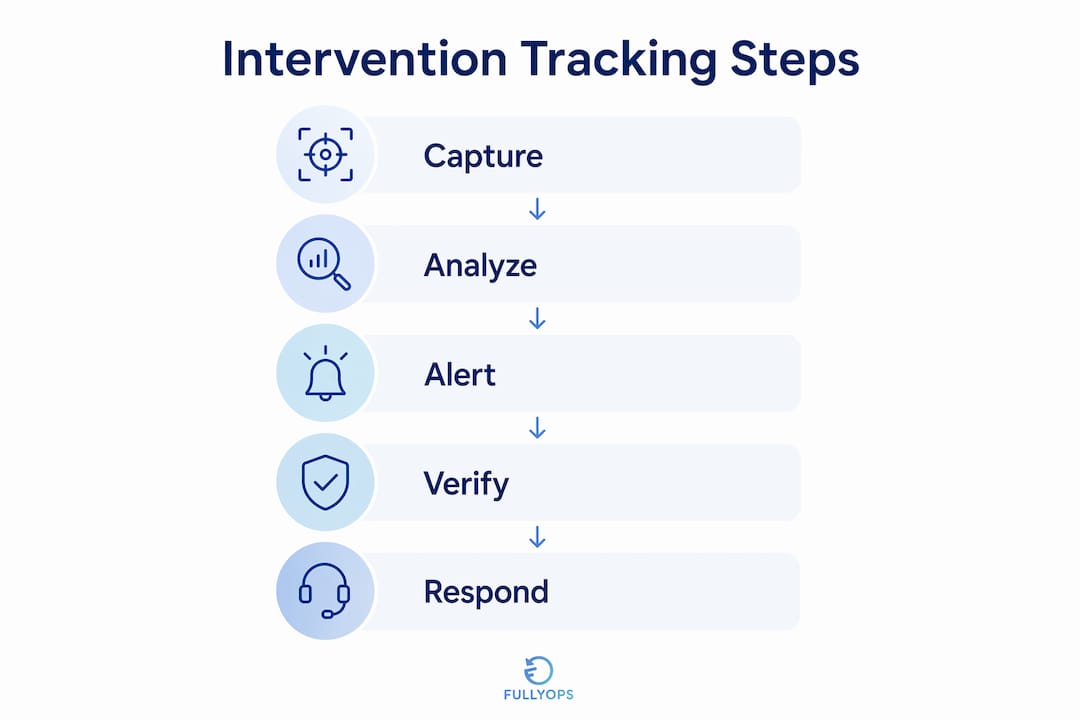
Real-time intervention tracking is the process of capturing, analysing, and acting on intervention data the moment it occurs, enabling operations managers to prevent failures before they escalate into costly downtime. In industrial maintenance, the industry standard term for this practice is live intervention monitoring, though the two are used interchangeably across field service and asset management contexts. Platforms like Fullyops, event streaming tools such as RisingWave, and AI-driven systems like those from Omnilert and Becklar have made this capability accessible to maintenance teams at scale. The core benefit is speed: when intervention data flows in real time, supervisors can redirect technicians, trigger work orders, and close coordination gaps within seconds rather than hours.
What tools are essential for real-time intervention tracking?
The technological foundation of any live intervention monitoring system rests on three components: a high-speed data ingestion layer, a verified alerting mechanism, and an integrated dashboard for operational visibility.
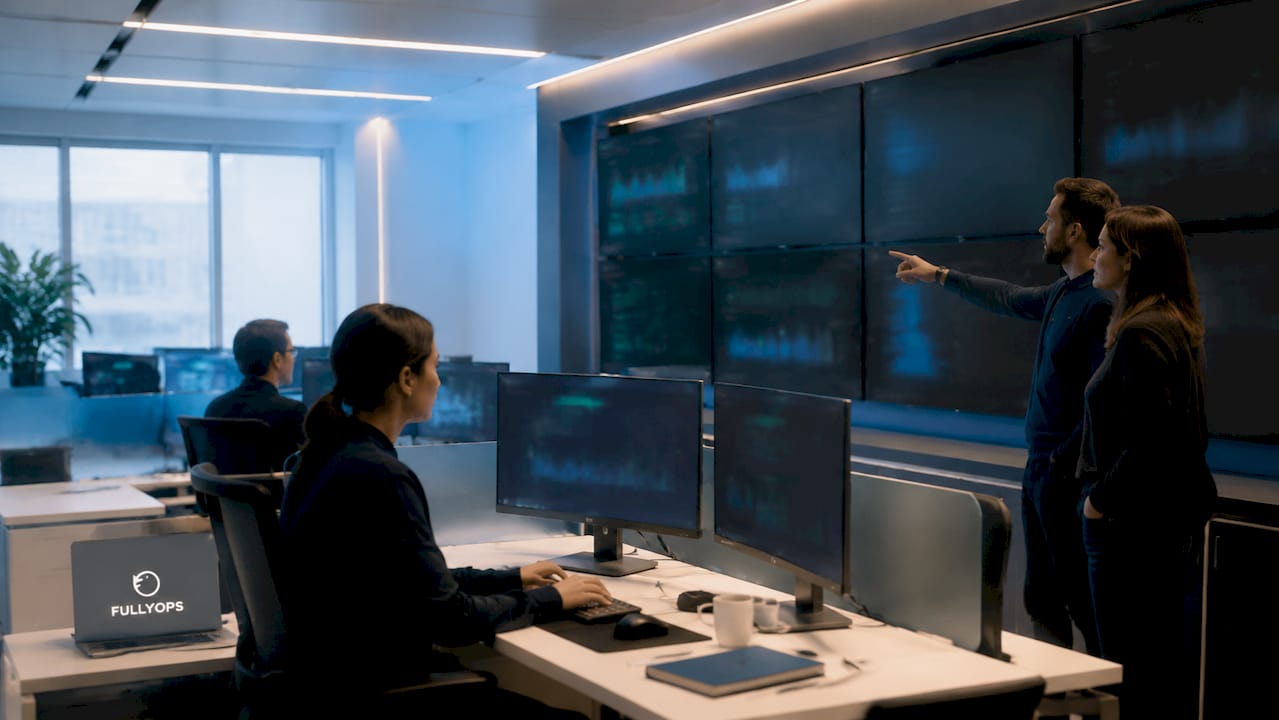
High-speed event streaming is the starting point. Event streaming platforms like RisingWave achieve end-to-end data freshness under 100 milliseconds, with query latencies as low as 10–20 milliseconds. That level of speed means a sensor reading from a machine on the factory floor reaches your dashboard before the fault has time to compound.
Verified alerting systems separate active intervention from passive recording. Real-time video surveillance systems such as those from Omnilert combine live video feeds, AI analytics, and trained operators to detect and react to incidents in seconds. Becklar’s video remote guarding service takes a similar approach: trained operators engage live with potential issues rather than simply logging them for review. This distinction matters because passive recording misses intervention windows entirely, whereas live monitoring allows supervisors to act while events are still unfolding.
Integrated dashboards tie the system together. Live monitoring dashboards, as demonstrated by Bland AI in call centre environments, give supervisors immediate flags to intervene during active interactions. The same principle applies in industrial maintenance: a dashboard that surfaces intervention performance metrics in real time allows a maintenance administrator to reassign a technician mid-task or escalate a fault before it triggers a line stoppage.
| Technology | Primary function | Key advantage |
|---|---|---|
| RisingWave event streaming | Data ingestion and query | Sub-100 ms freshness |
| Omnilert AI video analytics | Threat and fault detection | Seconds-level response |
| Becklar video remote guarding | Verified live alerting | Reduced false alarms |
| Bland AI live dashboards | Supervisor visibility | Real-time escalation flags |
| Fullyops intervention tracking | Work order and asset management | Integrated maintenance workflows |
Pro Tip: Before selecting a platform, confirm it supports transactional data state synchronisation. A coordination gap of 200 milliseconds at 20,000 requests per second can produce thousands of uncoordinated automated actions, which is a significant risk in high-throughput industrial environments.
How to implement real-time intervention tracking step by step
Implementation does not require replacing your existing infrastructure. AI-driven orchestration software can wrap around current sensors and cameras to add live monitoring capability with a high return on investment. The following process applies to most industrial maintenance environments.
-
Audit your data sources. List every sensor, PLC, SCADA system, and manual data entry point currently in use. Identify which assets generate the most critical intervention events and prioritise those for live monitoring first.
-
Establish connectivity and integration. Connect your data sources to an event streaming layer. Confirm that your chosen platform can ingest data from existing equipment without requiring hardware replacement. Fullyops, for example, supports integrations with third-party systems, allowing maintenance data to flow into a single operational view.
-
Configure your monitoring dashboard. Set up tiered severity levels within your dashboard. A three-tier model works well: informational alerts for minor anomalies, warning alerts requiring technician acknowledgement within a defined window, and critical alerts that trigger automatic work order creation and supervisor notification.
-
Define alert thresholds carefully. Poor threshold calibration is the primary cause of alert fatigue. Set thresholds based on historical fault data rather than manufacturer defaults. Review and adjust thresholds monthly during the first quarter of operation.
-
Train staff on alert interpretation. Technicians and administrators need to distinguish between alert tiers and know the correct response for each. Run tabletop exercises using historical incident data before going live.
-
Integrate with your asset management system. Connect your live monitoring layer to your maintenance tracking tools so that alerts automatically generate work orders, log technician hours, and update asset records. This closes the loop between detection and documented resolution.
-
Review intervention performance metrics weekly. Track mean time to acknowledge, mean time to resolve, and false alarm rate. Use these figures to refine thresholds and staffing allocations over time.
Pro Tip: Use AI to filter alerts before they reach human operators. Unified deep learning frameworks can improve intervention prediction accuracy by up to 32.8%, which directly reduces the volume of low-value alerts your team must process.
Common challenges in live monitoring and how to resolve them
Alert fatigue is the most frequently cited barrier to effective real-time data analysis in industrial settings. When systems generate too many low-priority alerts, operators begin ignoring them, which defeats the purpose of live monitoring entirely.
- Threshold miscalibration: Systems configured with overly sensitive thresholds generate constant noise. The solution is to prioritise verified, high-fidelity alerts over raw alert volume. Becklar’s video remote guarding model demonstrates this clearly: trained operators verify events before escalating, which reduces false alarms and maintains operator trust in the system.
- Coordination gaps: When monitoring and action-triggering systems do not share a synchronised data state, interventions fall through the cracks. Transactional real-time systems address this by ensuring both layers read from the same data state at the same moment.
- Latency accumulation: Latency compounds across network hops, processing layers, and dashboard rendering. Audit each layer independently and set a maximum acceptable end-to-end latency target before deployment.
- Data quality degradation: Sensors drift over time. Schedule quarterly calibration checks and include sensor health as a metric within your dashboard.
“The shift from passive recording to active verified response is the core differentiator of real-time systems. Without verification, you have data. With verification, you have the ability to intervene.” — Omnilert on real-time video surveillance
Pro Tip: Assign a dedicated system health owner within your maintenance team. This person reviews alert quality metrics weekly and owns threshold adjustments. Without clear ownership, calibration tasks are consistently deprioritised.
How to choose the right tracking approach for your environment
The correct approach depends on your asset types, team size, and existing infrastructure. No single model suits every industrial environment.
Video verification systems work best in environments where physical access, security, and equipment condition can be assessed visually. They are particularly effective in large facilities with distributed assets. The trade-off is cost: live operator engagement requires staffing or a managed service contract.
Sensor-driven alert systems suit environments where equipment telemetry is already available through SCADA or IoT networks. They scale well and integrate naturally with existing asset management systems. The risk is alert fatigue if thresholds are not managed carefully.
Centralised dashboards give operations managers a single view across all assets and interventions. They work well for teams managing multiple sites or large asset portfolios. Distributed alerting models, by contrast, push notifications directly to individual technicians and reduce the dependency on a central monitoring function.
AI-driven orchestration overlays offer the highest flexibility. They sit above existing sensor and camera networks, apply machine learning to filter and prioritise alerts, and integrate with work order systems to trigger responses automatically. The upfront configuration effort is higher, but the long-term reduction in manual monitoring workload is significant.
| Approach | Best for | Key limitation |
|---|---|---|
| Video verification | Facilities with visual inspection needs | Staffing or service cost |
| Sensor-driven alerts | IoT-equipped industrial environments | Alert fatigue risk |
| Centralised dashboard | Multi-site or large asset portfolios | Single point of failure |
| Distributed alerting | Field technician teams | Coordination complexity |
| AI orchestration overlay | Mixed infrastructure environments | High initial configuration |
For most industrial maintenance teams, a combination of sensor-driven alerts filtered by AI and surfaced through a centralised dashboard represents the most practical starting point. Fullyops supports this model through its field service management capabilities, which connect live intervention data to work order management and technician scheduling in a single interface.
Key takeaways
Real-time intervention tracking delivers operational value only when speed, verified alerting, and integrated workflows operate together as a single system.
| Point | Details |
|---|---|
| Speed is the foundation | Event streaming platforms must deliver sub-100 ms data freshness to support genuine real-time response. |
| Verified alerts outperform volume | Prioritise high-fidelity, verified alerts over raw alert quantity to prevent operator fatigue. |
| AI reduces manual load | AI orchestration overlays can improve intervention prediction accuracy by up to 32.8%, cutting unnecessary alerts. |
| Integration closes the loop | Connecting monitoring to work order systems ensures every detected fault becomes a documented, assigned task. |
| Calibration is ongoing | Threshold review must be scheduled regularly; set-and-forget configurations degrade alert quality over time. |
Why I think most teams underestimate the coordination problem
Operations managers tend to focus on the monitoring layer when implementing live intervention tracking. They invest in sensors, dashboards, and alert configurations, and then assume the system will work. The part that consistently causes problems is the gap between detection and coordinated action.
A 200-millisecond coordination lag at high throughput is not an abstract engineering concern. In a busy industrial facility, it translates directly into technicians receiving conflicting instructions, work orders being created for faults already resolved, and supervisors acting on stale data. I have seen well-funded implementations fail not because the monitoring technology was inadequate, but because the transactional layer connecting monitoring to action was an afterthought.
The other underestimated factor is human calibration. Automation handles detection well. It handles prioritisation poorly without careful configuration and regular review. The teams that get the most from automating asset tracking are those that treat threshold management as a continuous operational discipline, not a one-time setup task. Build that discipline into your team’s weekly rhythm from day one.
— Pedro
How Fullyops supports real-time intervention management
Fullyops is built for operations managers and maintenance administrators who need more than a monitoring dashboard. The platform connects live intervention data directly to work order management, technician scheduling, and asset records, so that every detected fault moves from alert to assigned task without manual handoffs. The resource allocation tutorial walks through how to configure asset assignments and intervention workflows to match your operational structure. For teams evaluating their options, the Fullyops maintenance software comparison covers the leading platforms for industrial environments in 2026, with feature breakdowns aligned to real maintenance use cases.
FAQ
What is real-time intervention tracking?
Real-time intervention tracking is the continuous capture, analysis, and response to intervention events as they occur, using live data feeds, alert systems, and integrated dashboards to minimise response time and operational disruption.
How does alert fatigue affect intervention tracking systems?
Alert fatigue occurs when systems generate too many low-priority notifications, causing operators to ignore alerts. Verified alerting approaches that prioritise quality over quantity are the most effective countermeasure.
Do I need to replace existing sensors to implement live monitoring?
No. AI-driven orchestration software can integrate with existing camera and sensor networks, adding real-time intervention capability without full infrastructure replacement and delivering a high return on investment.
What latency is acceptable for industrial intervention tracking?
End-to-end data freshness under 100 milliseconds is the benchmark for genuine real-time performance, with query latencies in the 10–20 millisecond range considered optimal for high-throughput industrial environments.
How do I measure whether my intervention tracking system is working?
Track three core intervention performance metrics: mean time to acknowledge, mean time to resolve, and false alarm rate. Review these weekly and adjust alert thresholds based on the data to maintain system effectiveness over time.
Recommended
- Inventory tracking: the essential guide to maintenance efficiency
- Essential asset tracking tips for industrial managers
- Why track technician hours: the operations manager’s guide